Showing posts with label ROC. Show all posts

Monday, July 27, 2026

What are the Various Organic, Biodynamic, and Regenerative Certifications?


Growers and consumers navigate a complex ecosystem of agricultural certifications -- each with its own standards, inspection protocols, and philosophical foundations. What does each certification mean? How do they differ? Some focus strictly on inputs, others on ecological outcomes, and even more incorporate social or animal‑welfare criteria. What follows is an overview of the major certifications used in organic, biodynamic, and regenerative agriculture.

Overview

Program Scope & Focus Verification Model Core Principles
USDA Organic National organic standard for crops & livestock Third‑party audit under federal regulation No synthetic fertilizers/pesticides, no GMOs, 3‑year transition
Certified Naturally Grown Community‑based alternative to USDA Organic Peer review inspections Small‑farm oriented; aligns closely with USDA Organic rules
Real Organic Project Add‑on label reinforcing soil‑based organic farming Annual inspection Soil‑grown crops; excludes hydroponics; pasture‑based livestock
Demeter Biodynamic Whole‑farm ecological system Third‑party audit Biodiversity, closed nutrient cycles, biodynamic preparations
A Greener World – Regenerative Certified Regenerative outcomes across crop & livestock systems Third‑party audit Soil health, biodiversity, measurable ecological improvement
Soil & Climate Initiative Outcome‑based regenerative verification Annual measurement & reporting Continuous improvement in soil function & climate impact
Regenerative Organic Certified (ROA) Regenerative organic agriculture Tiered certification (Bronze–Gold) Soil health, animal welfare, social fairness
Regenified Regenerative performance standard Tiered verification (Levels 1–6) Six soil‑health principles; whole‑system outcomes
Soil Regen Regenerative agronomy consulting & verification Data‑driven assessment Soil testing, biological improvement, farmer profitability
Regenerative Viticulture Foundation Regenerative grape‑growing & education Voluntary participation Soil restoration, biodiversity, One Block Challenge™
Land to Market Regenerative sourcing for food, fiber & leather Outcome-based verification using Ecological Outcome Verification (EOV) Soil health, biodiversity, ecosystem function measured annually
Fibershed Climate Beneficial™ Regenerative fiber & textile systems Practices verified through carbon‑farm planning Soil carbon drawdown, climate‑positive land stewardship
Ethos™ Regenerative supply‑chain transparency Digital verification & traceability platform Outcome tracking, soil‑health metrics, producer‑level data integrity

Organic Certifications

USDA Organic (National Organic Program)

The USDA Organic seal represents the United States’ federal regulatory standard for organic production. It prohibits synthetic fertilizers, most synthetic pesticides, sewage‑sludge‑based amendments, and genetically modified organisms. Land must undergo a three‑year transition period before certification. Farms maintain an Organic System Plan (OSP) and undergo annual third‑party inspections.


USDA Transitional Organic

This designation supports farms during the required three‑year transition to full USDA Organic status. It does not permit organic labeling on products but verifies that land is under compliant organic management. Transitional certification helps growers communicate progress to buyers and lenders.


Certified Naturally Grown (CNG)

CNG is a peer‑reviewed alternative to USDA Organic designed for small, direct‑market farms. Standards closely mirror USDA Organic, but inspections are conducted by fellow farmers rather than accredited auditors. CNG emphasizes transparency and community‑based verification.


Real Organic Project (ROP)

ROP is an add‑on label for USDA‑certified farms that meet additional soil‑based requirements. It excludes hydroponic production and confinement livestock systems, reinforcing traditional organic principles centered on soil health and ecological integration.


Biodynamic Certification


Demeter Certified Biodynamic

Demeter is the global biodynamic standard and one of the oldest ecological farming certifications. It builds on organic requirements and adds whole‑farm ecological criteria, mandatory biodiversity areas, limits on imported fertility, and use of biodynamic preparations. Certification requires annual inspections and licensing fees based on gross sales.


Regenerative Certifications

Regenerative Organic Certified® (ROC)

ROC is administered by the Regenerative Organic Alliance and layers regenerative requirements on top of USDA Organic. It evaluates farms across three pillars: soil health, animal welfare, and social fairness. Practices include cover cropping, reduced tillage, and verified labor standards. ROC offers three tiers—Bronze, Silver, and Gold—based on performance. See also Regenerative Farming at Grgich Hills Estate and Domaine Bousquet, GAIA, and Regenerative Farming.


Regenified™

Regenified™ provides a structured way to document how farming decisions influence soil function and long‑term site health. Its 6‑3‑4 Standard aligns with many practices already familiar to growers: reduced tillage, permanent or seasonal cover crops, mixed‑species plantings, maintaining living roots through the year, and the controlled use of livestock for vegetation management. See also Understanding Certified Regenified™ Through Ashton Creek Vineyard.


Land to Market (Savory Institute)

Land to Market, developed by the Savory Institute, is an outcomes‑based regenerative verification. It uses Ecological Outcome Verification (EOV) to measure soil health, biodiversity, and ecosystem function through short‑ and long‑term monitoring. Certification is tied to demonstrated ecological improvement rather than prescribed practices.


Soil & Climate Initiative (SCI)

SCI is a regenerative verification program focused on measurable improvements in soil health and climate outcomes. It prioritizes continuous improvement rather than strict practice‑based standards, making it accessible to farms at various stages of transition.


Fibershed Climate Beneficial™

Fibershed’s Climate Beneficial™ certification applies to fiber and textile producers. It verifies that farming and grazing practices sequester carbon and improve soil health within regional fiber systems. The program is part of Fibershed’s broader effort to localize textile production.


A Greener World (AGW) 

A Greener World promotes practical, sustainable solutions in agriculture by supporting farmers and educating consumers. They offer a regenerative certification emphasizing soil health, biodiversity, and verified ecological outcomes. Standards apply to farms of various sizes and production types, including mixed crop‑livestock operations.


Soil Regen

Soil Regen is a science‑based agronomy group that supports growers transitioning to regenerative systems through soil‑health testing, data‑driven consulting, and practical on‑farm guidance. The organization emphasizes measurable biological improvements rather than prescriptive practice lists. Their work connects soil function with economic resilience, helping producers adopt regenerative methods that fit their specific soils, climates, and operational goals.


Regenerative Viticulture Foundation  (RVF)

RVF is a nonprofit organization dedicated to advancing soil‑centered, climate‑positive grape growing through education, collaboration, and measurable outcomes. Its mission is to help winegrowers transition from extractive to regenerative practices that restore ecosystem function, improve soil health, and strengthen vineyard resilience. The foundation’s flagship initiative, the One Block Challenge™, invites growers to dedicate a single vineyard block to regenerative management—serving as a living demonstration of how small, evidence‑based changes can yield ecological and economic benefits. 

Ethos™

Ethos™ provides regenerative verification for farms and ranches, focusing on soil health, ecological outcomes, and transparent documentation. It is a data-driven platform that collaboratively monitors and reports on the holistic impacts of regenerative agriculture, from soil health to farmer and community wellbeing.

Other Resources


Dodon Center for Ecological Farming

The Dodon Center for Ecological Farming promotes a transition to ecological farming and a sustainable food system through practical education, regenerative practices, and strategic partnerships. Their focus is on soil health, biodiversity, and local food production—bringing together farmers, consumers, and policymakers to build a resilient and fair future. 


Monday, April 22, 2024

Grape Spotlight: DO Costers del Segre Danaus Red Wine

Costers del Segre is Catalonia's most inland wine region and generally speaking, this region is harsh. It's semi-arid, with a climate of extremes. Although its seven fragmented districts do represent a varied mix of soil and climatic conditions. -- wine-searcher.com

DO Costers del Segre is a Denominación de Origen (DO) wine region located in Catalonia, on the northeastern coast of Spain. The name means 'Banks of the Segre' – a river which originates in the Pyrenees mountain ranges and meets the Ebro River just south of the city of Lleida.  The DO was established in 1988 and is a collection of subregions clustered along the Segre river valley. It has a dry, semi-arid Continental climate featuring limestone and clay spoils. The DO is comprised of seven sub-zones, four of which are considered "mountain viticulture".  It also experiences a high diurnal temperature variation (70 degrees F) producing aromatic and structured wines.


The subregions, from north to south, are Pallars Jussa, Artesa de Segre, Segria, Raimat, Valls del Riucorb, Les Garrigues and Urgell. As a result of these scattered subregions, this DO boasts one of the most versatile wine portfolios in Spain. The cooler vineyards produce grapes for Cava (Macabeo, Parellada and Xarel-lo), while the drier areas are suitable for growing red grapes, especially Tempranillo, Garnacha, Cabernet Sauvignon, Merlot, Trepat, Monastrell, Pinot Noir and Syrah. Varietal white wines are also produced based on Chardonnay, Riesling, and Sauvignon Blanc.

One wine we recently received is made from the three most predominate grapes within the drier regions. The Danaus Organic Red Wine 2022 ($13) is a blend of 45% Tempranillo, 45% Garnacha, and 10% Cabernet Sauvignon and made exclusively for Origins Organic Imports. This is a company founded by Labid Ameri and Anne Bousquet initially as the U.S. importing arm for Domaine Bousquet -- but has expanded to include organic wine producers worldwide

The wine is made by Bodegas Costers del Sió a twenty year old operation where the first vines were handplanted in 1998 and the first wines released in 2005. Their estate is named Finca de Flix and is poor in organic matter but rich in loam and mud. It is located in the Artesa de Segre subregion at an altitude of 1,000 feet (310 meters), where the estate is influenced by the Mediterranean with continental influences.

Danaus refers to Danaus Plexippus (i.e., “sleepy transformation” in ancient Greek) -- the scientific name for the monarch butterfly (named for the monarch King William III of England). Each of the three grape varieties were harvested separately and after fermentation, bended and aged for four months in 300 liter French oak barrels. This is a fantastic wine for a number of reasons, starting with the retail price. Not many wines under $15 have this balance between fruit flavors and oak influences and an uninterrupted flow from the nose to the approachable finish. Layers of red berries and light smokey tannins. 


Distributed in AR, AZ, CA, CT, DC, DE, FL, KS, LA, MD, ME, MI, NJ, NY, OR, VT, WA

Saturday, April 13, 2024

Steak and Eggs with Domaine Bousquet and Wines with Altitude

I am continually blessed to receive multiple shipments of Argentinean Wines with Altitude from Domaine Bousquet. Their estate vineyards are located 4,000 feet above sea level in Gualtallary within the Tupungato mountain range. In this environment, rainfall is scant, sunshine is plentiful, and the desert-like climate creates a massive 59° F day/night temperature differential. The area also has poor stony and alluvial soils that are interlaced with layers of sand and limestone. This diverse combination creates free-draining soils that, due to the already mentioned limited water availability, stress the vines. The grapes react to these conditions by increasing skin tannins, concentrating flavor, and retaining acidity and aromas.

The two new samples that I received fall within the Domaine Bousquet Cameleon label which "symbolizes the story of the Bousquet family, a fourth generation that left their native France after a long worldwide search for an idyllic wine growing region".  The grapes are grown within the Tupungato mountain range described above and benefit from that particular geographic terrior.  On the surface the Cameleon Signature Organic Chardonnay 2022 ($15)  and Cameleon Signature Organic Cabernet Sauvignon 2021 ($20) were pleasant wines where the chardonnay provided peaches and green apple flavors within a medium texture whereas the cabernet showed fresh blackberries, earthiness, slight mint,  and firm tannins.  But on their own they were slightly underwhelming.

That was until I paired each with steak and eggs and the wines rose to a new level. The Chardonnay's texture and acidity worked very well with the cayenne pepper and paprika laced scrambled eggs. They just seemed to integrate effortlessly. An even better pairing occurred with the Cabernet Sauvignon and herb seasoned flank steak where the tannins and acidity broke into and cut through the fat creating a savory plate.  Both the meat and wine exploded in the mouthfeel creating lasting  bites.  

The lesson here is not to dismiss wines after the first sip and find creative ways to enjoy them.  Cheers.

Total Wine exclusive in AZ, CA, CO, CT, DE, FL, GA, IL, IN, KS, KY, LA, MA, MD, MI, MN, MS, NC, NJ, NM, NV, NY, SC, TN, TX, VA, WA, WI

Monday, March 4, 2024

Four Fresh and Food Friendly Organic Wines from Domaine Bousquet

I received another shipment of Argentinean Wines with Altitude from Domaine Bousquet where their estate vineyards are located 4,000 feet above sea level in Gualtallary within the Tupungato mountain range. In this environment, rainfall is scant, sunshine is plentiful, and the desert-like climate creates a massive 59° F day/night temperature differential. The area also has poor stony and alluvial soils that are interlaced with layers of sand and limestone. This diverse combination creates free-draining soils that, due to the already mentioned limited water availability, stress the vines. The grapes react to these conditions by increasing skin tannins, concentrating flavor, and retaining acidity and aromas.

I decided to pair the two white offerings with a bowl of spicy sausage and shrimp jambalaya. Initially I thought the acidity expected in the Bousquet Organic Sauvignon Blanc 2023 ($13) might be the best option but the white stone fruit flavors were essentially overwhelmed by the food's richness. Instead the Bousquet Organic Unoaked Chardonnay 2023 ($13) was ideal as the wine's depth of apple-peach flavors and acidity, not only stood up to the richness, but also complimented it as the wine's expression lasted past the jambalaya's.

The four wines are incorporated into Domaine Bousquet’s premium varietal series. This program blends estate and purchased organic fruit from the Uco Valley in the high Andean foothills. The grapes benefit from huge day/night temperature swings, achieving exuberant ripeness and juiciness. The wines receive no oak treatment allowing the fruit shine through and make the wines extremely food-friendly as described above. 

The Bousquet Organic Cabernet Sauvignon 2022 ($13) and Bousquet Organic Malbec 2023 ($13) portray this juicy fruit forward profile. They each had abundant acidity and strong blackberry flavors. They both provided approachable tannins with the Cabernet more chewy and the Malbec silky. Both of these worked well with BBQ and burgers.  I would say that these are four excellent picnic wines.

The wines also be available throughout the United States. The Domaine Bousquet website provides a handy tool to search for retail outlets and restaurants that carry their wine. For those in Fairfax County, Mom's Organic Market carries may of their wines. 

Thursday, December 14, 2023

Wines with Altitude: Domaine Bousquet Part II - The Ameri Label

In Wines with Altitude: Domaine Bousquet Part I, we discussed these estate vineyards 4,000 feet above sea level in Gualtallary within the Tupungato mountain range. To repeat, "In this environment, rainfall is scant, sunshine is plentiful, and the desert-like climate creates a massive 59° F day/night temperature differential. The area also has poor stony and alluvial soils that are interlaced with layers of sand and limestone. This diverse combination creates free-draining soils that, due to the already mentioned limited water availability, stress the vines.  The grapes react to these conditions by increasing skin tannins, concentrating flavor, and retaining acidity and aromas". 

Today Domain Bousquet is managed by founder's Jean Bousquet's son-in-law and daughter: Labid al Ameri & Anne Bousquet. al Ameri had joined his father-in-law full time in 2005 helping to build the winery while Anne joined the company in 2008. "In 2009, the couple moved to Tupungato full-time, assuming full ownership in 2011".

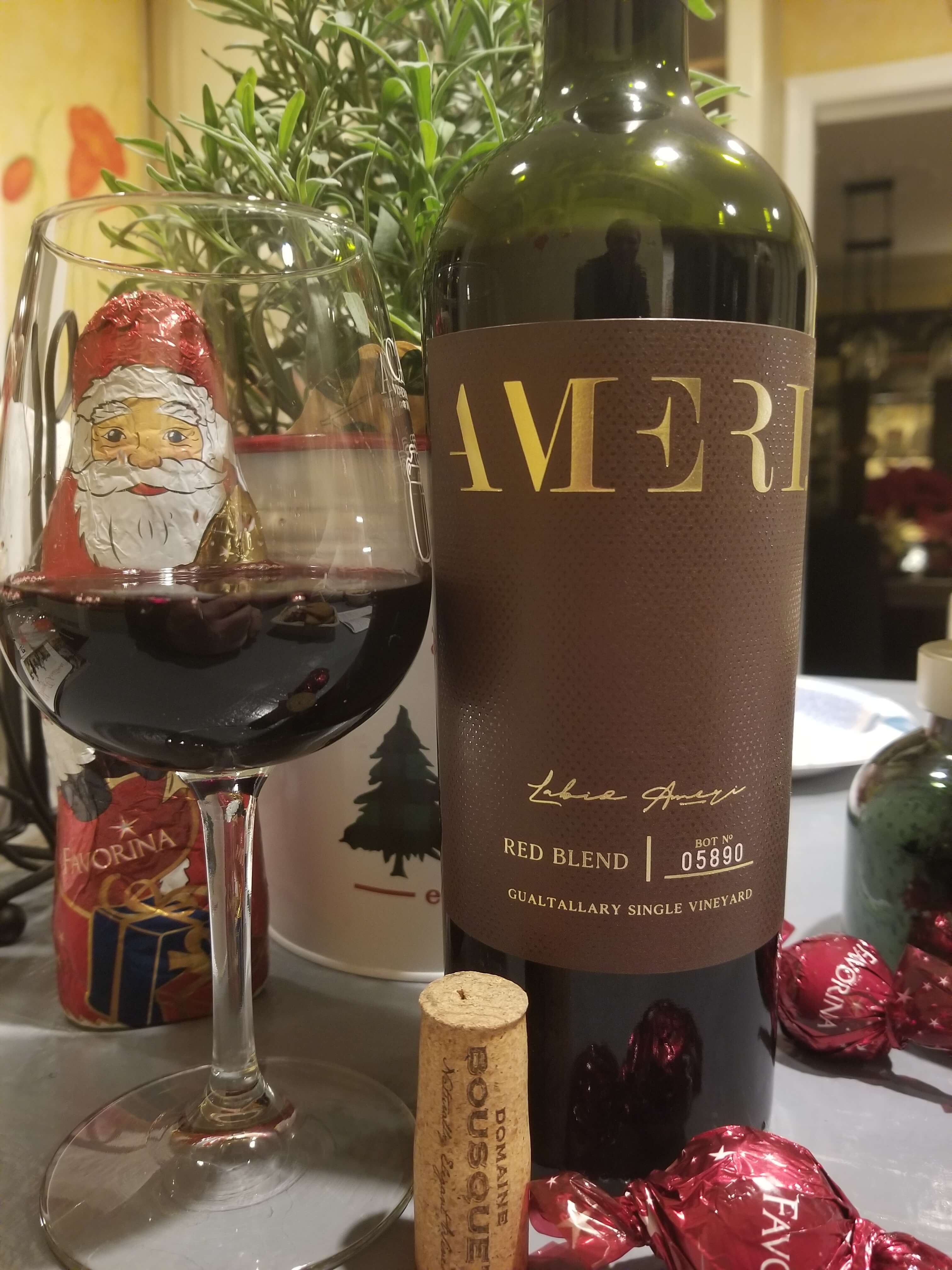
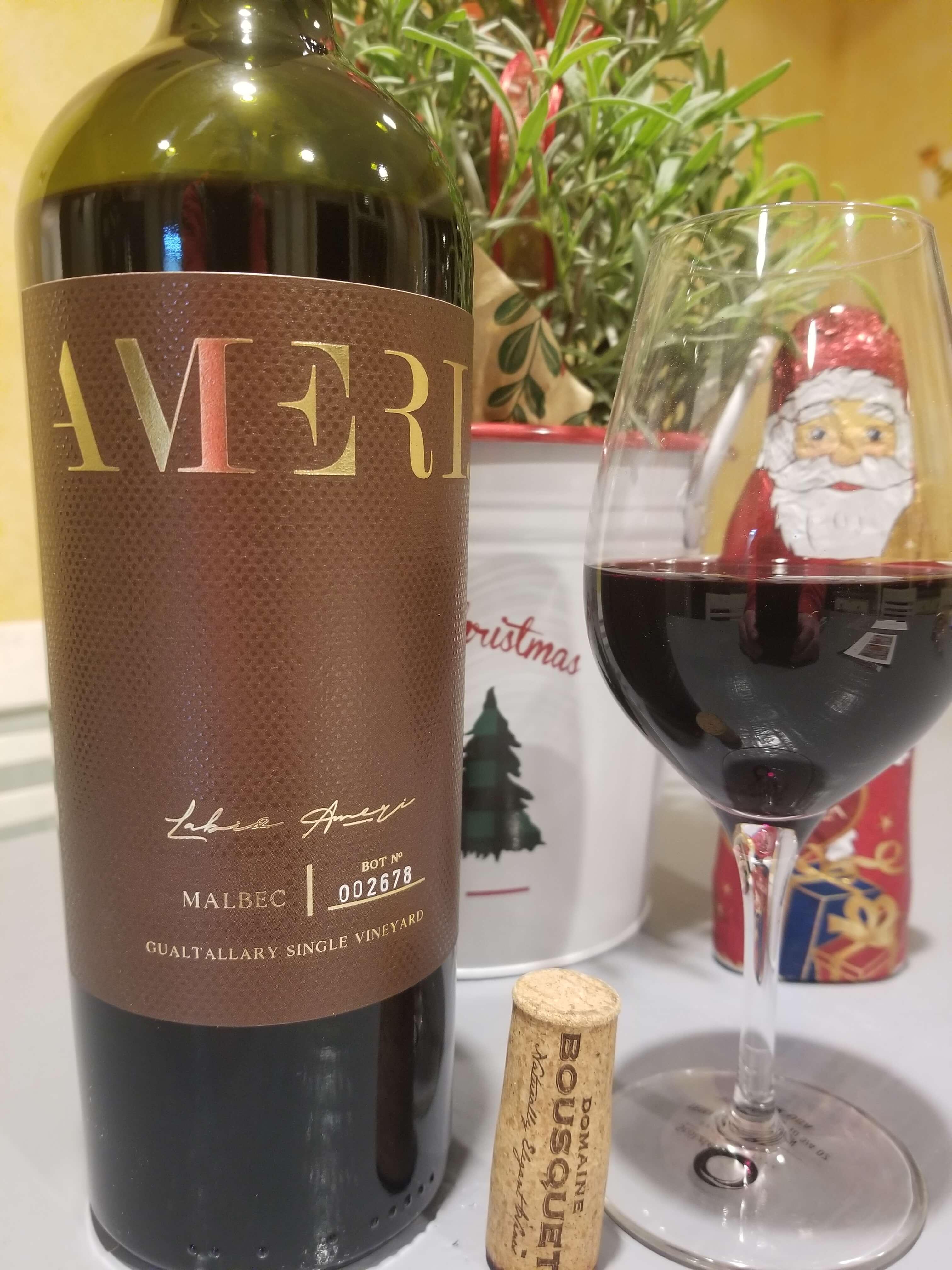
We were very fortunate to receive samples of two wines from their premium label, Ameri -- sourced from fruit from the Bousquet Estate Vineyard. Both of these wines are certified organic which has been the case for this vineyard since the winery's inception in 1997. 

Earlier this year the couple started the three-year transition to fully biodynamic farming even though they have also earned the Regenerative Organic Certified (ROC)™ status from the 501(c)3 Regenerative Organic Alliance. Thus, Domaine Bousquet became one of only four wineries achieve this status to date, and the first outside the United States to meet ROC™’s stringent requirements that pertains to food/produce, fiber, and botanical ingredients. The other three wineries are Fetzer Vineyards (CA), Tablas Creek Vineyard (CA) and Troon Vineyard (OR).

"The California-based Regenerative Organic Alliance (motto: “Farm like the world depends on it,”) has adopted USDA Organic standards as a baseline. ROC™ requires certification in three areas: soil health and land management, animal welfare, and farmer and worker fairness. Sensibly, potential members apply existing certifications from blue chip organizations such as Demeter, Certified Fair Trade, and Certified Humane, among others, to meet requirements. "

To repeat, the fruit for both the Ameri Red Blend and Ameri Malbec are certified organic and from vines first planted in the Bousquet Estate Vineyard in 1998. The vineyard is located in the Uco Valley’s Alto Gualtallery zone at an altitude of about 4,125 feet. The  Ameri Red Blend debuted with the 2011 vintage and bottles have been numbered since 2018. The blend is Malbec dominant followed by different percentages of Cabernet Sauvignon, Syrah, and Merlot.  According to the winery,  the "Ameri Malbec is a new development, starting with the 2019 vintage when Domaine Bousquet winemaker Rodrigo Serrano determined that the Ameri Red Blend component wines were presenting so well that the time had come to showcase them individually, starting with the Malbec".

Ameri Red Blend 2020 ($37)
The wine starts with an earthy, barnyard, and mint aroma. Blackberries, chocolate cherries, and sharp tannins dissolve into a chewy, pleasant finish.

Ameri Malbec 2020 ($37)
The wine melts throughout the mouth, spreading evenly and relaxes the body. Seriously, a relaxing sensation. Cherry flavors pop with pieces of chocolate finishing with light approachable tannins.

Friday, October 27, 2023

Wines with Altitude: Domaine Bousquet from Gualtallary, Argentina


Imagine a 240 hectare wine estate located in the Andes foothills at an altitude of 4,000 feet above sea level.  The highest peaks in California's Sierra Nevada, Washington's Cascade Range, or many of Colorado's peaks are only 300-500 feet higher. In this environment, rainfall is scant, sunshine is plentiful, and the desert-like climate creates a massive 59° F day/night temperature differential. The area also has poor stony and alluvial soils that are interlaced with layers of sand and limestone. This diverse combination creates free-draining soils that, due to the already mentioned limited water availability, stress the vines.  The grapes react to these conditions by increasing skin tannins, concentrating flavor, and retaining acidity and aromas. 

The Domaine Bousquet estate is situated in the northern reaches of the Uco Valley, specifically in Gualtallary within the Tupungato mountain range. This massive Andean lava dome is one of the highest mountains in the Americas rising to 21,560 feet above sea level.  The winery's founder, Jean Bousquet, fell in love with the region during a vacation and returned in 1977 to plant this estate -- close to the very highest extremes of Mendoza's viticultural limits. There were many naysayers who doubted Bousquet's endeavor, but Jean believed "he’d found the perfect blend between his French homeland and the New World (sunny, with high natural acidity and a potential for relatively fruit-forward wines)". This feat was within the family winemaking tradition which goes back four generations in the South of France.  This tradition continued as Bousquet’s daughter, Anne Bousquet, and her husband Labid Al Ameri became investors and eventual owners of the family operation. And one last important feature, the estate is 100% certified organic.

Domaine Bousquet produces a range of still and sparkling wines released through almost a dozen brands leveraging the ability to plant multiple grape varieties such as Malbec, Cabernet Sauvignon, Merlot, Pinot  Gris, Sauvignon Blanc, and the focus of this post: Chardonnay and Pinot Noir. We received samples of two MĆ©thode Traditionnelle sparkling wines, the MĆ©thode Traditionnelle Chardonnay-Pinot Noir Brut NV ($18) and MĆ©thode Traditionnelle Pinot Noir-Chardonnay Brut RosĆ© NV ($18). The first grape in each listing accounts for 75% of the blend and as expected the RosĆ© had a more red fruit character whereas the Chardonnay dominate Brut was more citrus and floral. And both shared a bready - yeasty character. What was unexpected was the softness of the effervescence and their lasting nature as well as noticeable minerality in both wines. Gualtallary's limestone soils may have something to do with this. 

At $18 retail SRP, these are tremendous values which we plan to have on hand during our Thanksgiving and Christmas holidays. Cheers.