Thursday, July 8, 2021

Grape Spotlight: Croatian Međimurje Pušipel (Furmint)

"The first records of Pušipel originate from the first half of the 19th century when it was mentioned in the vineyards in the village Dragoslavec Breg. However, after that, the name Pušipel disappeared because it was produced under the name Šipon or Moslavac. This grape variety is also known as the Furmint in Hungary and Mosler in Austria and Germany." -  Wine & more


Continental Croatia is home to several small wine regions with Zagorje and Međimurje bordering Slovenia to the west and very close to Hungary to the north. Međimurje lies between the Drava and Mura rivers and is where the first gentle slopes of the Alps begin. The region has a typical continental climate, with cold winters and hot summers as well as a fairly high level of humidity. That being said, these northwestern regions are the coldest in Kontinentalna Hrvatska and are known for more aromatic grape varietals such as Sauvignon Blanc, Muškat, and Rhine Riesling. But Međimurje is best known for one variety: Pušipel otherwise known as Furmint in Hungary with other synonyms being Mosler, Sipon, Moslovac, and Zapfner. 

The Furmint grape is best known in Tokaj, Hungary where its late-ripening character makes it susceptible to botrytis and leads to the exceptional blended Tokaji Aszú sweet wines. Yet the grape can also be vinified into dry, single-varietal, and minerally driven wines such as Hungary's Somlo region and richer more elegant wines in Croatia's Međimurje.  

Pušipel accounts for half of all vineyard plantings in Međimurje which lead the society of Međimurje wine-makers, "HortusCroatiae", to designate it as the region's signature grape. In this regard, the society devised a unique bottle for all Međimurje Pušipel to ensure the further branding of Pušipel wine. 

For consumers in the United States, Croatian Premium Wine Imports provides access to three dry Međimurje Pušipel wines described below. 

2018 Jakopić Pušipel Classic ($25)
This Jakopić wine pedigree began in 1908 when great-grandfather Philip produced his first wines. This had lead to three generations of winemakers within their estate in Železna Gora, Međimurje. Their Pušipel vines were planted 45 years ago in sand and clay soils. This results in a wine that starts with an earthy apple and pear nose that continues into the full mouthfeel with a little lime. And expect a long satisfying finish. 

2019 Stampar Pušipel Classic ($25)
In 1928, Bolfenk Štampar marries into the family of winemaker Andraš Novak and acquires the estate and cellar that would become Vinarija Štampar. Forty years later, his successor Franjo Štampar plants Pušipel on the Krpec hill - an area of steep inclines dominated by clay with occasional marl, sediment, sparse layers of sandstone, and thin layers of black soil.  These plantings expanded with the purchase of the terraced plots on Mađerkin hill. Today, the winery is operated by the 4th generation of Štampars with the Pušipel Classic a showcase wine. It starts with a pleasant herbal, citrus, and floral nose which leads to a well-rounded mouthfeel of citrus and stone fruits. The acidity is sufficient to lift the finish but not overwhelm the palate. 

2017 Dvanajščak-Kozol Pušipel Prestige ($39)
Vina DK - Dvanajščak Kozol is a family-run operation that cultivates 10 hectares of vineyards below Mohokos (344 m above sea level) and the highest and sunniest part of Međimurje. These vineyards were initially planted in the early 1990s and include the first Pinot Noir cultivated in Međimurje. The winery is run by Viktor and Rajka Dvanajščak (both sommeliers) plus their children Tea (the youngest person to pass the sommelier exam in Croatia at 16 years old) and Viktor (a former med student). This wine has a deeper bright pear and apple profile with a full mouthfeel, depth, and suitable acidity.  An excellent wine.


Disclosure: We received samples from Croatian Premium Wine Imports in order to share our opinion about their products, but this isn’t a sponsored post.

Monday, July 5, 2021

For the Love of Bourgogne Aligoté

Having long played a second fiddle to Chardonnay, Bourgogne’s other white grape, Aligoté, is finally getting its due! As winemakers and growers help realize its potential by giving it more attention and care in the vineyard and cellar, the spectrum of styles available of this incredibly terroir-expressive wine grows wider: Bourgogne Aligoté brims with mouthwatering acidity and salinity as well as a nose driven by green apple, peach, lemon, and white flowers, yielding expressions that can range from light and refreshing to rich and age-worthy.

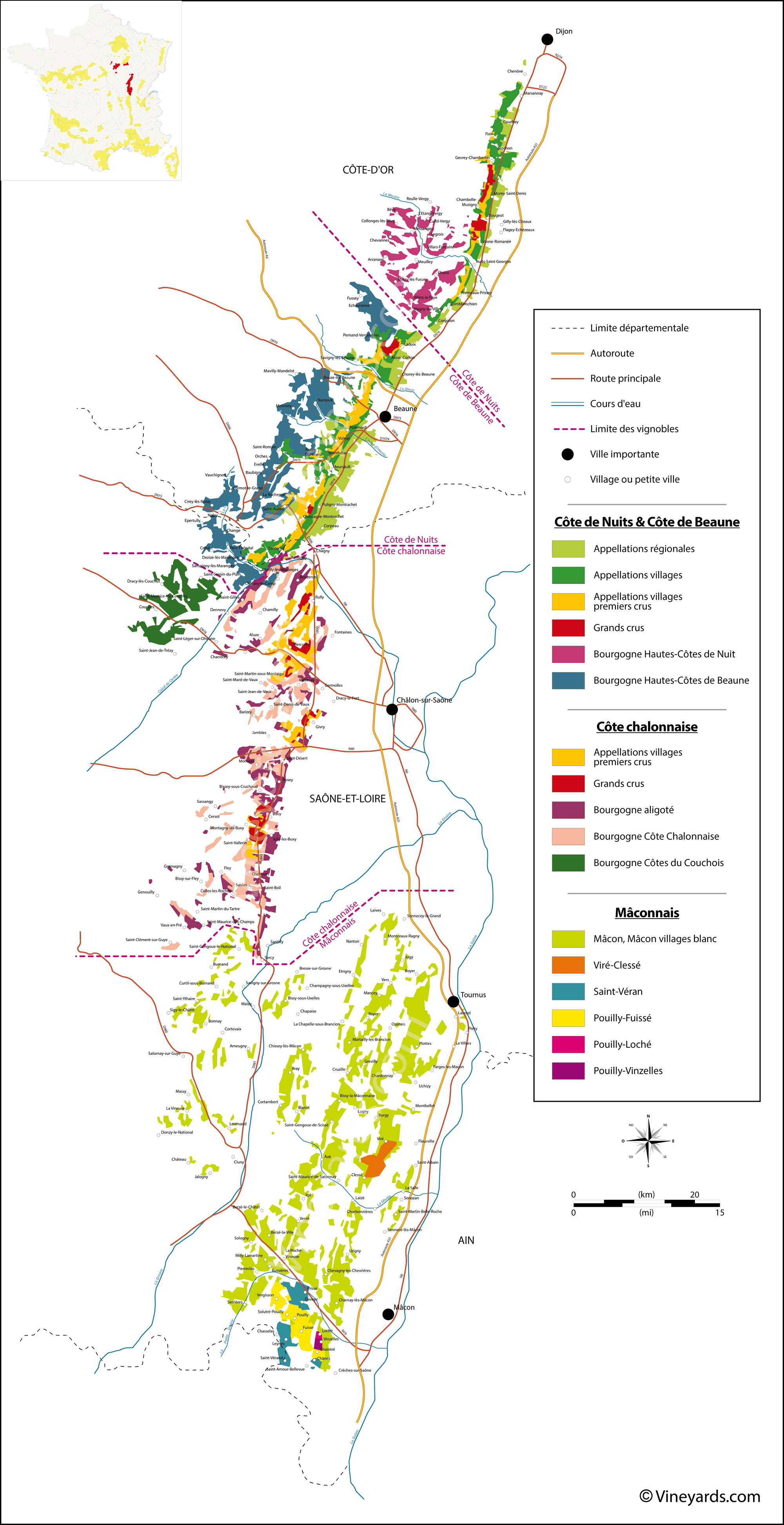
Although the Aligoté grape represents less than 6 percent of Bourgogne's total vineyard planting, it has a long history in the region. It has been grown in Bourgogne since the 17th century and furthermore, the Bourgogne Aligoté appellation was created 84 years ago this July (1937).  The appellation is a regional AOC, which means that the wines can be produced throughout the Bourgogne region. However, it most prolific within the Côte Chalonnaise -- in the heart of Bourgogne -- and in particular in Bouzeron, in the northern Côte Chalonnaise. 

DNA profiling shows that Aligoté is a member of the wider Pinot family, the same as with Chardonnay. It is an early-ripening variety, is more frost-resistant than its more renowned cousins, and thus planted in cooler sites. Bourgogne Aligoté wines are generally made in stainless steel and are crisp and fresh in style, with relatively high acidity, even after undergoing complete malolactic fermentation. 

During a recent For the Love of Bourgogne Aligoté Twitter tasting hosted by Christy Canterbury, we received and reviewed four Bourgogne Aligoté wines that revealed the floral, citrus, mineral, and refreshing characters of these wines. These wines also offer great value and carry an unexpected weightiness and depth. 

Bourgogne Aligoté Buissonnier Vignerons de Buxy ($19)
Their parcels of Bourgogne Aligoté are located mainly between Buxy and Saint-Gengoux-le-National (Bouzeron) with the grapes planted in calcareous soil covered with scree and rock. The wine is made entirely in stainless steel vats allowing the grape's characters to shine. This wine has a traditional Bourgogne Aligoté profile: white stone fruit, some citrus, real butter, minerality and excellent acids. 

Bourgogne Aligoté Olivier Leflaive 2018 ($27)
The grapes for this wine were also grown in calcareous clay within Puligny and Corpeau in the Côte-d'Or, and not in the Côte Chalonnaise, and using biodynamic methods. The wine was aged primarily in stainless steel with 15% in oak. This helps develop a delicious buttery texture aligning with minerality, soft tropical fruit, and refreshing acids.

Bourgogne Aligoté Marcel Giraudon 2019 ($22)
This wine is another example of the broader Bourgogne Aligoté AOC as the estate is located in Chitry-Le-Fort - near the town of Chablis and part of the Auxerre district. The Giraudon family has been farming and making wine in Chitry for centuries, and the current proprietor, Marcel Giraudon, follows very traditional methods in his work. Their vineyards are on hillsides of Kimmeridgian chalky marl as one finds in Grand Cru Chablis.  This wine was fermented and aged entirely in stainless steel and starts with a light grassy hay and citrus aroma. This then leads to a full mouthfeel, lemons and peaches, creamy texture, and refreshing acidity. 

Bourgogne Aligoté Domaine Chevrot 2019 ($22)
This estate is located in the village of Cheilly-lès-Maranges in the Côte du Nuit, just north of Côte Chalonnaise. Some of the vines were planted 75 years ago, with an average age of 30 years, in limestone soils. The Domaine itself was established in 1830 with the current family generation opting for organic farming in 2008. This is another all stainless steel wine - although with approximately 13 months aging in the vats. It is a fantastic wine with a tropical nose and a creamy, saline, wet rock interior. 

Wednesday, June 30, 2021

Grape Spotlight: Orvieto Classico Trebbiano Toscano

Umbria is located at the very heart of the Italian Peninsula and is the only Italian region without a coastline or international border.  In the wine realm, it consists of about 15 sub-classifications with the Orvieto DOC the most prolific of these. It accounts for 80% of Umbria's vineyard plantings and most of the Umbrian wines available in the United States.  This DOC also includes the Orvieto Classico area located around the town of Orvieto itself and extends slightly eastwards to take in the land around Lake Corbara. This area reflects the original vineyard zone traditional known as Orvieto and before the DOC classifications extended these borders.

According to wine-searcher.com, "the vineyards which produce Orvieto wine are planted on both sides of the Paglia, the river which flows through Orvieto town en route to its confluence with the Tiber. The tufaceous soils and bedrock which are so characteristic of the area not only contribute to the quality of the local terroir, but are also well suited to the excavation of cellars for long-term storage". This calcareous tufa [or tufo is] ‘a porous or vesicular carbonate of lime, generally deposited near the sources and along the courses of calcareous springs’ -- Tufo (tufa) vs. calcareous, expressions of limestone in Italy.

The Orvieto DOC and Orvieto Classico are reserved exclusively for white wine and may contain between 40to 60% Trebbiano Toscano, 15 to 25% Verdello, and up to 20% maximum of Grechetto, with Canaiolo bianco (Drupeggio) and/or Malvasia Toscana accounting for the remaining percentages.  

Trebbiano Toscano has several local synonyms with the most common being Procanico, and is also synonymous with Ugni Blanc. Again via wine-searcher.com, "it is believed that Trebbiano Toscano was introduced to France during the 14th Century, when the papal court moved from Rome to Avignon, in the southern Rhône Valley. In the 15th and 16th Centuries, the variety was used in various parts of southeastern France, under the name Ugni Blanc".  The grape is disease resistant and somewhat protected from Spring frosts by being late budding but needs abundant sunshine in order to fully ripen. 

Cantine Bellini is a family winery featuring a fifth generation of winemaker and a pedigry of over a century farming the Chianti countryside. Although they specialize in Ruffino, they have expanded into the Orvieto D.O.C. under their SELENE brand with the Bellini Orvieto Classico 2020 ($10.99) - purchased at Total Wine. The wine is a blend of 50% Trebbiano, 20% each Grechetto & Verdello, and 10% Malvasia toscana. After fermentation, it spends three months in stainless steel tanks and doesn't match the standard description of Orvieto wines as a dry, peach-scented wine. Instead, this wine's aroma is dominated by floral notes, with strong minerality and a pleasant light lime character. Moderate acidity, but very crisp and light. 

Tuesday, June 29, 2021

The Teremana Small Batch Tequila

I was searching for a Tequila for our George's Margarita Mix and purchased a bottle of the Teremana Tequila Reposado ($29.99) primarily because it was on sale and from the label, appeared to be from a small craft distiller. The Blue Weber agave was harvested from the Jalisco Highland mountains, then slow-roasted for three days in small traditional brick ovens, distilled in handmade copper pot stills, and finished in bourbon barrels. The brand name refers to "Spirit of the Earth" as the  'Tere' is derived from the Latin 'terra' and 'Mana' the Polynesian word for spirit. Then a quick internet search this to be a celebrity brand of Dwayne “The Rock” Johnson.  Impressions?

Why?  Agave - black pepper aroma on the nose. Some vanilla and more pepper in the body but disjointed with an overwhelming burnt rubber finish. Lacks depth and sweetness and character.  Prefer others.