Showing posts with label Italy. Show all posts

Thursday, January 8, 2026

The Essence of the Olive: Sicily's Val di Mazara DOP

The protected designation of origin "Val di Mazara" is reserved for extra virgin olive oil that meets specific requirements and conditions. The olives are produced, processed and packaged throughout the province of Palermo and in some towns of the province of Agrigento. Established in 2002, our Consortium for the Protection of Extra Virgin Olive Oil DOP “Val di Mazara" guarantees the quality of the product in all stages of cultivation, production and distribution.  -- Dop Val di Mazara

Sicily’s olive oil culture is as old as its sun‑baked hills, and few regions express that heritage as vividly as the Val di Mazara DOP. This protected designation of origin represents one of the island’s most historic olive‑growing districts, a landscape shaped by centuries of cultivation and a climate that seems designed for olive trees. The DOP covers the entire province of Palermo and several municipalities in Agrigento, forming a broad swath of western Sicily where coastal breezes, limestone soils, and rolling hills create ideal conditions for producing exceptional extra virgin olive oil.

At the core of Val di Mazara’s identity are its native olive varieties. The DOP requires that at least 90% of the olives come from Biancolilla, Nocellara del Belice, and Cerasuola, either individually or in combination. These cultivars are the soul of Sicilian olive oil: Biancolilla brings delicate floral notes, Nocellara del Belice contributes structure and tomato‑leaf aromatics, and Cerasuola adds grassy intensity and a characteristic bitterness. The remaining 10% may include Ogliarola Messinese, Giarraffa, or Santagatese, varieties that complement the primary trio without overshadowing their distinctive profiles. The result is an oil typically golden yellow with deep green hues, medium fruitiness, and aromas that evoke fresh herbs, green tomato, and the Mediterranean countryside.

Although olive cultivation in this region stretches back millennia, the modern DOP was formally established in 2002, when the Consortium for the Protection of Extra Virgin Olive Oil DOP Val di Mazara was created to safeguard the authenticity and quality of the oil. The consortium’s mission is rooted in strict traceability, ensuring that every bottle reflects the land, traditions, and craftsmanship that define this historic territory. This commitment to transparency and excellence has helped elevate Val di Mazara to international recognition, reinforcing Sicily’s reputation as a powerhouse of premium olive oil.

The regulations governing Val di Mazara DOP are rigorous, designed to preserve both quality and terroir. Harvesting must take place between the first signs of ripening and December 30 each year, using either manual or mechanical methods. Once picked, the olives must be stored in rigid, ventilated crates in cool, controlled conditions to prevent fermentation or spoilage. Milling must occur within forty‑eight hours of harvest, and all extraction processes must take place within the DOP territory to maintain full traceability and protect the oil’s sensory characteristics. These rules ensure that the final product captures the freshness, aroma, and complexity that define the region’s oils.

This Premium Sicilian Extra Virgin DOP "Val di Mazara" olive oil is bottled exclusively for Aldi and shows off a pale green color, an earthy-onion palate, and a black pepper finish. 

Monday, January 5, 2026

Amaro Nonino Quintessentia® Herbal Liqueur

I've gravitated towards Amaro as I have aged and I wanted to start 2026 with a sip of one of my favorites: the Amaro Nonino Quintessentia®.  Expect just a touch of sweetness and a profile dominated by Seville Oranges on the nose and the citrus continuing to the finish alongside fennel, cinnamon, Werther’s caramel, and mountain herbs.  Love the unique roundness. 

The Grappa Nonino Distillery was founded in 1897 by Orazio Nonino in the Friuli region of Italy and has run through six generations as Benito and Giannola passed control over to their three daughters Cristina, Antonella, and Elisabetta (the 5th generation).  And the 6th generation has already made an impact with Cristina's daughter Francesca taking a major role in the family operations.

In 1933, Antonio Nonino (the third generation) started producing Nonino liqueurs like the Amaro Carnia, an infusion of herbs from the mountains of Friuli, using grappa as the base. After Antonio died n 1940, his wife Silvia became the first woman to manage a distillery in Italy and her knowledge of botanicals lead her to create the Aperitivo Bianco Nonino. Silvia became the first in a long series of Nonino woman distillers. During her tenure, Silvia also revised the recipe of the Amaro Carnia, and by adding selected botanicals, created a more complex amaro:  Amaro del Friuli.

In 1973, Benito (4th generation) and Giannola Nonino started a worldwide distilling trend by introducing the very first single varietal grappa -- Nonino Monovitigno, made from Picolit - an indigenous grape from the Nonino distillery's home region of Friuli Venezia Giulia. The concept was revolutionary because suppliers traditionally combined the pomace (the post-pressed pulpy matter of grape skins, flesh, seeds, and stems) for all grape varieties into the same bins. The combined pomace was usually then fermented and distilled into grappa. And most winemakers were reluctant to change this process until Giannola recruited the wives to separate the varieties in exchange for higher payments.

In 1992, the distillery replaced grappa in the recipe of the family amaro with ÙE® Grape distillate aged for a minimum of 12 months in barriques and small casks. This grape distillate was created by Giannola and Benito in 1984 using a discontinuous distillation* process in copper steam stills. This amaro was also rebranded as Amaro Nonino Quintessentia®. The ancient family recipe still uses herbs from the mountains of Friuli and the grape distillate is usually a blend of Ribolla Gialla, Moscato, and Malvasia grape pomace. The Quintessentia® is aged five years and barrel before it is packaged in an old pharmacy bottle at 70 proof. 


* Discontinuous distillation means that at the end of each "batch", or distillation cycle, the distilled grape pomace is unloaded from the cauldrons and replaced with other fresh grape pomace ready to be distilled. Therefore, between each cycle of distillation, it is necessary to stop the process to allow loading and unloading. The "discontinuous" method represents the historic and artisan system to produce Grappa and is not to be confused with the industrial "continuous" method.

Wednesday, December 31, 2025

Vin Santo del Chianti with Fattoria Poggio Alloro

Vin Santo del Chianti is a traditional Italian dessert wine produced in the Chianti region of Tuscany, recognized with a Denominazione di Origine Controllata (DOC) status in 1997.  It is made using the "passito" method, where white grapes—primarily Trebbiano and Malvasia—are hand-harvested and dried for several months to concentrate their sugars before being pressed and fermented.  The wine is aged for a minimum of three years in small wooden barrels, traditionally made of chestnut or oak, known as "caratelli", which range from 50 to 300 liters in size.

We first experienced a Vin Santo del Chianti during a visit to Fattoria Poggio Alloro, a farm winery overlooking San Gimignano. The farm specializes in Vernaccia di San Gimignano, Grappa, Chianti DOCG, and Vin Santo del Chianti.  The name Poggio Alloro means Bay Leaf Hill, and it refers to the bay laurel bushes that grow everywhere on their property. This is a destination providing spectacular views of San Gimignano and the surrounding rolling hills as well as organically growing a multitude of agricultural commodities from grapes; olives; fruits; vegetables; and grains: barley, oats, corn, sunflowers, durum, wheat, and farro to produce the delicious durum, semolina and farro pasta.

Their Vin Santo del Chianti is made in the traditional method described above using Trebbiano Toscano, Malvasia, and Colombana Nera grapes. DNA analysis confirms that Colombana Nera is a natural cross between Sciaccarello (Mammolo) and an unknown parent variety.  Despite its thick skin, it produces a light-colored wine - so used prevalently in blends. After fermentation, the wine is aged minimum five years in caratelli casks. The color is golden amber, with a toasted fruit aroma,  with a slightly sweet fig and apricot flavor. Serve with biscotti. 

Monday, November 17, 2025

The Essence of the Olive: How Olive Oil Is Made

Behind every golden drop of olive oil lies a process that blends ancient tradition with modern precision. Much like winemaking or distillation, olive oil production is a balance of art and science — where timing, technique, and terroir determine the outcome. From the grove to the press, each step in the journey shapes the oil’s flavor, aroma, and integrity.

For those in the beverage world, understanding how olive oil is made offers valuable insight into its complexity — and the same appreciation we give to the craftsmanship behind a fine wine or spirit.

Featured Producer
Terre Francescane is located in Umbria and the Gradassi family has been farming olives for 400 years.  In 1639, when – according to an ancient inscription found on a stone in the old olive mill – the Gradassi family began farming olives. Four centuries later they still proudly harvest olives from the same fertile slopes their ancestors did. I picked up this bottle of their L'Italiano Black Ceramic at the Rome airport duty free store and wish I had purchased more. It's slightly sweet with a pleasant bitterness at the finish - easy for a teaspoon a day diet. 


The Harvest: Timing Is Everything

The olive harvest typically takes place between October and December in the Northern Hemisphere (and April to June in the Southern Hemisphere). The timing of the pick is crucial:

  • Early-harvest olives are greener, yielding robust, peppery oils with higher polyphenol content (the antioxidants that give structure and bite).

  • Late-harvest olives are riper, producing smoother, fruitier oils with a gentler profile and golden hue.

Producers choose their harvest moment based on desired flavor, cultivar, and market style — much like vintners deciding when to pick grapes. In many small groves, olives are still hand-harvested, preserving fruit integrity and reducing bruising before pressing.


From Fruit to Paste: The Milling Process

Once harvested, speed is essential Olives begin to oxidize and ferment quickly after picking, so quality-focused producers rush them to the mill — often within hours.

At the mill (frantoio in Italy or almazara in Spain), olives are washed and ground into a thick paste using hammer or blade mills. This paste contains both oil and water, and the goal is to separate the two while preserving the delicate aromas and flavors.


Malaxation: The Quiet Transformation

After milling, the olive paste is gently mixed in a process called malaxation. This slow churning (usually 20–40 minutes) allows small oil droplets to coalesce into larger ones — a critical step for flavor development. Temperature control here is key: to qualify as cold-extracted or cold-pressed, the process must stay below 27°C (80°F) to prevent flavor loss and preserve antioxidants.

Professionals often compare this stage to maceration in winemaking or blending in distilling — it’s where texture, balance, and character begin to emerge.


Extraction: Separating Liquid Gold

Modern producers use cen, the purest and highest-quality grade, obtained mechanically without chemical refinement or excessive heat.

The remaining byproduct, called pomace, can be repurposed for compost, fuel, or lower-grade oil production, aligning with sustainable agricultural practices.


Storage & Bottling: Protecting Freshness

Fresh olive oil is like fresh juice — vibrant, aromatic, and best enjoyed soon after production. It’s typically stored in stainless steel tanks under nitrogen or inert gas to minimize oxygen exposure and light damage. When bottled, dark glass or tins help preserve quality, and clear labeling ensures transparency on harvest date, origin, and cultivar.

Much like wine, olive oil evolves over time — but rather than aging, it gradually loses intensity. The best producers encourage consumption within 12–18 months of harvest for peak flavor.


Craft in Every Step

From the meticulous timing of the harvest to the precision of cold extraction, making olive oil demands the same attention to detail that defines great winemaking and distillation. For beverage professionals, understanding this process transforms olive oil from a simple pantry item into a crafted product — one that speaks of place, producer, and philosophy.

For travelers, visiting a working mill during harvest reveals a world alive with sensory energy — the hum of machinery, the scent of fresh-cut grass, and the taste of vivid green oil straight from the press. It’s an experience that captures both the science of extraction and the soul of the Mediterranean.

Monday, November 3, 2025

The Essence of the Olive: Introducing Our Olive Oil Series

Few ingredients in the world of food carry as much heritage, versatility, and symbolism as olive oil. For thousands of years, this golden liquid has nourished civilizations, inspired poets, and defined entire culinary traditions. From the rocky hills of Greece to the sun-drenched groves of Spain, from the ancient presses of Italy to the emerging producers of California and beyond, olive oil remains a cornerstone of culture, craft, and cuisine.

In this new series, we’ll explore olive oil from root to bottle — uncovering the stories, science, and people behind it. We’ll delve into how geography and climate shape its character, how different olive varieties yield distinctive aromas and flavors, and how modern producers balance innovation with ancient methods. You’ll learn what makes an extra virgin truly “extra,” how to taste olive oil like a professional, and how to pair it with food and wine.

Join us on this journey through groves, mills, and markets as we uncover the world of olive oil — one harvest, one taste, one or two stories at a time.

So let's jump in. What is Extra Virgin Olive Oil (EVOO)? 

Extra virgin olive oil is the highest quality grade of olive oil, made exclusively from the first cold-pressing of olives without heat or chemicals, resulting in a superior flavor, aroma, and higher nutritional value. The cold-pressing retains more antioxidants, polyphenols, and vitamin E, contributing to its anti-inflammatory properties and health benefits. Finally, the olive oil must have a free acidity level of 0.8% or less and is assessed by a tasting panel to ensure it has no defects and a distinct fruity character. 

In contrast, virgin olive oil has a higher acidity level (between 0.8% and 2.0%) and may have minor defects detectable by taste, making it less flavorful and less nutritious than EVOO.  Virgin olive oil is often produced by blending refined olive oil with a small amount of virgin or extra virgin oil to improve its taste and color, which reduces its health benefits compared to EVOO. Since virgin olive oil is typically lighter in color, milder in flavor, and less expensive than extra virgin olive oil it is more suitable for cooking at higher temperatures where its flavor is less critical.

The production of EVOO requires olives to be harvested at optimal ripeness and processed quickly (often within 90 minutes) to preserve quality, while virgin olive oil can be made from olives with higher acidity or from later harvests.  The production process will be covered more in depth next week with From Tree to Taste: How Olive Oil Is Made.

Fattoria Poggio Alloro is an agritourism destination providing spectacular views of San Gimignano and the surrounding rolling hills. The farm is located 40km southwest from Florence and only 5km from San Gimignano.  The name Poggio Alloro means Bay Leaf Hill, and it refers to the bay laurel bushes that grow everywhere on their property. There's a multitude of agricultural commodities grown on the one hundred hectares from grapes; fruits; vegetables; and grains: barley, oats, corn, sunflowers, durum, wheat, farro; and olives.

More specifically 1,500 olive trees that are used in the production of extra-virgin olive oil. The Leccino, Moraiolo, and Frantoio varieties are completely hand picked in November, and then cold pressed to guarantee superior quality.   Their EVOO has a golden yellow color with light green tones and has a stone fruit, slightly spicy flavor with an intense finish.

Thursday, July 31, 2025

Franciacorta: Italy’s Finest Sparkling Secret

While traveling through Italy last month, Prosecco was everywhere - by the glass or as a spritz - and usually the sparkling wine of choice for our family. Yet I had to make sure we had a decent amount of Franciacorta available to sip and this was normally through grocery store purchases. I would easily label Franciacorta the best of Italian sparkling wine and readily compare favorably to any other international effervescent wine. This Duca Diseo Brut Franciacorta is made in Lombardy by Cantina Chiara Ziliani. It is composed of 75% Chardonnay and 25% Pinot Noir grapes harvested in the vineyards of Provaglio d’Iseo, village in the heart of the Franciacorta DOCG region. It ages 18 months on its own yeasts providing a pleasant bready backbone layered with white peaches and pears. Continual bubbles...

What Is Franciacorta?

Franciacorta is a high-quality, traditional-method sparkling wine made in the province of Brescia, near Lake Iseo. Unlike Italy’s more widely known sparkling wine, Prosecco (which is made using the tank method), Franciacorta is produced using the metodo classico — the same labor-intensive process used in Champagne. This involves a secondary fermentation in the bottle, creating the elegant bubbles and rich, yeasty notes that define the world’s best sparkling wines.

A Protected Name

Franciacorta holds DOCG status (Denominazione di Origine Controllata e Garantita), Italy’s highest wine classification. This guarantees strict regulations on grape growing, winemaking, and aging, all with the aim of ensuring premium quality. Only sparkling wines produced within the defined Franciacorta region and made according to these rules can bear the name.

The Grapes Behind the Bubbles

The primary grapes used in Franciacorta are:

  • Chardonnay – lends elegance, freshness, and structure.
  • Pinot Nero (Pinot Noir) – adds body and depth.
  • Pinot Bianco (Pinot Blanc) – used in smaller amounts for softness and floral notes.
  • Some producers are experimenting with Erbamat, an ancient local variety that brings acidity and character.

Styles of Franciacorta

Franciacorta offers several styles to explore:

  • Brut – the most common style, crisp and dry with fine bubbles and citrusy elegance.
  • Satèn – unique to Franciacorta, made only from white grapes (mostly Chardonnay), with lower pressure and a creamy, silky texture.
  • Rosé – includes at least 35% Pinot Nero, bringing structure and red fruit notes.
  • Millesimato (Vintage) – made from grapes of a single year, aged at least 30 months on the lees.
  • Riserva – aged over 60 months, delivering depth, complexity, and toasty richness.

Aging Matters

Franciacorta must be aged a minimum of 18 months on the lees for non-vintage wines, which is longer than the minimum required for Champagne. This extended aging imparts complexity, with aromas of brioche, toasted nuts, and citrus peel.

Food Pairing & Serving

Franciacorta’s versatility makes it a brilliant companion to a wide range of dishes:

  • Brut pairs beautifully with shellfish, sushi, and light pasta dishes.
  • Satèn is excellent with creamy risottos or mild cheeses.
  • Rosé complements roasted poultry or charcuterie.

Serve chilled (around 6–8°C / 43–46°F) in a tulip-shaped flute or white wine glass to appreciate the aroma and mousse.

Why Franciacorta Deserves a Spot in Your Cellar

Franciacorta remains underappreciated outside of Italy, which means you can often find excellent bottles at a fraction of the price of Champagne. It offers an unbeatable combination of craftsmanship, terroir, and flavor — a true gem for sparkling wine aficionados and curious newcomers alike.

Next time you’re celebrating (or just enjoying a quiet evening), reach beyond the familiar. Let Franciacorta surprise and delight you — Italy’s finest bubbles, ready to sparkle.

Monday, July 28, 2025

Grape Spotlight: Vernaccia di San Gimignano with Fattoria Poggio Alloro

Bonagiunta da Lucca; e quella faccia | Bonagiunta from Lucca; and that face
di là da lui più che l'altre trapunta | beyond him more embossed than the others
ebbe la Santa Chiesa in le sue braccia: | had the Holy Church in its arms:
dal Torso fu, e purga per digiuno | from Torso, and by fasting purges
l'anguille di Bolsena e la vernaccia". | the eels of Bolsena and the Vernaccia."
--Dante Alighieri's Purgatorio Canto XXIV

Vernaccia di San Gimignano, perhaps Tuscany's greatest white wine. It has long been esteemed by Italians from Dante's time through the modern era when in 1966 it became the first Italian wine to be awarded DOC status and 1993 upgraded to a DOCG status (the only Tuscany white wine having this designation). The Italian hill town of San Gimignano is surrounded by land that used to be the ancient Ligurian sea. Thus fossils and shells permeate the pliocene soil and clay providing mineral composition to the Vernaccia wines. These wines are also known for a string floral bouquet and abundant acidity. 

Fattoria Poggio Alloro specializes in not only Vernaccia di San Gimignano, but also a Grappa made from the must of the processed grapes.  The name Poggio Alloro means Bay Leaf Hill, and it refers to the bay laurel bushes that grow everywhere on their property. This is a destination providing spectacular views of San Gimignano and the surrounding rolling hills as well as organically growing a multitude of agricultural commodities from grapes; olives; fruits; vegetables; and grains: barley, oats, corn, sunflowers, durum, wheat, and farro to produce the delicious durum, semolina and farro pasta. With these, they offer cooking classes as well as a round of wine tasting.

These wines include, of course, Vernaccia di San Gimignano; but also Sangiovese to produce Chianti wine; and Canaiolo, Volorino, Malvasia and Trebbiano to produce the traditional Vinsanto sweet wine. The Vernaccia di San Gimignano DOCG is 100% Vernaccia and on the nose expect honeysuckle and perhaps tropical fruit. On the palate notice the minerality - the saline jumps forth - then alternating with pear, citrus and slight bitter almonds. 

The Grappa di Vinacce di Vernaccia is a distillate obtained from the pomace (the solid part of the grape composed of skins and seeds) of Vernaccia grapes. This grappa is noticeably fragrant with both citrus and stone fruit mixed with a soft petrol. 


Wednesday, July 16, 2025

Puglia's Amaro Salento: Bitter Liqueurs and Limoncello

Throughout Puglia we had seen bottles of Amaro Salento Classico in various grocery stores and restaurants and by chance we were passing near their Veglie distillery on our drive to Porto Cesareo. Hoping to tour the facility we pulled in to find founder Realino Mazzotta out front but unfortunately learned we could enter the distillery. However, he called for his son Francesco to bring us a samples of several products and it was immediately evident that our detour was a prudent decision. 

The inspiration for Amaro Salento s.r.l. started in the 1940s when Realino's father Raffaele opened Bar Venezia in the center of the small town of Veglie.  Realino remembers him serving coffee corretto - a "correct" coffee with extra sugar and augmented with a bitter liqueur. During this time in Salento, home-made liqueurs were a common activity with very few commercialized spirits. Only in a few bars - like Bar Venezia - was it possible to sample liqueurs crafted from the maceration of native herbs and roots. 

The recipe used by Raffaele was never officially written down and was suggested by a monk from the nearby convent of the Friars Minor of San Giuseppe da Copertino.  This liqueur was apparently much much beloved by the American soldiers stationed in the town after the Liberation. And from our experience beloved by American tourists 75 years later. Sadly Raffaele died when Realino was young and the recipe was lost.

As life lead Realino to become an esteemed international conductor, he "maintained spiritual contact with his father by traveling through the fields and along the Ionian coast to collect rare herbs. Over the years, research also spilled over into libraries, through a meticulous selection of manuscripts that referenced some 'Herbe amarissime' (1767, Life of Saint Joseph of Cupertino – Domenico Bernino) that the saint used during penitential fasts."  

In 2014 Amaro Salento s.r.l. was born with the release of Amaro Salento Classico with the Amarissimo released a year later.  Francesco relayed that the Classico was more in line with a sweeter amaro whereas the Amarissimo was aligned to a fernet. I chose the Classico and specifically it is comprised of 45 herbs, vegetables, roots, peels, seeds, flowers, and rhizomes, including cinchona, gentian, bitter and sweet orange, elderberry, wormwood, chamomile, pigeon pea, and quassia. Some of these botanicals I've never heard of. But this is a fantastic representation of an amaro - much nicer than most of the selections we tasted throughout Italy. 

We also purchased two other bottles - their Limoncello Salento and Bitter Rurale. The Limoncello is practically finished after being served nightly since our return as a palate cleansing digestif.  It explodes with lemon flavor. Yet the biggest surprise has been the Bitter Rurale; throw out the Campari. It is a fantastic maceration of bitter orange, sweet orange, Roman wormwood, pomegranate, cascarilla, cinchona, gentian, and quassia. This bitter liqueur will be deeply missed after our last sip or Negroni.

Tuesday, July 1, 2025

Getting Acquainted with Fernet-Branca

Who enjoys Fernet-Branca? We were able to tour their Milano facility and even though Italian was spoken, learned plenty.

Fernet-Branca's history began in 1845 when Bernardino Branca,  a self-taught herbalist, formulated this bitter liqueur. He and his sons marketed it as a cure for many common ailments and eventually started exporting throughout the world. We learned that they started exporting to Argentina in 1905 and this country is easily its top market. They even build an Argentinean distillery in 1925.

The exact composition of botanicals and herbs are secret but we saw a wheel that includes most of the ingredients. These are sourced from all over the globe and include Chinese rhubarb, Aloe ferox (bitter aloe), cinchona, chocolate, quinine, angelica, gentian, galanga, chamomile, linden (Tiliae flos), iris, saffron, zedoary, myrrh, and cinchona.  Fernet-Branca has a higher alcohol content, at 39%, and lower sugar content than most other amaro and is aged in large barrique barrels. This helps explain its unique profile.  

Apparently, Argentineans and  Italians prefer consuming Fernet-Branca over ice with Coke. I would rather someone suggest an alternative cocktail.


Wednesday, May 28, 2025

Gambero Rosso's Vini D’Italia 2025 Roadshow

On April 30th, Gambero Rosso, Italy's premier food and wine media group, returned to Washington DC celebrating the Vini D’Italia 2025 guidebook! The event featured a walk around tasting of hundreds of Italy’s top Italian wines representing a fraction of the 2,600 wineries and more than 25,000 wines reviewed by the guidebook's experts. As part of the event, Gambero Rosso also hosted a Wines of Abruzzo masterclass in partnership with wines of Consorzio Tutela Vini D'Abruzzo and led by Marco Sabellico, the Editor-In-Chief of the Vini D’Italia 2025 guide.

The masterclass focused on Pecorino within several different regulatory zones: IGT Pecorino, Abruzzo DOC Pecorino, Colline Pescaresi, and the Tullum DOCG. The wines shared a persistent floral character, and fabulous acidity, while alternating between citrus and tropical fruits. My favorites of the nine featured were the Cascina Del Colle Terre Di Chieti Abruzzo DOC Pecorino Superiore Aimè 2023 and the Cantina Tollo Feudo Antico Pecorino Tullum DOCG Biologico Fermentazoine Spontanea 2023.  The latter is comprised of 100% organically grown Pecorino that was fermented naturally in cement tanks and then rested on its lees for six months.  This is a wonderful wine, golden delicious apples with a true sense of herbaciousness lifted by persistent acidity.  The Aimè is farmed organically and is profoundly more fruit forward with strong ripe peaches and tropical notes. That profile is balanced by lively minerality. Two fantastic wines. 

Moving into the Embassy's atrium and the walkaround tasting I focused on two regions: Puglia and Lazio. I started with Amastuola, a wine resort and farm located just north of Taranto where they organically farm ten grape varieties. By design, the 100 hectare estate "brings together the two concepts of functionality and aesthetics. The rows of vines were planted on the basis of the design conceived by the great landscape designer Fernando Caruncho. The vine spaliers draw harmonious parallel waves that follow each other for about 3 km. " Their IGP Puglia Bialento di Amastuola 2024 is a blend of Malvasia and Fiano and provides fresh pears, white grapefruit, and herbaceous notes. The IGP Puglia Primitivo di Amastuola 2021 is full bodied dark fruit with layers of light spices and juicy tannins.  Then there's  Negroamaro - a favorite Puglia grape - and their IGP Puglia Negroamaro di Amastuola 2021 shows luscious soft fruit  and a juicy spiced finish. 

Masca del Tacco is located in the cultural heart of central-northern Salento with 200 hectares of vines within a triangle of Brindisi, Taranto and Lecce. They farm Negroamaro, Primitivo, Cabernet Sauvignon, Fiano, and the Brindisi based Masseria Paticchi vineyard contains the regal Susumaniello grape. They poured a very delicious and surprisingly mineral laden Susumaniello Rosato 2024 and well as the full bodied Susumaniello 2023 with its layers of fresh and inviting fruit.  

From Lazio and just southeast of Rome, Colle di Maggio introduced us to the indigenous Bombino Blanco grape which they grow in volcanic soils along with Fiano, Chardonnay, Merlot, Cabernet Sauvignon, Syrah and Petit Verdot. These vines are over 50 years old, are planted 150-200 meters above sea level, and benefit from their proximity to the Tyrrhenian Sea. Bombino Blanca is a late ripening variety and disease tolerant grape primarily used in blends and the Sirio Lazio Bianco IGP is a delicious combination of Chardonnay and Bombino. They release another excellent Chardonnay blend in the Lunapigra Lazio Bianco IGP -- this time paired with Fiano

Located a little closer to the sea, Casale del Giglio was a most pleasant surprise. The winery started as a small family venture in 1967 then expanded in 1985 with the planting of an experimental vineyard of 60 different vines. This translates today to a large portfolio of a dozen flagship grape varieties, with two very intriguing options: Viognier and Bellone. The Lazio IGP Blanco Viognier is a very rare sighting of this Rhone grape in the Italian landscape and provides full fruit - with layers of peaches and apricots. The Lazio IGP Blanco Bellone shows that this ancient (once sited by Pliny the Elder) and drought resistant grape thrives in the sandy soils close to the sea. The wine shows tropical fruit and fresh acidity that is extremely quaffable. This is one to seek. 


Thursday, April 4, 2024

Grape Spotlight: Sicilia DOC Grillo

"Beginning with the Greeks, who arrived on the eastern part of Sicily in the 8th century BCE, the idea of methodical grapegrowing practices for the purpose of quality winemaking firmly took root on the island. As the centuries passed, Phoenicians and Romans traded Sicilian wines based on their power and their distinctive qualities. The best vines were propagated, viticulture developed, and thus Sicilian wines were promoted on and off the island. Today, we see the fruits of these labors. Though many things have changed, most of Sicily’s indigenous grape varieties and time-honored winegrowing traditions continue to play an important role. Thanks to meticulous vineyard tending and gentle grape handling in Sicily’s wineries, Sicilia DOC wines feature the medley of flavors that Sicily has been known for since ancient times and which represent some of the best wines of Italy." -- Wines of Sicily DOC

Sicily is Italy's southernmost wine region and is the largest island in the Mediterranean Sea It is blessed with consistently bright sunshine and reliably moderate rainfall, Sicily's classic Mediterranean climate is ideally suited to the production of wine grapes. This is because the warm, dry climate means that mildews and rots are kept to a minimum, particularly in well-ventilated areas that benefit from coastal breezes. This low disease pressure means that chemical sprays are hardly needed, and much Sicilian wine is produced from organic grapes.

There are a number of denominations spread throughout the island with the broadest being Terre Siciliane IGT and Sicilia DOC. As of 2017, all varietal wines made from either Grillo or Nero d'Avola must be classified as Sicilia DOC.  According to wine-searcher.com, "Sicily's soils, and the mountains from which they came, are of particular interest when it comes to studying the island's viticulture. Mount Etna, the towering stratovolcano, dominates the island's eastern skyline, and is responsible for the mineral-rich, dark soils that characterize the Etna DOC vineyards. Vines are now being planted higher up on the volcanic slopes, to capitalize on the cooler air and richer soils there. Fifty miles (80km) south, the Iblei Mountains stake their place in eastern Sicilian wine. On their lower slopes and the coastal plains below them, the DOCs of Siracusa, Noto, Eloro and Vittoria sweep from east to west, forming a crescent that mirrors the arcing coastline. In western Sicily, the volcanic hills are less individually dramatic but just as influential to the soil type".

Apparently the origins of Grillo are still being debated, but what is clear, is that this grape is well suited to the hot, dry Sicilian climate. Traditionally Grillo has been used in the popular Marsala fortified wines because of its high levels of sugar and the ease with which it oxidizes. More recently, winemakers have tuned their processes to use Grillo to make fresh, light white wine with nutty, fruit-driven flavors.  Some winemakers have started using lees contact to create deeper, fuller-bodied expressions of the grape, with aromas and flavors that resemble ripe citrus and spice. 

During last month's Slow Wine tour in Washington DC, I attended the From Vine to Glass: Sicilia DOC's Native Varietals seminar sponsored by Wines of Sicily DOC.  This seminar featured a trio of very distinct Grillo wines.  

Baglio Bonsignore "OI" Sicilia DOC 2022 Grillo
The winery farms 13 hectares of grapes near Naro, in Southwestern Sicily, with four hectares planted with 10 year old Grillo vines.  The vineyards are planted at about 1,000 feet in limestone and clayish soils. We started with a very complex wine, tropical and nutty aromas that follows with loads of character. Fresh and mineral driven with some creamy depth.  

Bagliesi "Terre Di Toto" Sicilia DOC 2022 Grillo
The winery is also located near Naro and the estates are spread over twenty-five hectares in the province of Agrigento and also planted around 1,00 feet and similar calcareous-clayey soils.  This wine is a blend of  Grillo grapes from the estates and is leaner with bright green apples, slight grass, and salivating salinity. This is a patio consumer -- it won't last long.

Di Giovanna "Helios" Sicilia DOC 2022 Grillo
This winery is located in the mountainside of Monte Genuardo, a protected nature reserve and situated on the western side of Sicily,  They operate five family estates of almost 100 hectares -- composed of 65 hectares of vineyards, 14 hectares of olive groves, and 21 hectares of wheat fields and forests. These vineyards are  located in the small DOC of Contessa Entellina within the Sambuca di Sicilia DOC and most are planted on the limestone and ancient marine slopes of Monte Genuardo up to 2,700 feet above seal level.  This is an interesting wine, both refreshing and funky featuring  ripe citrus and spicy aromas and flavors. There's also significant structure with appreciable tannins and minerality on the finish. 

Friday, March 29, 2024

Slow Wines Descent into Puglia

The Puglia Wine Region is a long, thin wine region in the far south-eastern corner of the "boot" of Italy. According to wine-searcher.com, "the hot Mediterranean climate, persistent sunshine, and occasional sea breezes make for a near-perfect environment for viticulture".  For this reason, over the past 2.5 millennium olives and grapes have been cultivated in this area regardless of the Greek, Roman, Goth, Byzantine Greek, German Lombard, Muslim Saracen, Norman, Angevin, Aragonese King, Spanish, French Bourbon, and Neapolitan Republic stewardship.

In November 1995, Puglia vineyards were organized into the Puglia IGT (Indicazione Geografica Tipica), a region-wide appellation for the Puglia region: the easternmost region in Italy, a long, narrow peninsula, bordered by two seas, the Ionian and Adriatic, with the longest coastline in the Italian peninsula.  This coastline is bordered by plains rising steadily up into low-lying mountains and is characterized by scrubby, sunbaked limestone soils, cooled down on summer evenings by fresh breezes from the Mediterranean. 

Puglia IGT regulations allow for 50 grape varieties with an even split between red and white wine grapes. Northern Puglia favors Italian classics such as Sangiovese and international varieties such as Chardonnay and Syrah. In contrast, southern Puglia favors the region's traditional varieties: Primitivo, Negroamaro, Susumaniello, and Uva di Troia (Nero di Troia) for reds and Falanghina, Fiano and Muscat for whites.

These wines were on display at a recent Slow Wine tour of the United States.  This is an organization with branches in the U.S. and Italy which "support and promote small-scale .. winemakers who are using traditional techniques, working with respect for the environment and terroir, and safeguarding the incredible biodiversity of grape varieties that are part of our heritage".  During their stop in Washington D.C., I was able to sample wines from four Puglia members that demonstrated the richness and depth from this area. 

Amastuola Winery
This establishment is located on the western side of south Puglia, close to Taranto and the Ionian sea. By design, the 100 hectare estate "brings together the two concepts of functionality and aesthetics. The rows of vines were planted on the basis of the design conceived by the great landscape designer Fernando Caruncho. The vine spaliers draw harmonious parallel waves that follow each other for about 3 km. The were also defined by their author himself 'waves of time that have been crossing this place since times immemorial'.

In addition, 1,500 centuries-old olive trees have been rearranged in the 24 islands organically positioned throughout the entire surface of the vineyard as well as along the historic allays of the Farm. The olive trees used are the result of a historical-monumental recovery work. The CNR (National Research Council) of Perugia dated and filed a record of all the olive trees, some of which are 800 years old and have a diameter that exceeds 2.5 metres. The combination of olive trees and vines has created a harmonious visual contrast that brings alongside the silver green of the vines with the intense green of the olive trees".

From this estate they produce over a dozen organic wines with several available at the event.  Primitivo is their flagship grape and is expressed through their CentosassiLamarossa, and Primitivo labels.  The Lamarossa may have been my favorite as its shared concentrated ripe fruit and silky tannins with the other labels, but had a more earthy quality. They also poured a bolder more tannic and spicier Aglianico as well as a delicious Negroamaro. Please seek Puglia wine made from this grape. 

Cantina Sampietrana
This winery was formed in 1952 as a cooperative by 68 vine-growers and is located on the Adriatic coast within the Brindisi and Salice Salentino DOCs, both designations dedicated primarily to the production of Negroamaro wines. The region is also both hot and dry and enjoys 300 sunny days each year with summer afternoon temperatures regularly surpassing 104 Fahrenheit. As a result, the grapes which grow here develop high levels of sugar which leads to a high percentage of alcohol in the wine.  Besides Negroamaro, the winery vinifies Primitivo, Susumaniello, Malvasia, Aglianico, Montepulciano, Merlot, Syrah, Chardonnay, Fiano and Verdeca.

Negroamaro is a main player and "owes its name to its main characteristics: the almost black color of its wines and a bitter aftertaste. It has medium-sized bunches of conical shape, with tight density, of short size and without wings. The berries are large, very pruinose and with thick black skins with violet veins. Oval in shape, the berries are very leathery. Productivity is very high and must be limited with drastic pruning and suitable breeding systems, little expanded". It's beauty is shown in the Since 1952 Brindisi D.O.P. Reserva -- a blend of Negroamaro 80% and Montepulciano 20%.  This is simply a luscious wine. Negroamaro is also featured in the Settebraccia Salento I.G.P. Rosso, along with Susumaniello, that is fresher and very satisfying.  

Primitivo was also on display in three offerings, the Tre Filari Salento I.G.P. Rosso, Centoare Primitivo, and Stillarosea Salento I.G.P. Rosato. Like with the Amastuola Winery, these wine show concentrated ripe fruit and silky - easy tannins. 

Finally, the Verdeca Salento I.G.P. Vino Biblioteca is a refreshing saline driven wine with citrus and juicy acidity. This autochthonous and late ripening grape is now found almost exclusively in the Taranto and Bari provinces and is most known for its high acidity.

Sacco Vignaiolo Apuli
This winery is located in Torremaggiore in northern Puglia and whose underlying philosophy is Terra Mij or "My Land". This implies a deep respect for the territory and tradition first displayed by founder Vincenzo Sacco and now by his two sons Matteo and Alessandro. They maintain this respect by focusing on Nero di Troia - the indigenous grape of northern Apulia. This grape is more commonly referred to as Uva di Troia and is believed to have arrived in Puglia with Greek colonists in ancient times. "According to the legend, in fact, the Greek hero Diomede, once the Troia War (Trojan War) ended, sailed to the Adriatic Sea until he reached the Ofanto river and there, after he found the perfect place, he anchored his boat. Diomede brought with him some grapevines that, upon the banks of the Ofanto river, gave birth to the Nero di Troia grape.   It takes its name both from its polyphenolic properties, which gives it a deep ruby red color that sometimes may seem 'black', and from its historical origins."

During this tasting they offered three expression from this grape. The Magis Nero di Troia is the premium offering - made from hand harvested grapes grown on very steep slopes. This wine has tremendous structure with balanced freshness. the Terra Mij Nero di Troia is even fresher with hints of spice - a very solid wine. Finally, they produce a rosè in the Unanotte Nero di Troia Rosè where the wine's pink color is extracted over one night (Unanotte). This is a lovely wine -- bright fruit and slight minerality. 

On the white side, the Aleis Organic Falanghina stands out as a single vineyard source with fresh citrus and mineral characters. And the Terra Mij Organic Bombino White is an introduction to a new grape variety -- its obscureness probably explains adding White to the label. It's a blend with 30% Malvasia - aromatic with ripe fruit, minerality, and fresh acidity.  Bombino Bianco is most likely from Spanish origin but has found a home in northern Puglia, Abruzzo, Lazio and Emilia-Romagna.

Conti Zecca
The Zecca family has been farming estates in central Salento since 1580 when Francesco Antonio Zecca moved to Leverano. In 1884, Pope Leone LEO XIII bestowed the title of Count upon Giuseppe Zecca because of the family's role in developing the region. In the early 20th century the first bottles were produced and in the post War era, the cellar was modernized leading to the first Conti Zecca wine label: Donna Marzia. In modern times, they operate four estates all closer to the Ionian coast that cover 320 hectares of vines. They focus on Negroamaro, Primitivo, and both Malvasia Nera and Bianca.  The Nero IGP Salento Rosso is a dark rubied blend of Negroamaro and Cabernet Sauvignon which starts with a complex aroma of fruit and spice that leads to a structured wine with soft but firm tannins and a deep fruit profile. I just want to chew on this wine on a cool night on the deck. 

Wednesday, January 3, 2024

Grape Spotlight: Cortese di Gavi DOCG from Riva Leone

The Gavi or Cortese di Gavi DOCG is an appellation covering still and sparkling white wines produced from the indigenous Cortese grape grown in and around the town of Gavi in southern Piedmont, Italy, roughly 50km (30 miles) due north of Genoa on the shores of the Mediterranean. -- wine-searcher.com

The designation of origin Gavi or Cortese di Gavi DOCG was established in 1998 based on a pre-existing DOC created in 1974. The DOCG area is a predominantly hilly area and vines are planted within 11 municipalities in the southern part of the province of Alessandria. The soils are primarily alluvial, calcareous, and limestone resulting in low yields and decent minerality. It's climate contains elements of both Continental and Mediterranean with abundant winter rainfall followed by hot and dry summers. The summer conditions are tempered by the influence of winds from the sea with abundant sunshine allows the grapes to slowly ripe. And the high diurnal temperature range between night and day allows for the grapes to retain acidity and boist the aromatics.

Cortese is a white grape variety most famously associated with the crisp, lime-scented wines of Gavi. The variety is known for its bracing acidity and its ability to retain freshness even when grown in warm environments. The variety has been grown in the southeastern part of Piedmont for hundreds of years with documents on Cortese dating back to the beginning of the 17th century (wine-searcher.com). The thin skinned grape can be very rigorous and vines and grapes must be pruned and dropped which also helps prevent rot by allowing more airflow. And the warn environment in Gavi allows the grapes to ripen fully balancing the high acidity.

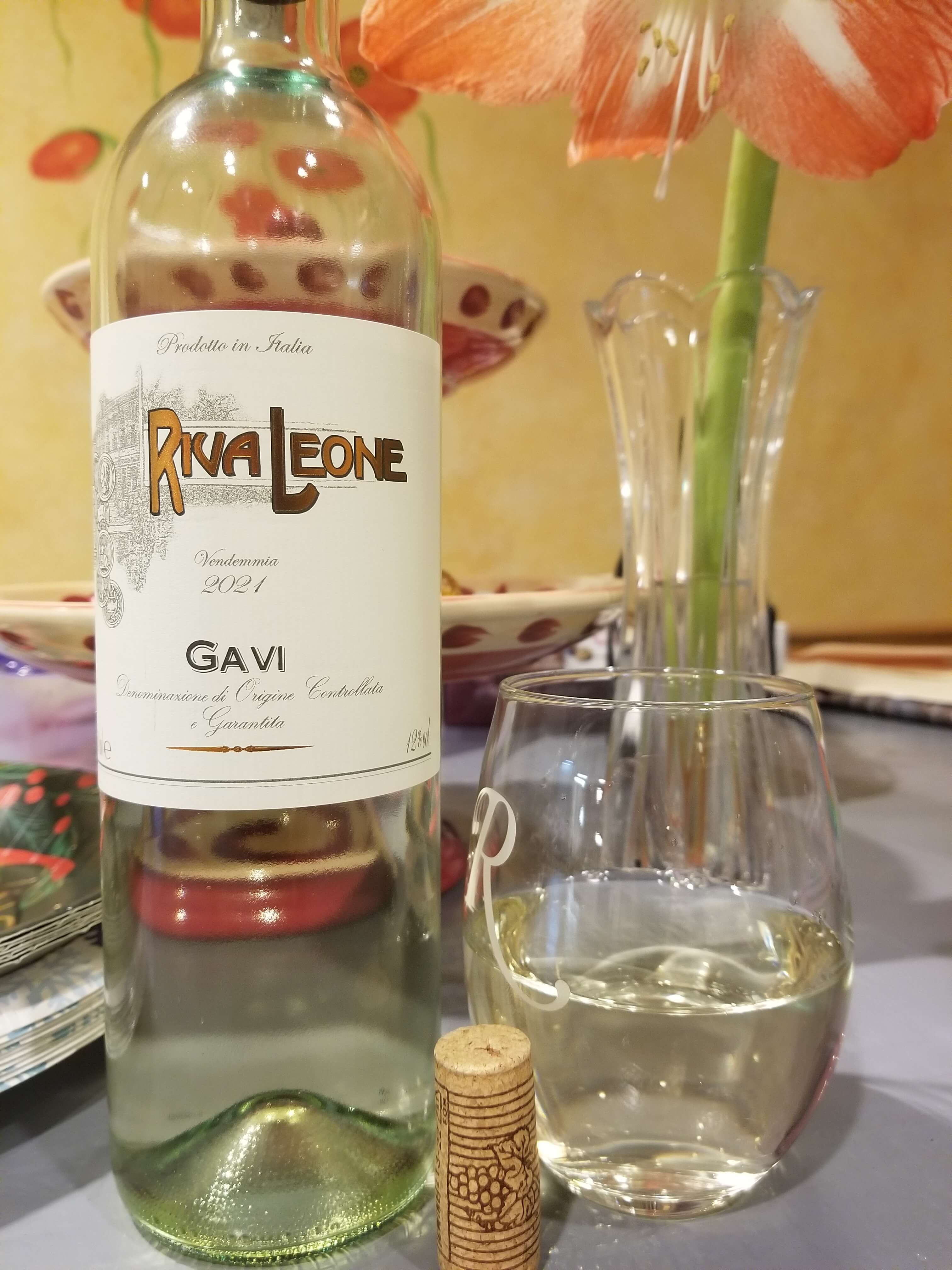
Mack & Schuhle offers a Riva Leone line of wines from the Piedmont which includes the Riva Leone Gavi 2021 ($14.99). According to the Consorzio Tutela del Gavi, 2021 provided conditions in which "the grapes revealed a slow maturation ... stands out compared to previous years, with a better stability of the malic acid which suggests an excellent qualitative potential for the 2021 Gavi DOCG". For this wine, the grapes were lightly pressed and the must fermented in temperature controlled stainless steel vats. This is a delicious wine, starting with powerful aromatics of pineapple and pears leading to a lemon-lime profile, texture and minerality, finishing with racy - fresh acids. A complete bargain. 

Monday, December 4, 2023

Cerasuolo d'Abruzzo DOC with the Villa Gemma Cerasuolo d’Abruzzo DOC Superiore

Cerasuolo (chair-ah-swolo) translates loosely to "cherry-colored” in Italian and refers to Italian rosés in general. However the Abruzzo province is one of the few appellations in Italy exclusively dedicated to rosé, the Cerasuolo d’Abruzzo DOC. This designation was established in 2010 and mandates that 85-100% of the rosé wine consist of Montepulciano and the remaining percentage be filled with local white grapes. Montepulciano's dark color and tannins give the rosatos body with characters of cinnamon, orange peel, strawberry, rose and a mineral acidity. 

We received a sample of Cerasuolo from Masciarelli, a leading producer in Abruzzo and the producer with vineyards in all four provinces (Chieti, Pescara, Teramo, l’Aquila). The winery has been producing a rosato since 1986 and  Villa Gemma is their flagship line from  winemaker Gianni Masciarelli. The Montepulciano grapes for the Villa Gemma Cerasuolo d’Abruzzo DOC Superiore ($20) were harvested from 30 year old vines from the San Martino sulla Marrucina estate in Chieti, destemmed and macerated on their skins for 24 hours, before fermentation in stainless steel.  This rosato has exceptional texture and body with raspberries, pomegranate, and herbaceous aromas followed by a full red raspberry profile enveloped with minerality and subtle mint and finishing with refreshing acids. 

Tuesday, September 26, 2023

Grape Spotlight: Masciarelli Trebbiano d'Abruzzo

Abruzzo is a naturalist's dream "as half of the region's territory is protected through national parks and nature reserves, more than any administrative region on the continent, leading it to be dubbed 'the greenest region in Europe'".  That could be why it has been occupied since the "Neolithic era, with the earliest artifacts dating to beyond 6,500 BC. In the 6th century BC, the Etruscans introduced viticulture into the area which continued with the Romans -- who contributed to much of Abruzzo’s recognizable history.  Even after the fall of Rome, the Lombards, Byzantines, Magyars, and Normans successively imparted some type of influence in Abruzzo.   Throughout these periods, viticulture has been a constant with multi-generation small plots, sometimes less than a few hectares, being passed down through successive generations. 

Abruzzo is located directly east of Rome and bordered by the Molise wine region to the south, the Marche to the north, the Lazio to the west, and the Adriatic to its east.  It is further divided into several sub-regions: Chieti, Pescara, Controguerra, Teramo, and L’Aquila (L’Aquilano) -- with Chieti being the prime winemaking region (75% of vineyards).  Most of Abruzzo is rugged with  65% mountainous with this landscape assisting grape growing by blocking most storms from the west. And to the east, the Adriatic Sea provides a moderating Mediterranean climate for these vineyards; vines that are predominately planted in calcareous clay soils.

The most popular grape varieties in all sub-regions are Montepulciano d'Abruzzo and Trebbiano d'Abruzzo.  Last week we focused on Montepulciano d'Abruzzo and now Trebbiano d'Abruzzo, both through the wines of Masciarelli. Trebbiano is grown throughout Italy, but in Abruzzo, Trebbiano Abruzzese is a different clone, an ancient version indigenous to the region.  The wines are generally "golden in color, typically dry but fruit-forward, with a delicate bouquet and refreshing, crisp acidity".  -- wine-searcher.com

The only Abruzzo producer with vineyards in all four provinces (Chieti, Pescara, Teramo, l’Aquila), Masciarelli wines demonstrate the diversity of Abruzzo terroir.  The winery was founded in the early 1980s by Gianna Masciarelli when produced the first vintage of wine from 2.5 hectares of vines he had planted in land owned by his grandfather near the family home in the province of Chieti. Over the next couple decades production increased as more estates were planted and Gianna introduced several innovations to the region. He was the first to introduce the Guyot training system in Abruzzo and use French oak barrels to age Montepulciano d’Abruzzo.  Tragically Gianna died suddenly in 2008 but his wifie of almost 20 years, Marina Cvetić, seamlessly continued the progress towards higher quality and expansion. Today, their eldest daughter Miriam Lee manages the winery with Marina and they focus on keeping all wines estate grown while expanding plantings, transitioning to organic viticulture, and dialing back the use of oak.

The Masciarelli Trebbiano d'Abruzzo DOC 2022 ($16) is a friendly wine with a floral aroma, flavors of stone peaches and creamy lemons and a refreshingly acidic finish. It is fermented and aged in stainless steel and like the Masciarelli Montepulciano d’Abruzzo DOC, the grapes are sourced from several of the estate vineyards in Chieti, Pescara, & Teramo. 

Tuesday, September 19, 2023

Grape Spotlight: Masciarelli Montepulciano d'Abruzzo

Abruzzo is a naturalist's dream "as half of the region's territory is protected through national parks and nature reserves, more than any administrative region on the continent, leading it to be dubbed 'the greenest region in Europe'".  That could be why it has been occupied since the "Neolithic era, with the earliest artifacts dating to beyond 6,500 BC. In the 6th century BC, the Etruscans introduced viticulture into the area which continued with the Romans -- who contributed to much of Abruzzo’s recognizable history.  Even after the fall of Rome, the Lombards, Byzantines, Magyars, and Normans successively imparted some type of influence in Abruzzo.  Throughout these periods, viticulture has been a constant with multi-generation small plots, sometimes less than a few hectares, being passed down through successive generations. 

Abruzzo is located directly east of Rome and bordered by the Molise wine region to the south, the Marche to the north, the Lazio to the west, and the Adriatic to its east.  It is further divided into several sub-regions: Chieti, Pescara, Teramo, and L’Aquila (L’Aquilano) -- with Chieti being the prime winemaking region (75% of vineyards).  Most of Abruzzo is rugged with  65% mountainous with this landscape assisting grape growing by blocking most storms from the west. And to the east, the Adriatic Sea provides a moderating Mediterranean climate for these vineyards; vines that are predominately planted in calcareous clay soils.

The most popular grape varieties in all sub-regions are Montepulciano d'Abruzzo and Trebbiano d'Abruzzo.  This week we will focus on Montepulciano d'Abruzzo and next week Trebbiano d'Abruzzo, both through the wines of Masciarelli.

Montepulciano  is a late-ripening, thick-skinned, deep-colored grape indigenous to Abruzzo. It provides a robustness that is balanced by considerable acidity and noticeable tannins. That profile means wines ranging from firmly structured and willing to age to lighter styles, including rosés with some heft, depending on decisions made in the vineyard and winery. The wines are known for their fruit and spice characters.

The only Abruzzo producer with vineyards in all four provinces (Chieti, Pescara, Teramo, l’Aquila), Masciarelli wines demonstrate the diversity of Abruzzo terroir.  The winery was founded in the early 1980s by Gianna Masciarelli when produced the first vintage of wine from 2.5 hectares of vines he had planted in land owned by his grandfather near the family home in the province of Chieti. Over the next couple decades production increased as more estates were planted and Gianna introduced several innovations to the region. He was the first to introduce the Guyot training system in Abruzzo and use French oak barrels to age Montepulciano d’Abruzzo.  Tragically Gianna died suddenly in 2008 but his wifie of almost 20 years, Marina Cvetić, seamlessly continued the progress towards higher quality and expansion. Today, their eldest daughter Miriam Lee manages the winery with Marina and they focus on keeping all wines estate grown while expanding plantings, transitioning to organic viticulture, and dialing back the use of oak.

The Masciarelli Montepulciano d’Abruzzo DOC 2020 ($16) is an example of the latter approach. This was the original wine that Gianna Masciarelli first produced back in 1981 and today is the company's best-selling product and the flagship of the Classic Line. The grapes are sourced from several of the estate vineyards in Chieti, Pescara, & Teramo and are fermented and aged in stainless steel. It is a juicy wine, showing dark berries and earthiness and lifted by sufficient acidity and approachable tannins. And appealing everyday wine.