Showing posts with label Virginia Cider. Show all posts

Tuesday, August 18, 2026

Shenandoah Valley - Appalachian Highlands Road Trip Stop 7: Big Fish Cider Co.

Recently I spent a couple days traveling the backroads of the Shenandoah Valley into the Appalachian Highlands visiting as many craft beverage establishments as possible. This endeavor included four wineries in the Shenandoah Valley, two breweries in the Appalachian Highlands, and a couple cider houses within both regions. Here's the story

Monterey was our final destination as we wanted to visit the geographically isolated Big Fish Cider Co. The drive into Highland County crossed through high elevations, narrow valleys, and mostly livestock farms. The county’s geography differs from the rest of western Virginia, with farms situated along ridgelines and hollows that support these livestock as well as hay production and small orchards. Monterey developed as a service center for these agricultural communities and later became known for its maple‑syrup industry and outdoor tourism. 

Big Fish Cider Co. operates in downtown Monterey and was founded by Kirk Billingsley, who began producing cider from locally sourced apples and expanded the operation into a commercial cidery as demand grew.  The apples used in production come from Highland County and nearby mountain orchards, where cooler nights and slower ripening contribute to higher acidity and firmer structure. 

One of these apples is the Harrison - an historically significant American cider apple documented in the eighteenth and nineteenth centuries.  The apple nearly disappeared in the twentieth century before being rediscovered and reintroduced into modern orchards. It is known for its high sugar content, firm tannin, and suitability for producing full‑bodied, dry cider. The Big Fish Harrison ($19.50) is made off-dry with 1% residual sugar that is completely balanced by the apple's tartness and acidity. The apples were sourced from Glaize & Bros Orchard in Winchester, VA and provide sufficient tannin to ensure a full bodied palate.  

We did not have time to sample their complete portfolio as we looked at at 2.4 hour journey home, but if the Harrison is an indication, we will return, perhaps in maple syrup season. Cheers. 

Update: The text has been updated to reflect that the apples where sourced from Glaize & Bros Orchard in Winchester, VA and not Crimora farm. Big Fish uses Highland County apples when possible, and when the weather doesn't cooperate, they source apples as locally as possible. 

In addition, while Kirk Billingsley founded Big Fish and operated it for 10 years, last year it was purchased by cidermaker Joshua Corl. 

Friday, August 14, 2026

Shenandoah Valley - Appalachian Highlands Road Trip Stop 6: Troddenvale Cider

Recently I spent a couple days traveling the backroads of the Shenandoah Valley into the Appalachian Highlands visiting as many craft beverage establishments as possible. This endeavor included four wineries in the Shenandoah Valley, two breweries in the Appalachian Highlands, and a couple cider houses within both regions. Here's the story

The Warm Springs Valley is a narrow mountain valley in Bath County shaped by the Allegheny Highlands and has a long history of mineral‑spring activity which has been enticing visitors to the region since the early eighteenth century. The valley floor sits between parallel ridgelines, creating a landscape of mixed pasture, forest, and small agricultural holdings, with elevations rising sharply on both sides of the valley. Warm Springs Run flows through the center of the valley, fed by the natural warm springs that give the area its name. The combination of sheltered terrain, reliable water sources, and cooler nighttime temperatures has supported farming for more than two centuries and continues to define the geography surrounding Hot Springs and Warm Springs today.

Oakley Farm is one of these historical agricultural holdings - founded in 1834 and listed on the National Register of Historic Places. It is one of the oldest continuously operated farms in Bath County. The property sits at 2,400 feet on a karst limestone in Warm Springs, Virginia and is surrounded by the George Washington National Forest. Over nearly two centuries, three families have shaped and stewarded this farm. Today, Oakley is home to two ventures, Troddenvale and Foodlore, "each rooted in the land and in the traditions of food, farming, and gathering that continue to shape this valley".

Troddenvale can be roughly translated to the “valley road” and is inspired by the long  history of visitors traveling to Virginia’s great springs region: the Warm Springs Valley.  The cidery focuses on producing ciders from fruit grown in the Appalachian Highlands and their estate orchards include a mix of heirloom and modern apple varieties suited to the region’s cooler nights and well‑drained soils. I learned later that they also source apples from Virginia's modern pomme pioneer, Diane Flynt, and her Foggy Ridge Cider.  Troddenvale's ciders emphasizes traditional styles without additions or adjustments. They rely on native yeasts that provides genuine complexity and individual character; fermenting in neutral oak that creates depth; and unfiltered bottling that provides texture.

During our visit I sampled five ciders that were offered as their weekend sampler. The first was the 2024 House Cider ($22), produced from a blend of apples grown on the farm and nearby orchards -- including Foggy Ridge. Interestingly the fresh pressed juice was fermented in a combination of French, American oak, and Black Locust barrels.  House Cider is made in a straightforward manner, relying on natural acidity and the characteristics of the fruit to present a dry profile with moderate tannin and the light orchard‑fruit notes typical of Appalachian‑grown apples. 

The 2024 Forage Cider ($26) was next and as the name suggests made from apples collected from wild or unmanaged trees located near to Oakley Farm.  These trees often include older or unidentified varieties that persist in the region’s hollows, fence lines, and former homestead sites. Foraged apples can show higher tannin, variable acidity, and more rustic aromatics compared to cultivated fruit. The resulting cider presents a drier, more structured profile starting with an interesting sour grapefruit note that after strongly aerating mellows into a more Martinelli fresh apple flavor.

The 2024 Petit Cider ($25) is produced from 100% Virginia Hewe’s Crab apples grown at Foggy Ridge, Countryside Farm & Nursery, and apples from Hidden Valley in Warm Springs planted by the forest service in the mid 1990s. After native fermentation and resting on its lees for many months, the cider was bottled and let to rest 10 months before release. The tasting notes genuinely reflect the orange marmalade notes that slowly open after the reduced aroma is allowed to aerate. 

The 2024 A Little Man Sings ($30) is a natural wine made from Petit Manseng where the grapes were grown in Crozet Virginia at Grace Estates Winery and Chiles Family Orchards. The grapes were foot tread and macerated whole cluster for two weeks. Upon fermenting dry, the wine was pressed directly to barrel, blending with a small amount of reserve wine from previous vintages. The barrels sat open and un-topped for 12 months. The result is a tart wine with some pineapple and other tropical notes with a unique brown sugar character. And still plenty of acidity.

The final offering is the 2023 Family Ties ($45) - a truly unique collaboration between  Lightwell Survey and Troddenvale. This wine-cider hybrid is made from Traminette grapes blended with Virginia Hewe’s Crab. "Once the cider reached near-dryness, clusters of Traminette grapes were foot-tread, pressed, and combined with the cider in a neutral French oak barrel. The mixture rested undisturbed until it was racked off its lees in early March 2024 and bottled still."  I really enjoyed this collaboration with the spicy and floral character of the grapes mingling with the tartness and tannin of the crabapples. Perhaps its blaspheming but I would augment with a little sparkling water to return the a more effervescent character. Cheers. 

Monday, February 20, 2023

Sage Bird Ciderworks Pommeau and Ashmead's Kernel for #openthatciderbottle

When I heard that the American Cider Association's Open That Cider Bottle was returning on February 25, 2023, I leveraged a trip to Harrisonburg to visit Sage Bird Ciderworks and see what would be a  worthy cider to open that night. I love this cidery's Age Old Apples series showcasing heirloom apple varieties and have written previously about their Harrison and Virginia Hewe's Crab ciders.  Black Twig and Dabinett were two other ciders in the heirloom series but I decided on a new apple variety to me: Ashmead's Kernel. 

Ashmead's Kernel is an old English russet apple that originated from a seed planted around 1700 by Dr. Thomas Ashmead in Gloucester, England. The apple is lumpy, misshapen, and rather small with green and golden-brown skin, and a distinct crisp, nutty snap.  Interestingly, Ashmead's Kernel is one of a few apple varieties from the Old World that succeeded in the New World.  "When the first settlers arrived in North America they brought with them tried and tested varieties from Europe, yet few adapted to the very different climates of North America and most of the early successful American apple varieties were chance seedlings that evolved in America.  However Ashmead's Kernel did thrive, and today holds a position of respect on both sides of the Atlantic..". -- Orange Pippen

The tasting notes from Sage Bird Ciderworks remark that the Ashmead's Kernel is dry and tart with a moderate body and crisp finish. Notes of champagne, citrus, ripe apple, and green grape. Check back after the 25th for our descriptors. 
I also noticed that Sage Bird produces a pommeau and had to include that in Open That Cider Bottle. Pommeau is a French-inspired cordial that’s made by blending unfermented cider with apple brandy (traditional Calvados).  The percentages are usually two-thirds apple must (unfermented apple juice) to one-third apple brandy in order to ensure that the resulting mixture has 16–18% alcohol by volume (abv). The potion is then usually finished in oak for at least one year. 

Long Night is their winter pommeau made from a light fermentation of a blend of Harrison and Dabinett apples and eau de vie (un-aged brandy) distilled from their Dry River Reserve distillery. According to the cidery,  the blending "arrests fermentation, leaving a naturally sweet yet high alcohol and stable mixture. We then age this mixture in freshly-dumped bourbon barrels from A Smith Bowman in Fredericksburg for a minimum of 12 months. The result is a wonderfully complex fortified dessert apple wine. Strong notes of stewed apple, butterscotch, caramel, vanilla, berry, and brandy on the nose and palate with a natural assertive sweetness, balanced tannin, and warming alcohol".  Can't wait to open it. 

Check back next week for updates on Open That Cider Bottle and hope to see these and other ciders participating in the BevFluence New Perspectives on Cider, Perry, and Brandy campaign.

Update: The Ashmead's Kernel is very dry and tart and sour. Not a lot of tannins, just fresh acidity, and limes & mint. A bit funky.  The Long Night is beautiful with fresh juicy apple juice complimented by a fuller brandy-driven profile with a lengthy satisfying finish. 
Tuesday, February 14, 2023

Five Takeaways from CiderCon 2023

The American Cider Association's CiderCon 2023 took place in Chicago from February 1st through the 3rd and the event offered "a full range of educational sessions covering topics that included cider production, marketing, sales, branding, sensory evaluation, compliance, business strategy, and orcharding". We attended several of these sessions as well as the trade show, a tasting organized by the New York Cider Association, unofficial cider shares, as well as visiting a couple of local craft beverage establishments. Here are our five takeaways from the conference.

Consistent and Systemic Approach to Tasting Cider
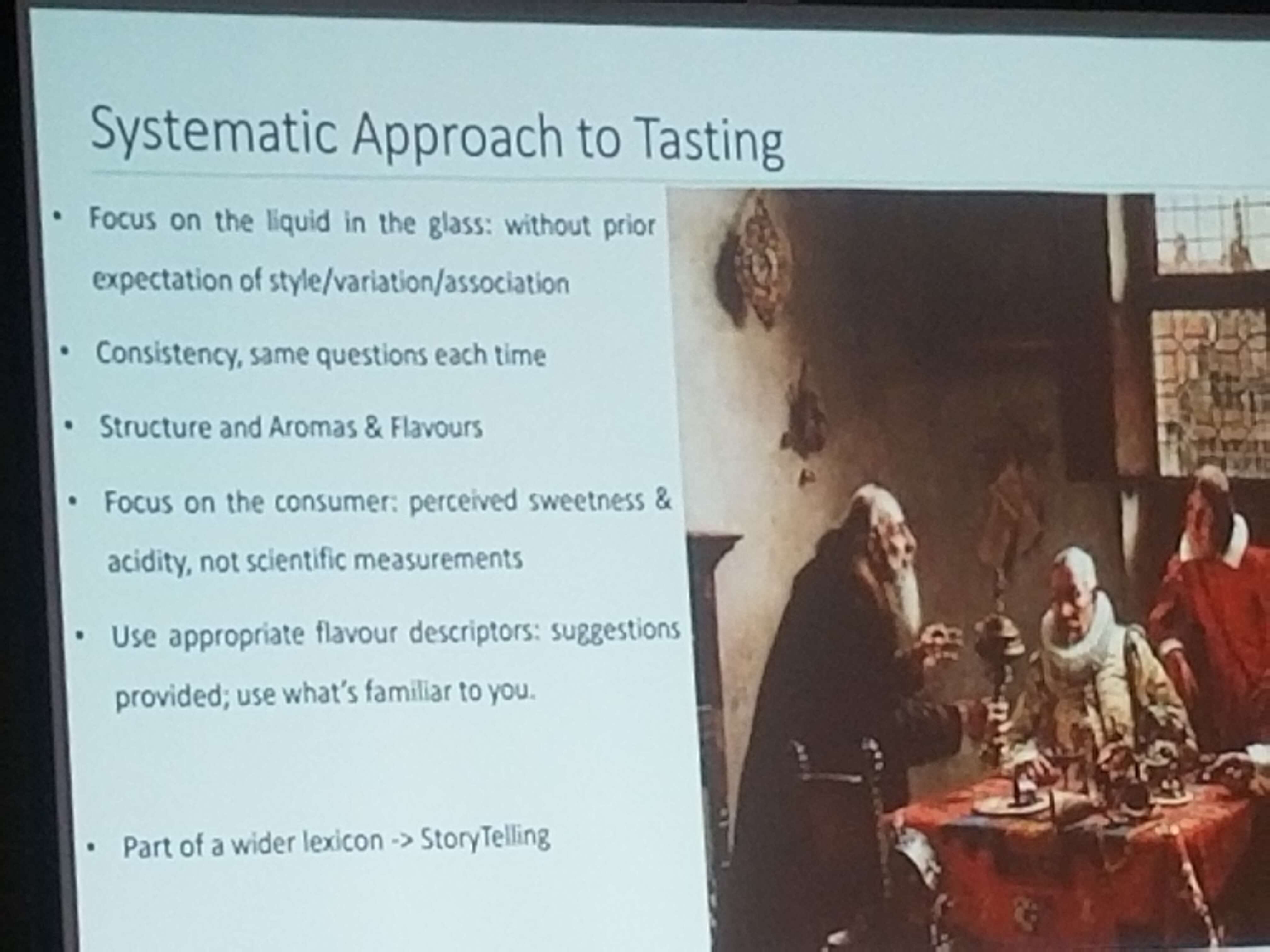
Cideries and reviewers should create a systemic approach to both cider tasting and descriptors as advocated by Richie Brady in A Proposal for a Systematic Approach to Tasting Cider. In other words, the industry should use a consistent method of describing the aromas, flavors, and structure of cider. This consistency involves focusing on the liquid in the glass, preferably in a blind fashion, without any preconceived expectations. Evaluate the Aroma (light, medium, pronounced), Flavor (in terms of major categories -- green, stone, citrus, tropic, red, and black fruit and then secondary flavors due to fermentation methods and oak treatments), and Structure (intensity, sweetness, acidity, tannin, length, and complexity). Finally, use descriptors that consumers understand. Barely anyone knows what cassis tastes like so use a more common alternative. An example that Brandy provided is "Lightly sparkling, sweet and vibrant cider with pronounced flavors of stone and tropical fruit, fragrant flowers, sweet vanilla, and caramel. Long and complex finish".

Fire Blight
Apple and pear orchards are prone to numerous pests and diseases not unlike grapevines -- such as a shared threat from powdery mildew and deer. At the conference, I also heard orchardists discuss groundhogs, rabbits, squirrels, and various insects but it was during The 4 Components of Flavor: Orcharding for High-Flavor Fruit seminar presented by Stina Booth that I first heard of Fire Blight. This is a bacterial illness that affects fruit trees and thrives in hot, humid climates, usually appearing in the spring and declining as dryer summer temperatures occur. The bacteria infects trees undetectably in the fall or winter, hiding in branches and unopened buds. Then in the spring, it begins to emerge through openings in the branches and foliage and becomes apparent. Unfortunately, fire blight is very difficult to treat effectively, and overusing certain bacterial sprays can cause the tree to develop resistance to treatment. The best way to fight fire blight is prompt pruning and sanitizing tools. -- MinneopaOrchards.com

Chicago Cider Scene
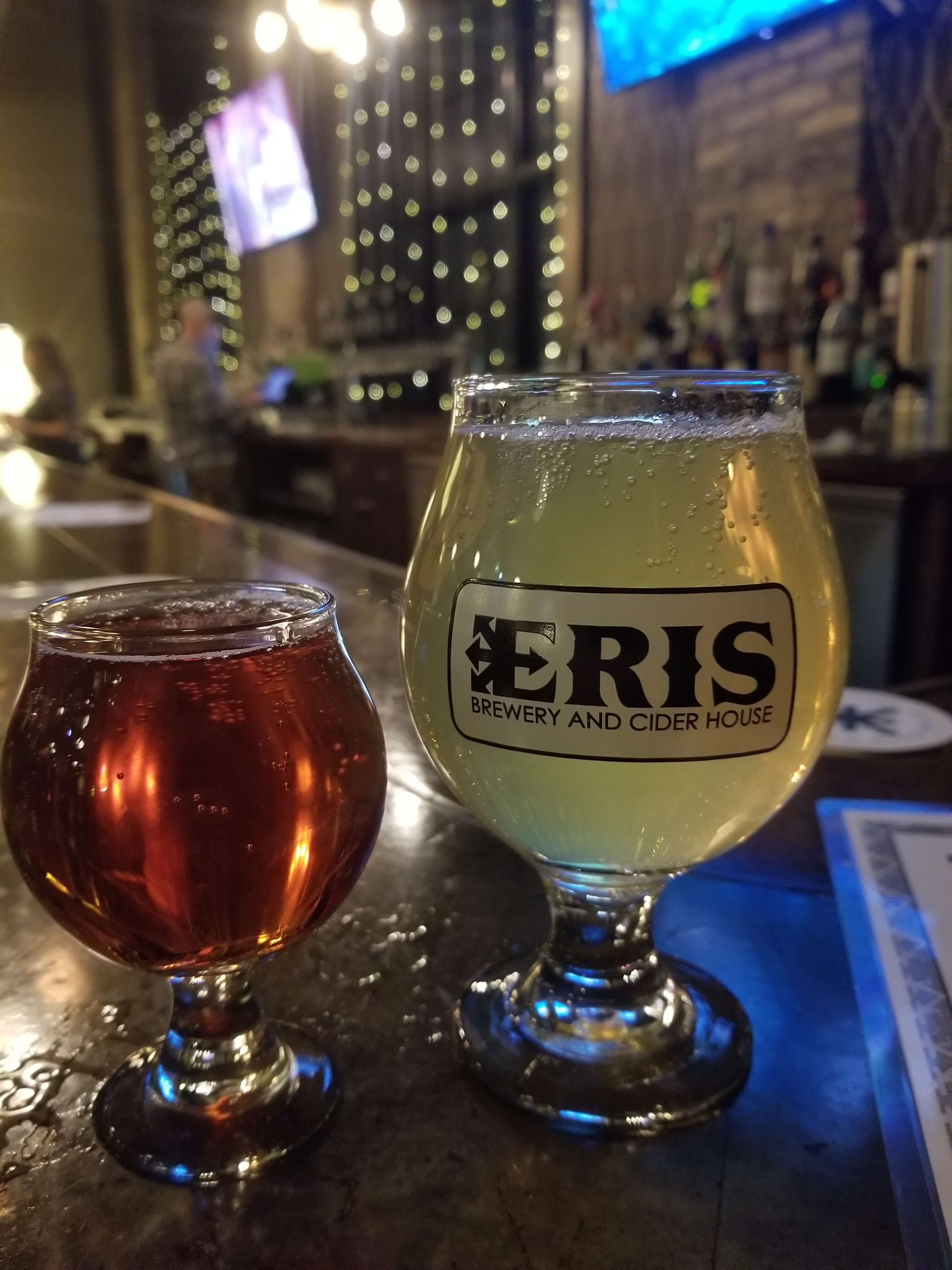
The conference coincided with Chicago Cider Week and two urban cideries hosted several events and were accessible during the conference. The Right Bee Cider Semi-dry Cider was available at a couple of spots at the host Chicago Hilton hotel and was a clean cider sweetened with honey from their own beehives. Their Dry Cider was also poured during an unofficial tasting and as I recall packed plenty of flavors. I was able to visit Eris Brewery and Cider House where the brewery is located in a historic old masonic temple that was renovated in 2018. I started with the Eris Cherish, a cherry cider produced in collaboration with Sleeping Village and the CIVL Foundation where the proceeds go towards providing music venue workers access to mental health awareness. I also turned to another collaboration, this time the Eris Apfelort which is a dry cider aged in used Jeppson's Malört barrels from CH Distillery. I had read about this wormwood-based digestif and how CH Distillery had purchased this "astringent and notoriously bitter 70-proof liqueur". The cider is neither and provides apples up front and subtle wormwood and a strong grapefruit finish.

Cider is North American
Just by casually talking to attendees it's easy to see that cider is produced throughout North America. We met producers and orchardists from north Georgia to Manitoba, across Canada, and from Nova Scotia to San Diego. I stood in line with a startup producer from Orlando and a representative from Bold Rock. I sat at tables with producers from Wisconsin, Oregon, and Tennessee and shared Michigan cider with the same from Pennsylvania, Virginia, and Ohio. The New York Cider Association hosted a tasting showcasing Empire State producers from the "Niagara Frontier to the Finger Lakes to the Catskills to the Hudson Valley to Long Island and to New York City". During unofficial cider shares, I sampled excellent cider from Washington State and Washington DC as well as from to. And my favorite cider of the week came from Greenbench Mead & Cider in St. Petersburg, Florida with their Giants in the Sky (Fresh-pressed Kingston Black, St Edmund's Russet, Pioneer, and Wickson Crab apples, wild-fermented in oak with native yeast.).

Cider is for Everyone
This is the official theme of the American Cider Association but is also a true statement based on industry analysis presented in the Alcohol Beverages and Cider: 2023 and Beyond and More Than a Beverage: Cider Category Performance sessions. Presenters from both sessions showed industry and consumer data beneficial and discouraging for the cider industry. First, the total per capita consumption of ethanol has remained relatively constant for the past 20 years with beer being the largest, albeit, slowly declining sector. The volume of cider sold peaked in 2016 and slowly declined since - losing market share and shelf space to Hard Seltzers and to a lesser extent RTDs. The good news is that the average alcohol consumer is becoming "Omnibibulous" a term created by Bart Watson, the Head Economist of the Brewers Association to describe how consumers are more "able and likely to drink almost anything (alcoholic)". And this group will continue to grow as younger consumers continue to experiment, and on the other hand, the baby boomers move into more leisurely lifestyles. Other facts based on consumer studies point to avenues where cideries can focus to attract customers. These studies show that 54% of all consumers have made a purchase in-store of a brand they first tried at a restaurant and 1/3 of cider consumers prefer a sweet version. Some ideas to consider. 

Tuesday, November 15, 2022

Virginia Cider Week & Cider Smackdown: Attack of the Crab

Virginia Cider Week
started last Friday and runs through November 20th and we attended the kickoff event Cider Smackdown: Attack of the Crab at Albemarle CiderWorks. This event was a blind tasting of eight Virginia ciders composed of crab apples and the entries consisted of either Virginia Hewes, Wickson, or Rub Ted Crabapple.

Hewe’s Crab was the most common fruit variety grown in eighteenth-century Virginia. It is thought to be a cross between the native American crabapple, Malus angustifolia, and the domesticated European apple of horticulture. It produces a delicious cinnamon-flavored cider that is both sugary and pungent. Jefferson planted his entire north orchard exclusively with this variety and once wrote that crushing the juicy Hewe's Crab for cider was like "squeezing a wet sponge." Its small, round fruit, which ripens in September in Central Virginia, is dull red and streaked with green. (monticello.org)

Wickson Crab was developed by Albert Etter, an apple enthusiast best known for his work on pink-fleshed and red-fleshed apples. Wickson was the result of crossing two other crab apple varieties. Confusingly Etter refers to them as Spitzenberg crab and Newtown crab in his patent papers, but it is not thought they are related to the mainstream apples of the same names but were crabs developed by Etter himself...Like most crab apples Wickson is very small and is also a hardy and problem-free tree. However, that is where the resemblance to other crab apples ends. Wickson is unusually sweet, but at the same time has a strong acid component. The result is an apple that has a very strong flavor, making it an excellent component for cider blends. (orangepippin.com)

Ruby Red is a chance seedling that actually originates from the property. The tree was found behind an old cabin at the base of Priest Mountain by John Saunders and after noting the apples' intense flavor and colored flesh, they chose to propagate the apple for commercial purposes. (Troddenvale at Oakley Farm

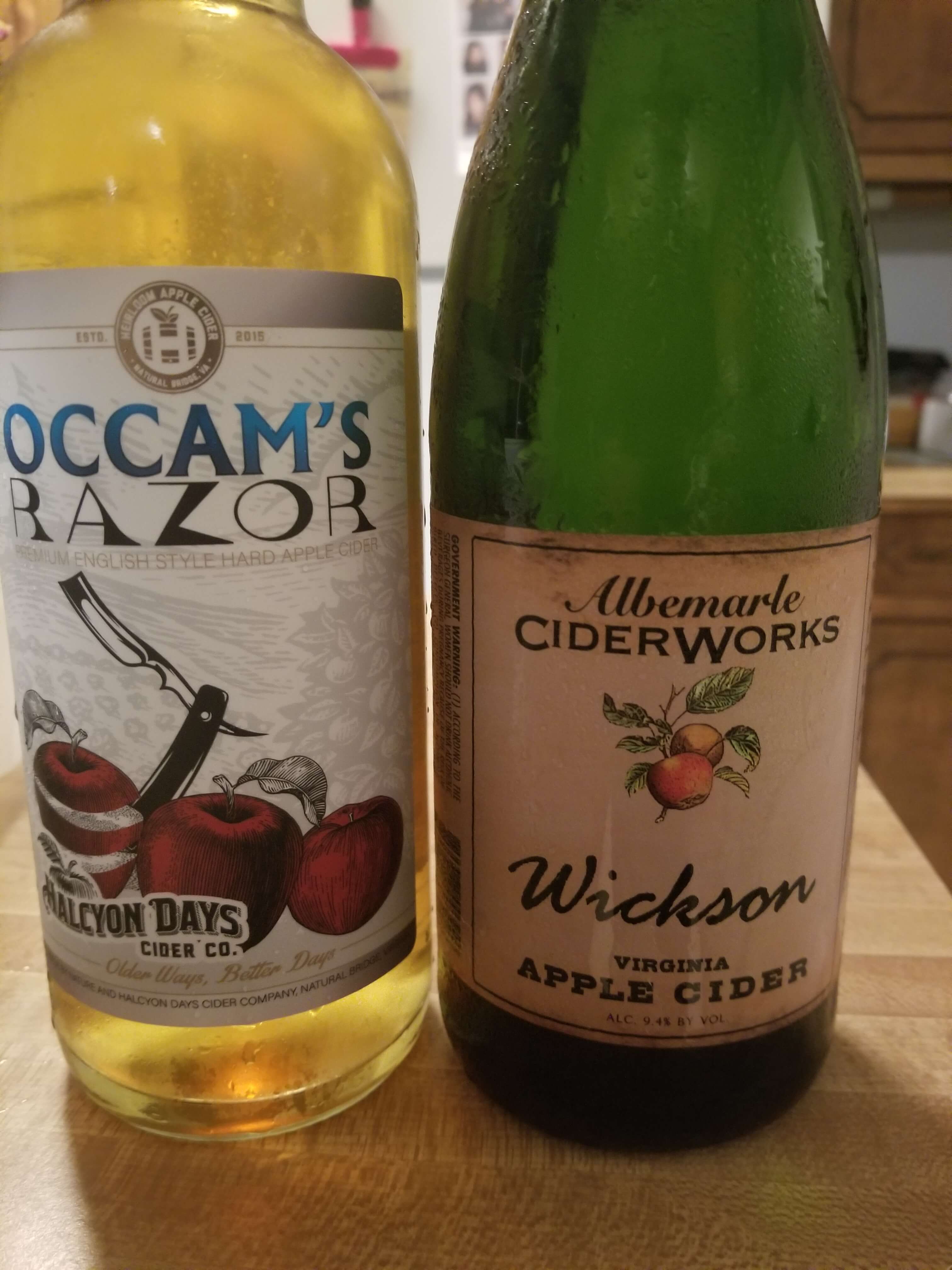
The Cider Smackdown was a blind tasting where attendees voted on their two favorites or a single favorite getting both votes. Each of the ciders was completely unique even those composed of the same apple varieties, as cellar techniques varied among the cideries. The Albemarle CiderWorks Wickson Crab received the most votes followed by a three-way tie of the Sage Bird Cider Virginia Hewes CrabHalcyon Days Cider Occam's Razor, and Big Fish Cider Virginia Hewes Crab.  I had recognized the Sage Bird Hewes Crab from opening a bottle a few weeks previously when studying for the CCP. Love the fleshy tart and bittersweet notes. My other vote went to the Potter's Craft Cider Wickson Crab (which finished in a three-way tie with the Lost Boy Cider Cellar Series: Hewes and Courthouse Creek Cider Crabtree Falls.  The Potter's Wickson Crab was aged in French oak wine barrels and was able to retain tartness and acidity while providing red currants on the nose and a full body palate.  The Troddenvale Grower Series, Silver Creek Orchards - 2021 rounded out the entries and this was my first taste of a Ruby Red Crabapple cider. There was an interesting farmhouse hoppy flavor combined with creamy lees and a bittersharp finish.

We came home with a bottle each of the Albemarle CiderWorks Wickson Crab and Halcyon Days Occam's Razor but hope to revisit all of these ciders during the BevFluence® New Perspectives on Cider, Perry, and Brandy campaign. All ciders are welcome for the campaign. Cheers. 

Friday, October 21, 2022

Studying for the Certified Cider Professional Level 1 Exam with Sage Bird Ciderworks Virginia Hewe's Crab

I finally began preparing for the Certified Cider Professional (CCP) exam this week as part of the BevFluence New Perspectives on Cider, Perry, and Brandy campaign and thought that the Sage Bird Ciderworks Virginia Hewe's Crab would be an appropriate study device. The American Cider Association (ACA) presents two levels for the CCP, " Level 1 CCP is designed for people who would benefit from a deeper but still introductory level of cider knowledge. The more advanced Certified PommelierTM test covers more in-depth cider knowledge, including sensory evaluation". 

The Level 1 CCP exam focuses on seven categories (1) Apples, the Orchard & History; (2) Cidermaking; (3) Evaluation; (4) Families & Flavor; (5) Keeping & Serving; (6) Food & Cider; and (7) Social Responsibility. I will now present the Virginia Hewe's Crab cider in terms of reviewing for the CCP. 

Sage Bird Ciderworks is located in downtown Harrisonburg, Virginia and opened a couple years ago due to the persistent hard work of Zach and Amberlee Carlson. This is the first cidery in the home of the Dukes and they offer a wide array of various styles and apple varieties including Hewe's Crab from their Age Old Apples series. 

Hewe's Crab was once the most popular apple variety in Virginia and is thought to be a cross between the native American crabapple, Malus angustifolia, and a domesticated European apple. The Hewe's Crab apples for this cider were harvested from orchards in the mountains surrounding the Shenandoah Valley. These are most likely low-density and freestanding orchards with relatively wide spacing between the trees.  Each individual tree is also most likely a graft of a Hewe's Crab scion fused to a rooted tree. 

The Hewe's Crab apple itself is considered Bittersharp with the bitter implying high tannins (polyphenols) and the sharp implying high acidity (malic acid). This is based on the Long Ashton Research Station (LARS) classification. The tannins and acidity can provide this cider the capability to age.  The apple's flesh is white so makes a clear cider as opposed to some cider apples with pinkish flesh which can add a little color to the cider without having to macerate on their skins - unlike red wine grapes. However, I believe this cider was aged several months in oak which will impart color and other flavors. 

Let's look at this particular cider bottle. Since the cider is over 7% abv, its label is regulated by the TTB, whereas labels for ciders under 7% are regulated by the FDA. The TTP requires the ABV, total volume, name and address of the producers, and whether the cider contains sulfites. You will not see vintages or designated geographic areas like the wine AVA system. This label provides additional information stating its sweetness level (dry) and composition -- 100% Virginia grown, single heirloom Hewe's Crab Apples. 

This Virginia Hewe's Crab cider is made from 100% apples and thus falls into the cider category as opposed to the Perry, Fruit Cider, Botanical Cider, or Dessert Cider categories. The ACA uses five commonly accepted flavors that we can taste so let's examine this cider in terms of sweetness, acidity/sourness, bitterness, salt, and savoriness. This is a caramel-colored cider, completely dry, with a tart, tannic, and full-bodied. There is a general savoriness I think both from the flesh and the oak treatment. The cider also provides an interesting array of pineapples, raisins, and a little saltiness or saline. 

The ACA recommends several food and cider pairings - particularly with a Bittersharp cider apple like this Virginia Hewe's Crab.  The acidity has a cleansing quality that cuts through fat and rich flavors and thus refreshes the palate. High tannins can have a similar effect. Think beef short ribs, pork schnitzel, sausage,  nutty and mushroom flavors, and dense cheeses. And because of the cider's rich tannins, it can be paired with similar intense foods and not be overwhelmed.

The preparation for the CCP sure increases the amount of information to process when evaluating a cider. Cheers. 

Friday, August 12, 2022

Inventing the Catoctin Mountain Craft Beverage Trail

According to wikipedia, the "Catoctin Mountain, along with the geologically associated Bull Run Mountains, forms the easternmost mountain ridge of the Blue Ridge Mountains, which are in turn a part of the Appalachian Mountains range. The ridge runs northeast–southwest for about 50 miles (80 km) departing from South Mountain near Emmitsburg, Maryland, and running south past Leesburg, Virginia, where it disappears into the Piedmont in a series of low-lying hills near New Baltimore, Virginia. The ridge forms the eastern rampart of the Loudoun and Middletown valleys".

Furthermore, "Catoctin Mountain traverses Frederick County, Maryland, and extends into northern Loudoun County, Virginia. It rises to its greatest elevation of 1,900 feet (580 m) above sea level just southwest of Cunningham Falls State Park and is transected by gaps at Braddock Heights (Fairview Pass), Point of Rocks on the Potomac River, and Clarke's Gap west of Leesburg, as well as several other unnamed passes in Maryland and Virginia. The mountain is much lower in elevation in Virginia, reaching its highest peak just south of the Potomac at Furnace Mountain (891 feet/271 m) and with only one peak above 800 feet (240 m) south of Leesburg".

This past Sunday I decided to visit a few craft beverage establishments starting near Frederick, Maryland then move south towards the Potomac and back into the Commonwealth.  Inadvertently I had traversed a potential Catoctin Mountain Craft Beverage Trail running parallel to the mountain and along Route 15. Seems like a well-matched partnership that the proper entities should investigate.

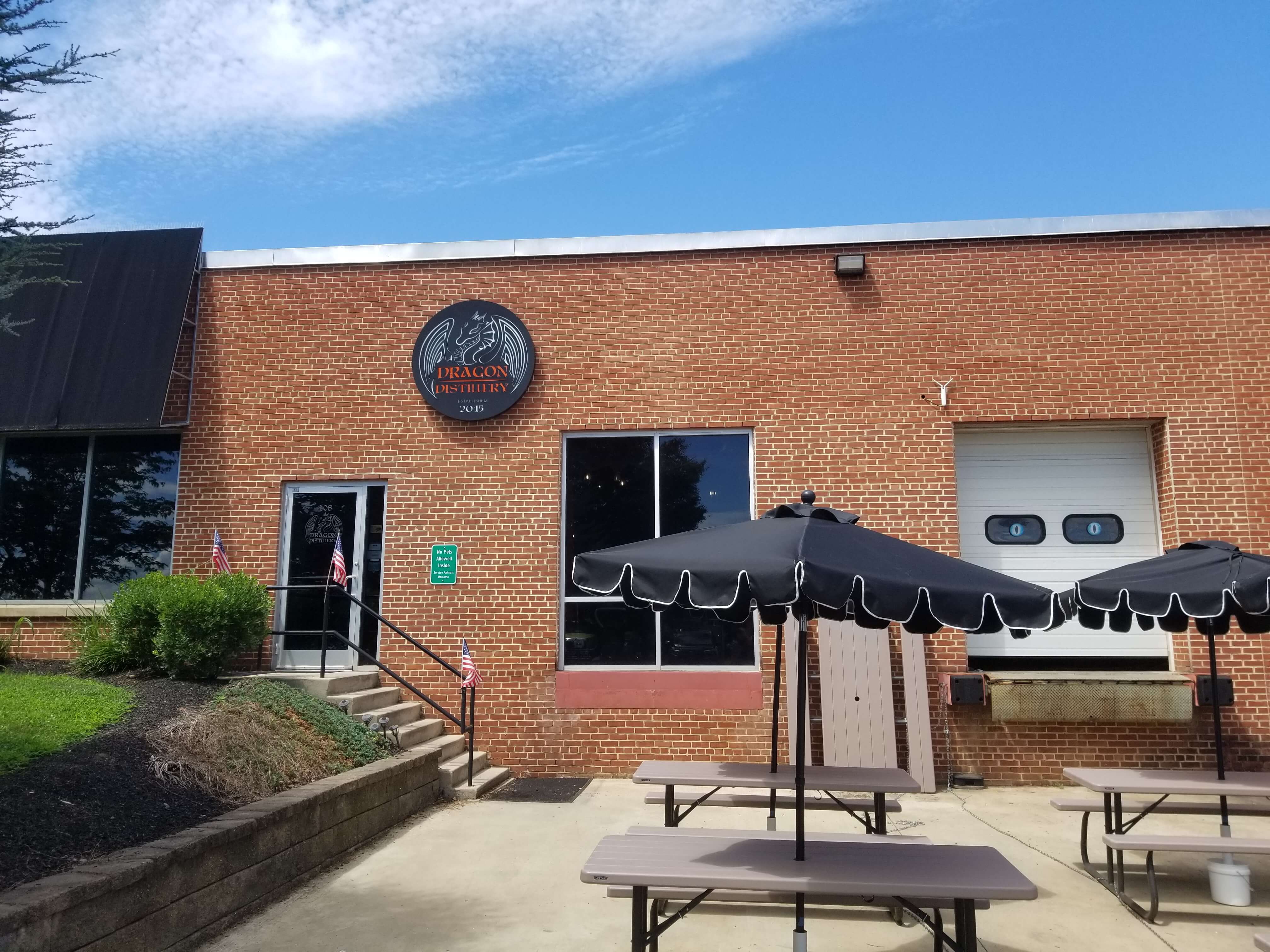
Dragon Distillery, Frederick Maryland
I set out for this distillery in order to sample a couple of their Ready-to-Drink cocktails as we wind down the BevFluence RTD campaign. And I learned earlier that they were the first East Coast distillery to launch an RTD product.  They have a couple that I really enjoyed starting with the 20 proof Dragon's Mule - a take on the popular Moscow Mule. The recipe calls for Barritt's Ginger Beer, vodka, and artificial flavors; I was surprised by its lack of sweetness and generally pleasant vibe. I also sat down to their 38-proof Dragon's Draft Bourbon & Cream Soda. Although it uses sugar-free cream soda it comes across as a little sweeter but plays nicely with the bourbon.  

On previous visits I had tasted their traditional moonshine and whiskey, so today I delved into their flavored products starting with the FigZilla Fig Infused Whiskey. Despite the name, vanilla overtakes the subtle fig which is most noticeable on the nose. A very smooth, drinkable whiskey.  You must be a coffee lover to enjoy the Dwarven Morning Blend -- where coffee completely overwhelms the white rum. Instead, I came home with a bottle of the Sultan's Surprise Toasted Coconut rum for its cocktail potential. It has a little more burn than the other two, but the toasted coconut will play nicely with the iCiNG Pina Colada flavor shots. 

Willow Oaks Craft Cider and Wine, Middletown Maryland
This cidery is a subset of Country Pleasures Farm, a 35-year-old family farm and orchard located in the Middletown Valley - with the Catoctin Mountain in the background. While talking to proprietor Eric Rice, I learned quite a bit about the region's history, the farm, and Maryland cider regulations. His, and many surrounding farms, were originally part of a colonial land grant that waited until the late 20th century to be subdivided.  Rice planted his farm 35 years ago and at the time there were no certified organic farms in the Free State and not a single organic orchard on the East Coast. More firsts on this tour - the first organic farm in Maryland and the first organic orchard on the Atlantic. Rice has planted a large number of traditional cider apples, some newer varieties, a couple English and French cidre apples, plus Asian pears.  Even though cider is the focus, Maryland regulations are still in their infancy where cider making was illegal only 13 years ago; thus Willow Oaks is registered as a winery.  

The ciders are all fermented using natural yeast and at times bottled unfiltered.  I went through a flight of six which highlighted the preferences of Washington, Jefferson, and Jackson. The All In is their flagship and this organic cider blend is aged in neutral oak barrels. The natural fermentation is telling, with an appealing refreshing finish. The Blue Note enhances this process with organic blueberries adding tartness and berry fruit to the tangy apples. The Confluence is a juicy heritage blend of Spitzenburg and Winesap apples with rounded tannins that provide a contrast to the previous tangy ciders.  I was all in on this cider, bringing a bottle home. The Appearition was the first perry on the flight but was overshadowed by the Pairing - also organic Asian pears, but this time infused with fresh pressed ginger juice. Very unique.  The final cider, and another in my cellar, was the Gloaming, a delicious blend of organic apples and organic black currants. Tart for sure, but also dry, fruity, and refreshing. 

Smoketown Brewing Station, Brunswick Maryland
Situated on the Potomac River, Brunswick is a transportation and recreation hub with many activities involving the river and Chesapeake and Ohio Canal Towpath. It also contains a bridge spanning the Potomac that leads directly into the bowels of Loudoun county. Smoketown Brewing Station sits in a converted fire station and theatre near the bridge and houses plenty of history within its walls. Plus the spirit of Walter Rice which is the namesake for their best offering, the Walter's Spirit Bourbon Barrel Aged Porter. This beer was aged four months in A. Smith Bowman bourbon barrels and is one of the best of 2022; an excellent melding of chocolate and bourbon & honey and vanilla. The brewery has plenty of other beer styles ready to satisfy the most discriminating palate. I enjoyed the low abv "Cherry Lane Social Club" Cherry Berliner Weisse enough to purchase a crowler. The Patsy Hazy IPA is named after the famous country singer who once performed in the second story Swing Hall and is juicy and delicious. The Fighting Fifth Cream Lager was a little too sweet for this palate, but the "Couchboy" Pilsner is a new favored lawnmower beer. 

Corcoran Vineyards and Cider, Waterford Virginia
Our favorite family cider and wine producer is on a direct line from Brunswick, over the Potomac on the Berlin Turnpike. A historical note that Brunswick was once called Berlin until it started being confused with the town on the Eastern Shore. Lori and Jim are good friends so I try to visit whenever I'm in the area.  Their standard flight of ciders consists of the Sinful, Original, Popo Peach, and Knot Head. These are made using Virginia-grown apples and each with a unique technique. The Sinful is dry but with added cinnamon and all-spice. The Original is just apples but fermented using champaign yeast. As the name suggests, Popo Peach includes some peach juice and the Knot Head is aged in whiskey barrels. This last is still my favorite, but they are all solid ciders. Would love to see these and other Maryland and Virginia ciders in the Cider: New Perspectives on Cider, Perry, and Brandy campaign. Cheers. 

Thursday, July 14, 2022

The Virginia Cider Trail Coincides with the BevFluence Cider: New Perspectives on Cider, Perry, and Brandy Campaign

This is a big month for Virginia Cider. Last week the American Cider Association (ACA) announced the launch of the Virginia Cider Trail where users of the app can win prizes and receive discounts at participating cider houses. And it just happened that this summer I have already visited four of these establishments. And I believe I was the first to officially check-in using the Virginia Cider Trail app at Sage Bird Ciderworks and Ciders from Mars. 

In addition, our partner site at BevFluence has opened brand registration today for their Cider: New Perspectives on Cider, Perry, and Brandy campaign. The cider, perry, and brandy products will be presented to a combination of industry experts, mixologists, bartenders, creators, bloggers, writers, and other media – and across the craft beverage landscape. This will generate new perspectives about cider, perry, and apple brandy from creators who range from cider novices to experts. I also plan on taking the ACA's Certified Cider Professional (CCP) exam during this campaign and using the ciders with my training guide. Brands and content creators can register here for the BevFluence campaign or learn more about the CCP here.

Lost Boy Cider is an urban cidery in Alexandria and sources its fruit from various orchards in the Shenandoah Valley. In early June they hosted one of four sessions on the Virginia Cider Road Show presented by the ACA. After a brief overview of Lost Boy by cidermaker Dave, the ACA's Jennie Dorsey provided a history of cider, a history of cider in North America, and then the history of cider in Virginia. She then provided a brief overview of Virginia's three most important apple varieties: Newton (Albemarle) Pippin, Hewes VA Crab, and Harrison. She finished by discussing the ACA's Apple classes (bittersweet, bittersharp, sweet, & sharp); ACA Cider Families (cider, perry, fruit cider, botanical cider, & dessert ciders); cider cocktails; and cider-food pairings. Yes, a boatload of information was packed within each session. We finished with a food and cider pairing featuring cheeses from Cheestique. I think the Barrel-Aged cider paired with the Appalachian cheese, dried pear, and balsamic vinegar was my favorite -- very complimentary.

Castle Hill Cider is located east of Charlottesville in Keswick and has an interesting history regarding the propagation of cider apples. As stated on their website:

Colonel Thomas Walker, the original owner of Castle Hill Estate, was the first to bring Newtown Pippin apple scions to Central Virginia following his return from the Battle of Brandywine in 1777.  The variety was planted at Castle Hill and became known as the Albemarle Pippin apple.

And as most Virginia cider lovers know, the Albemarle Pippin is still one of the signature Virginia apple varieties and was even exported to England throughout the 1800s.  Castle Hill Cider was founded in 2020 and the estate is planted with 6,500 trees featuring more than 30 apple varieties including Albemarle Pippin, Black Twig, Harrison, Burford Red Fresh, GoldRush, Dabinett, Hewes Crab, and Wickson Crab. The ciders are bottled in either 750ml or 375ml bottles and range from sweet to dry. 

During our visit, we choose a Classic flight and a Barrel aged flight. The majority of the group preferred the Terrestrial 2020 where the tannins and slight RS are balanced. It's also an interesting blend that includes Black Twig, Winesap, and Ashmead's Kernel. Personally, I preferred the funky, dry, and naturally fermented in quevri Levity 2020. Is this the only American cider fermented and aged in Georgian quevri?

For the barrel-aged ciders, the Hewes Pommeau Reserve is fascinating with complexity created by four years of aging in Woodford Reserve barrels and Keswick Winery wine puncheons. I also enjoyed the Silver Bough where Dabinett and Golden Hornet ciders were aged over a year in rum barrels.

Sage Bird Ciderworks is located in downtown Harrisonburg and opened a couple years ago after the persistently hard work of Zach and Amberlee Carlson. This is the first cidery in the home of the Dukes and they offer an excellent array of various styles. I settled on a flight of five ciders - slightly more than the paddle size. The clear favorite was the Dry River Reserve -- their flagship brut cider made from a blend of Virginia-grown apples. The Peaches For Me fits perfectly into the upcoming BevFluence campaign since the cider was aged in used apple brandy barrels. The oak treatment is noticeable -- providing a peaches and cream feel with a boost of apple flavors. Finally, an interesting geographic cider is their Stay Gold, a dry cider inspired by West Virginia's official state fruit, the famed Golden Delicious apple. 

Ciders from Mars is located about 30 miles south in downtown Stanton across the street from both Ox Eye Vineyards and Redbeard Brewing Company. So no excuses for not visiting. The cidery was founded by Virginia natives and science-minded Nikki West and Jeremy Wimpey. And Nikki improved her cidermaking through courses at the Cider Institute of North America -> a partner of the American Cider Association. Over a burger from 1Tribe Farm, I sampled six ciders through a standard flight. The Helles Dry is a solid representation of a brut cider and on the other side of the spectrum, the Pink Oceans was interesting with a subtle strawberry profile. However, the most impressive cider was easily the Liquid Gang, made from foraged apples and fermented using native yeast. The tannic structure mimics biting into an apple. Could be my favorite cider made in Virginia and is on par with the excellent cider from New York's Aaron Burr Cidery.

Saturday, January 22, 2022

CiderCon 2022 – Interview with Keynote Speaker Diane Flynt

CiderCon 2022
, the annual trade conference of the American Cider Association will be held in Richmond, Virginia from February 1-4, with excursions scheduled for two days prior. I published a preview and interview with Keynote Speaker Diane Flynt at BevFluence, but thought our readers would be interested in some of her comments on the industry since closing Foggy Ridge Cider (click the link above for the entire interview).  And privately we reminisced about our long-ago video with The Reverend Peyton's Big Damn Band.  

During the conference, I plan on attending these sessions: Top of the Mitten: High Latitude Ciders from Northern MichiganA Cider Among the Faults; and 400 Years of American Alcohol: Cider, History, Cocktails and More. I will also spend most of the after-hours at Bryant's Cider.  Let me know on social media if you plan on attending and we will share a pint of cider. Cheers. 

What have you been doing since the last release of Foggy Ridge ciders? 
Since releasing Foggy Ridge Cider’s Final Call blend in 2018, we have sold our apples to cidermakers in Virginia, North Carolina, and Tennessee. In early 2020 I signed a contract with the University of North Carolina Press to write a general trade book on the history of apples in the South. This book focuses on the stories and history behind the South’s almost 2,000 apple varieties. Through research at University Special Collections, the National Agricultural Library, and interviews with multi-generation apple growers I’ve learned surprising stories about southern apples. The book should be published in 2023. 

What can content creators do better or more in helping to promote the cider industry?
Many in the cider world are proud to say we are a “big tent” industry, and that there is a place for every price point, every method of production, and every quality level for ingredients…from apple juice concentrate to estate-grown cider apples. While this view has merits, it also flattens the discussion. I’d like to see content creators dig deeper into the ingredients and production methods of top-quality cider. Content creators are smart people, “thinking drinkers” if you will, and you should be able to see what is a “marketing message” from producers and what is an authentic practice or value that is carried out in cider-making every day. I see too much content that seems generated by a PR engine for a cider company large enough to hire a PR engine. 


Monday, January 17, 2022

Nelson County Route 151: Bryant’s Cidery & Brewery

This Saturday I had an engaging visit to Bryant’s Cidery & Brewery where founder Jerry Thornton was managing the taproom. Over a couple of flights of cider and beer, he provided an overview of his operation and the significant history of the Century Farm property.  In 1865, Maj Waller Massie Boyd returned from the Civil War and was given a tract of land by his father that included an overseer’s log cabin.  Boyd established an orchard called Edgewood which has remained in the same family through six generations for these 155+ years establishing the Century Farm designation. Thornton recalled the reasoning behind the name, "by the early 1900s a granddaughter of Boyd married R.L Bryant whose family farmed nearby. R.L expanded the orchards and built the infrastructure to support the farm".  Historic photos document the family and property's response through aviation in both world wars and to national calamities. 

In establishing the cider house, Thornton refurbished a barn for the tasting room and the overseer’s log cabin for the production facility. The taproom has a very rustic feel with the walls populated with historic photos documenting the family and property's response through aviation in both world wars and to national calamities. He also kept the feeding trough and reclaimed beams and boards & planks from the 1700s.

Bryant's offers a diverse selection of ciders with many infused with fruit or aged in barrel. For the tart sour beer fam in me, I enjoyed the Unicorn Fuel, a brut cider infused with organic rosehips and hibiscus. The Legend (I believe that was the name) was another favorite - a cider infused with coffee and cocoa bits. For the beer, the Roberta's Revenge Stout is solid - far from an Irish stout and more an American stout with chewy malts and dark chocolate on the tail.

However, the cider that immediately captured my attention and proved that Thornton was a serious producer was the brut Brite Good.  This cider is bone dry but packs plenty of tart apple flavor, finishing with refreshing effervescence. I mentioned the possibility of blending with Campari and confirmed the next day that this combination works beautifully.

I'm looking forward to visiting their Richmond taphouse during CiderCon early next month. But for those who are touring Nelson County's Route 151 or staying at Wintergreen, just keep driving south -- over the mountain pass -- to Bryant and the cider house. It's well worth the extra 20 minutes.

Wednesday, March 4, 2020

Lost Boy Cider - Virginia's First Urban Cidery

This weekend we leveraged a Four Mile Run fishing trip into a visit to Alexandria's Lost Boy Cider. Tristan Wright recently opened Virginia's first urban cidery using apples sourced from Glaize Orchard - a four-generation grower located outside Winchester in the Shenandoah Valley. This is the epicenter for Northern Virginia apple growing with Frederick County hosting its own Apple Trail. Wright also hired David Briun, a respected cider and winemaker, who leverages his experience from the Eden Ice Cider Company and Bellwether Cider & Wine to produce a wide portfolio of ciders - a dozen to be precise.

Many of these ciders are co-fermented with various fruit, peppers, botanicals, spices, and hops. But our focus was on the dry side of the house specifically the Comeback Kid, Gold Digger, Barrel Aged, and Andre the Giant - Petillant Naturel Cider.

The Comeback Kid is made from a blend of table apples -- Golden Delicious, Red Delicious, Pink Lady, Stayman, and Fuji -- a blend that remains the same throughout the year. Biun states that they work with David (Glaize Orchard) "to customize our picking schedule, storage, and pressing strategy so we can have a consistent blend throughout the year".   The cider itself is solid - dry, more tart than you would expect from these apples, a creamy texture, and finishing with refreshing acids.  For the Barrel Aged, Biun ages the Comeback Kid for 4 months in used bourbon barrels creating a softer cider where the bourbon shows itself on the tail. Unfortunately, the fresh acidity and tartness dissipate during this process.

The Gold Digger is a blend of Golden Delicious and Rhode Island Greening -- and American heirloom apple variety dating back to the 17th century and most often used for apple pie. But at Lost Boy, this non-pollinating apple has found a suitable mate to produce a dry, mildly tart cider with a full apple core. I think my favorite of the foursome.

Finally, the Andre the Giant is a Pét-Nat (Petillant Naturel) Cider, a sparkling cider, where the cider is bottled before completing its primary fermentation. Carbonation occurs in the bottle as carbon dioxide is produced naturally when the yeast consumes the remaining sugars.  This is a vibrant offering, light, and flavorful.

Lost Boy's tasting room is spacious with room for kids, dogs,  and yoga mats. A food truck was parked outside and a pizza party inside testified that visitors can byof.  And make sure you inspect the tasting bar itself, a physical specimen repurposed from a fallen maple tree.

As for future offerings, a Cyser is on deck and Biun says they are "starting to branch out for some more limited release ciders focusing on trying to capture the essence of different orchards. We have started conversations with Diane Flynt at Foggy Ridge Cider as well as Claire Whelan at Longview Orchard to source orchard/field blends for some projects next harvest". Sounds enticing

And as always theCompass Craft Beverage Finder will guide you to all your cider needs. Cheers.

Tuesday, November 12, 2019

A Day Trip Along the Shenandoah Spirits Trail

The Shenandoah Spirits Trail consists of 49 breweries, cider houses, distilleries, and wineries within the Shenandoah Valley and located between Harrisonburg and Winchester. These destinations are an easy day trip from the DC Metro area and are worth leveraging when visiting the Valley's Civil War sites, scenic roads, and outdoor activities. And try to stay for the sunsets. Here are a few we visited recently.

Old Hill Cider - Timberville
The is an outgrowth of Showalters Orchard where the Showalter family has been growing apples for over 50 years on a century-old orchard. Cidermaker Shannon Showalter established the first cider house in the Shenandoah Valley by fermenting various heirloom apples such as Pippen, Winesap, and Stayman. These are the blend for the refreshing Yesteryear dry cider. Full a fuller cider, try the Cidermaker's Barrel where the juice is fermented using wild yeast then racked into barrels -- developing texture and depth. And walk out back to sip and enjoy the scenic valley.

Swover Creek Farms and Kitchen - Edinburg
Swover Creek Farms was established just over a decade ago by Lynn and Dave St.Clair, diversifying their 100+-year-old family farm into berries and about 6 years ago 14 hop varieties. In 2014 they opened a small brewery operation using a 3.5 barrel brew system with 2 fermenters and 4 bright tanks. These are located in a renovated barn with a former cow loafing shed used for outdoor covered seating. Inside enjoy house-made pizza, Swover Creek smoked sausages and several styles of beer. Our favorites were the Saison and Lager.

Wolf Gap Vineyard - Edinburg
Willard and Diane Elledge founded Wolf Gap Vineyard and Winery 15 years ago on a 48-acre estate. The views of Wolf Gap and the Great North Mountains from their deck is worth a visit in itself, but an added bonus is the well-crafted wines offered. The 50-50 2017 Viognier-Traminette blend is refreshingly unique while the 2016 Chardonnay is textured and crisp. Nut the dry reds are their strong suit starting with the 2015 Chambourcin Reserve. Smokey and spicy but not jammy. The 2015 Cabernet Sauvignon Reserve proves that this grape can excel in pockets in the Commonwealth and the 2013 Mariage Reserve (Chambourcin and Cabernet Franc) is delicious.

Reminder: theCompass Craft Beverage Finder will guide you to these destinations.