Showing posts with label Brandy. Show all posts

Monday, July 6, 2026

Spirits for the World Cup Knockout Round: July 6, 2026

Over the years I’ve built a small global library of distilled spirits and fortified wines, and the World Cup Knockout Round feels like the perfect excuse to dig back into it - researching the producers, revisiting the bottles, and tasting my way through the bracket. Starting with the June 29th matches, I’ll be recommending one or two spirits for each game, whether they’re already on my shelf or simply deserve a place in the lineup. Click here to view the other World Cup Knockout Round matches.  Today's matches for July 6th:


Portugal vs Spain

Adega Velha 6 Years Old Reserva Brandy
Adega Velha 6 Years Old Reserva Brandy is produced in the far northwestern DOC of Vinho Verde from a mix of indigenous grapes including Vinhão, Azal Tinto, Barraçal, and Espadeiro. The fruit comes from Quinta da Aveleda, where granite and sandy‑loam soils shape the base wine. Located in the hilly Sousa sub‑region, the site benefits from a Mediterranean climate moderated by Atlantic influence. Aveleda itself was founded in 1870 and remains family‑run into its fifth generation, known today as the largest producer and exporter of Vinho Verde.

The wine is distilled in an alembic Charentais still, the same style used in Cognac and in other traditional brandy regions. After distillation, the spirit is aged six years in Limousin oak casks. Limousin’s wide‑grained wood contributes more tannin than tight‑grained barrels, giving the brandy additional structure while still allowing slow oxidative development. This combination of local grapes, classic distillation, and Cognac‑style maturation defines Adega Velha’s production approach.

Despite the tannic influence of Limousin oak, the brandy shows a soft and balanced profile. The nose carries floral and woody notes with a fresh nutty, honeyed core. The palate remains smooth, and the finish is long with minimal burn.

Sagamore Spirit Amontillado Cask Finish (Spanish Themed)
I’ve previously written about the only Spanish brandy on my bar, so for today’s match I’m turning to a Spanish‑themed spirit: Sagamore Spirit’s Amontillado Cask Finish. The whiskey begins with rye sourced from MGP in Indiana, built on a high‑rye mash bill before being blended and finished in MD. After initial aging in new charred American oak, the whiskey is transferred into rare second‑use Amontillado sherry casks. These barrels are increasingly difficult to obtain: Amontillado production is limited, long‑aged casks are tightly held by bodegas, and export of used barrels has declined as sherry houses repurpose them internally. 

Amontillado sherry itself sits between Fino and Oloroso styles, beginning under flor before aging oxidatively. This dual process creates a profile of toasted nuts, dried citrus, subtle salinity, and gentle oxidative depth. When used as finishing barrels, Amontillado casks contribute structure rather than overt sweetness, adding layers of nuttiness, dried fruit, and restrained oak. Sagamore Spirit uses these casks to highlight rye’s spice while adding mid‑palate richness and a more rounded finish.

The finished whiskey shows this rye spice plus dried citrus, almond, and light oxidative warmth from the cask. The palate is a little hot, but balances grain structure with sherry‑driven richness, and the finish is dry, nutty, and persistent. Finally, Sagamore’s bottle remains one of the most recognizable in American rye -- tall, angular, and faceted -- and inspired by the three-diamond racing emblem of the Alfred G. Vanderbilt family, who once owned the historic horse-racing farm in Baltimore County that the distillery is named after.


USA vs Belgium

Dad’s Hat Pre‑Prohibition Style Pennsylvania Straight Rye Whiskey (USA)
For this match, I wanted to re-open a Pennsylvania spirit in order to continue the celebration of our 250th Independence Day as well as the Philadelphia and Monongahela regions. These are all encapsulated in Dad’s Hat Pre‑Prohibition Style Pennsylvania Straight Rye Whiskey. The rye whiskey is built on regional traditions that once made Pennsylvania the center of American rye production. Before bourbon, rye from Pennsylvania’s Monongahela region was widely known for its grain‑forward intensity and long aging in charred oak. The state’s rye industry was so significant that it became a flashpoint in early American history: when the federal government imposed a tax on distilled spirits in 1791, Pennsylvania rye producers were among the most vocal opponents, leading to the Whiskey Rebellion — one of the first major tests of federal authority in the new republic.

Dad’s Hat revives this heritage with a production approach rooted in pre‑Prohibition methods. The whiskey is made from a mash bill centered on Pennsylvania‑grown rye, fermented and distilled in small batches, then matured in charred new oak barrels. The "Pre‑Prohibition Style" designation reflects a focus on traditional grain character, moderate barrel influence, and a profile shaped more by rye spice than by heavy sweetness. Aging takes place in a combination of full‑size barrels and smaller casks, allowing the distillery to balance structure, freshness, and early aromatic development.

The whiskey shows classic Pennsylvania rye traits: bright grain, baking spice, and light herbal notes on the nose. The palate is firm and expressive, with rye spice, caramelized grain, pepper, citrus peel, and subtle oak. The finish is clean and persistent, carrying spice and gentle warmth. 

Belgium
Jenever (also known as genever or genièvre) is the national distilled spirit of Belgium.  It is distilled from a base of malt wine (fermented from malted barley, rye, and sometimes corn), giving it a fuller, maltier profile than standard gin.  And in 2008, Jenever has held a Protected Geographical Indication (PGI) status within the EU, recognizing its origins in the Netherlands and Belgium.

Thursday, July 2, 2026

Spirits for the World Cup Knockout Round: July 2, 2026

Over the years I’ve built a small global library of distilled spirits and fortified wines, and the World Cup Knockout Round feels like the perfect excuse to dig back into it - researching the producers, revisiting the bottles, and tasting my way through the bracket. Starting with the June 29th matches, I’ll be recommending one or two spirits for each game, whether they’re already on my shelf or simply deserve a place in the lineup. Click here to view the other World Cup Knockout Round matches.  Today's matches for July 2nd. 


Spain vs Austria


González Byass Lepanto Brandy de Jerez (Spain)
González Byass is best known for its Sherry houses, but the family has also produced one of Spain’s leading brandies for over a century: Lepanto Brandy de Jerez, the only Brandy de Jerez distilled entirely within Jerez. Founded in 1835, the company built its reputation on careful cask management, and that same focus on wood, oxidation, and solera aging defines Lepanto.

The brandy is made from 100% Palomino grapes, the same variety used for Fino and Amontillado. After fermentation, the wine is distilled in Charentais‑style pot stills, creating a delicate, fruit‑forward spirit with subtle salinity. Aging follows a tiered solera system: first in ex‑Fino casks for brightness, then in ex‑Oloroso barrels for depth and dried‑fruit character. The Lepanto PX expression finishes in Pedro Ximénez casks, where raisin‑rich sweetness and velvety texture shape its final profile. The solera’s continuous blending preserves house character while allowing gradual evolution.

Lepanto shows orange blossom, toasted almond, dried fig, and gentle oak on the nose. The palate is elegant and concentrated, with caramelized citrus, honeyed raisin, walnut, vanilla, and a touch of Sherry rancio linking it back to Jerez. The finish is long and warm, with cocoa, spice, and polished wood. 

Rothman & Winter Crème de Violette (Austria)
This Floral Liqueur is produced in Austria by the Purkhart Distillery, a family operation specializing in eaux‑de‑vie and liqueurs since 1932 . The liqueur is made from Queen Charlotte and March violets grown in the Alps, whose petals are macerated to extract both aroma and natural color. This approach reflects a traditional European style of floral liqueur production, emphasizing botanical authenticity rather than added flavorings or artificial coloring.

The base is a robust brandy (Weinbrand), which provides structure for the delicate violet infusion. The macerated petals are blended with neutral spirit and natural cane sugar, resulting in a lightly sweet, higher‑proof liqueur designed for versatility in cocktails. Rothman & Winter bottles Crème de Violette at 20% ABV, maintaining a balance between floral intensity and mixability. Its production method aims for clarity of flavor: pure violet notes without vanilla, fruit, or heavy sweetness.

The profile shows fresh violet blossoms, subtle herbal tones, and a smooth, lightly sweet palate with hints of candied violet and citrus zest. It is best known as an essential ingredient in classic cocktails such as the Aviation and Blue Moon, where it contributes both color and floral lift. It also pairs well with sparkling wine or soda, adding a gentle botanical dimension without overwhelming other ingredients.


Portugal vs Croatia


Ginjinha Sem Rival Licor (Portugal)

Ginja is one of Portugal’s most familiar household liqueurs — a sour‑cherry spirit commonly kept in kitchens, dining rooms, and small cafés. Families serve it after meals or to visiting guests, and many towns maintain a strong homemade tradition. Jars of cherries macerating in alcohol often sit on windowsills, and it’s not unusual to see handwritten signs offering a small tasting for a modest fee. These versions vary in sweetness and strength, but they share the same basic method: whole ginja cherries, neutral spirit, and sugar.

Ginjinha Sem Rival is a long‑standing Lisbon producer working within this traditional framework. The brand uses whole cherries macerated in neutral spirit, creating a straightforward liqueur with bright cherry acidity, gentle sweetness, and a light almond‑like note from the pits. The recipe aligns closely with the homemade approach found throughout the country, which is part of why Sem Rival is so widely recognized. It’s a dependable, accessible bottling that reflects the classic flavor profile many Portuguese households expect.

Sem Rival’s role is practical rather than innovative. It provides a consistent expression of ginja for homes, neighborhood cafés, and small restaurants, sitting alongside the homemade jars that remain part of local culture. In a country where ginja is both a commercial product and a domestic tradition, Sem Rival represents the producer side of a category still deeply rooted in everyday Portuguese life.

Brigljević Distillery Dark Forest Pomace Brandy - 8 Years (Croatia)
It’s astonishing how many of Croatia’s most compelling spirits come from small, family‑run distilleries rather than large heritage houses — and Brigljević Distillery is a perfect example. Founded in 2002 in the forested hills of central Croatia, Brigljević built its reputation on meticulous craft distillation and a deep respect for traditional komovica (pomace brandy). 

The brandy begins with fresh grape pomace sourced from Croatian vineyards, fermented slowly to preserve aromatic intensity and the natural fruit‑skin character that defines great Komovica (traditional pomace brandy - aka rakija). Distillation takes place in small copper pot stills, yielding a concentrated, textural spirit with both fruit purity and earthy depth. Maturation is where Dark Forest earns its name — the brandy spends eight full years aging in oak barrels housed in Brigljević’s cellars, where cooler temperatures, high humidity, and seasonal shifts create a uniquely gentle oxidative environment. 

Dark Forest opens with dried plum, wild berry, forest floor, and warm spice on the nose. The palate is structured yet elegant: black cherry, cocoa, toasted oak, resinous herbs, and subtle vanilla, all wrapped in the earthy depth that only long‑aged pomace brandy can deliver. The finish is long, warming, and woodland‑inflected, with lingering dark fruit, cedar, and gentle tannin. In my view, Brigljević’s Dark Forest stands as one of the most expressive modern Komovica bottlings — a spirit that captures the terroir of Croatia’s forests and vineyards.


Switzerland vs Algeria

Switzerland 
Kirsch (also known as Kirschwasser or cherry brandy) is widely considered the most typical and popular distilled spirit in Switzerland.  It is a clear, potent eau-de-vie made from distilling fermented cherries, with the region around Zug and Lake Lucerne being particularly renowned for its high-quality production. 

Algeria
There is no single dominant national distilled spirit in Algeria; rather, the market is characterized by beer as the most consumed alcoholic beverage, followed by wine. When distilled spirits are consumed, they are typically local, traditional, or homemade varieties rather than a single major commercial brand. Key traditional spirits include:

  • Mahia: A potent, earthy spirit made from dates or figs, often served in small shots.
  • Boukha: A strong, sweet, and fruity fig brandy, which is typically homemade or locally bottled. 
  • Arak: A strong anise-flavored spirit traditionally diluted with water and ice.

Monday, June 29, 2026

Spirits for the World Cup Knockout Round: June 29, 2026

Over the years I’ve built a small global library of distilled spirits and fortified wines, and the World Cup Knockout Round feels like the perfect excuse to dig back into it - researching the producers, revisiting the bottles, and tasting my way through the bracket. Starting with today’s matches, I’ll be recommending one or two spirits for each game, whether they’re already on my shelf or simply deserve a place in the lineup. Today's matches for June 29th. 


Brazil vs Japan

Novo Fogo Silver Cachaça
Cachaça is Brazil’s national spirit - a sugarcane‑based distillate that combines the country’s agricultural, cultural, and culinary identity. Made by fermenting and distilling fresh‑pressed cane juice, it’s brighter, grassier, and more expressive than molasses made rum, with a natural sweetness that makes it ideal for cocktails. 

Novo Fogo’s Silver Cachaça is one of the clearest expressions of what makes Brazilian cane spirits so compelling: purity, freshness, and a sense of place that comes straight from the rainforest. Distilled in the hills of Paraná, Novo Fogo works with organic sugarcane grown in the Atlantic Forest, harvested by hand and pressed within hours to preserve its bright, grassy aromatics. Fermentation is quick and clean, driven by native yeast, and distillation in small copper pot stills yields a spirit that’s both vibrant and textural. Unlike many cachaças that lean on wood for identity, Silver rests only in neutral stainless steel, allowing the cane’s natural character to shine without interference. The result is a crystalline, terroir‑true cachaça that feels tailor‑made for the Caipirinha - lime, sugar, and Silver coming together in a cocktail that tastes like Brazil’s coastline in a glass. Novo Fogo Silver opens with fresh cane, lime zest, white pepper, and subtle tropical fruit, followed by a palate of grassy sweetness, citrus, and gentle minerality. The finish is both clean and refreshing.

Takamine Koji‑Fermented Whisky - 8 Years 
Few whiskies bridge cultures as elegantly as Takamine. Named for Dr. Jokichi Takamine — the chemist who introduced koji fermentation to American distilling in the 1890s — this whisky resurrects his original method, blending Japanese technique with American grain tradition. The result is one of the most historically significant and technically fascinating whiskies being made today. Takamine begins with a barley‑based mash, but instead of relying solely on malt enzymes, the distillery uses koji (Aspergillus oryzae) to convert starches — a method borrowed from sake, shochu, and miso production. Koji fermentation produces a different set of esters, amino acids, and aromatic compounds, yielding a spirit that is simultaneously grain‑true and deeply umami‑inflected. After distillation, the whisky ages eight years in a combination of new American oak and refill barrels, allowing the koji‑driven fruit and savory notes to integrate with vanilla, spice, and gentle tannin.

Takamine opens with pear, melon, steamed rice, honey, and subtle floral aromatics on the nose. The palate is layered and unmistakably koji‑shaped: stone fruit, white chocolate, toasted grain, citrus peel, and a soft miso‑like savoriness that adds dimension without heaviness. The finish is long, clean, and quietly complex, with vanilla and rice‑candy sweetness. It’s a whisky that honors a forgotten chapter of American distilling while showcasing the expressive power of Japanese fermentation. 


Germany vs Paraguay

Lantenhammer Enzianbrennerei -Altbayerischer Bauern‑Obstbrand 
Bavaria’s distilling heritage has quietly produced some of Europe’s most expressive fruit brandies, such as those from Lantenhammer. Founded in 1928 on the shores of Lake Schliersee, Lantenhammer built its reputation on alpine botanicals, but over the decades it became equally revered for its Altbayerischer Bauern‑Obstbrand — a traditional farmer’s fruit brandy. 

The spirit begins with hand‑selected apples and pears sourced from small Bavarian farms, harvested at peak ripeness to capture maximum aromatic intensity. Fermentation is slow and temperature‑controlled, preserving delicate esters and the natural skin‑driven aromatics that define great orchard brandy. Distillation takes place in small copper pot stills, where Lantenhammer’s signature technique - gentle heating, slow cuts, and meticulous separation - yields a spirit of exceptional purity and texture. After distillation, the brandy rests in earthenware vessels, a traditional Bavarian method that allows the fruit to open gradually without the influence of oak. This resting period is crucial: it softens the edges, integrates the aromatics, and preserves the crystalline fruit character that defines the house style. 

Altbayerischer Bauern‑Obstbrand opens with fresh apple, ripe pear, and subtle floral and alpine herbs on the nose. The palate is clean: crisp apple, soft pear sweetness, citrus lift, and a gentle almond‑skin depth adding depth. The finish is long and quietly complex, with lingering pear, floral lift, and a hint of minerality. 

Paraguay
Caña paraguaya would be the appropriate selection. It is a sugar cane spirit distilled from fermented sugar cane juice (mosto), sometimes with added honey.


Netherlands vs Morocco

Netherlands
I can't believe I don't have any Dutch Jenever on hand.  This is a traditional juniper-flavored spirit that has been produced in the country since the 17th century. And in 2008, Jenever has held a Protected Geographical Indication (PGI) status within the EU, recognizing its origins in the Netherlands and Belgium. It is distilled from a mash of grains, primarily malted barley, rye, wheat, and corn, producing a base known as malt wine (moutwijn).  This malt wine is then blended with neutral alcohol and flavored with juniper berries and other botanicals. 

Morocco
Apparently, Morocco’s national distilled spirit is Mahia ("water of life"), an aniseed-flavored eau-de-vie traditionally distilled from figs or dates and historically associated with the country’s Jewish community. 


Click here to view the other World Cup Knockout Round matches. 

Thursday, August 10, 2023

Les Vergers Lafrance - a Multiforme Cidrerie, Vignoble, Domaine, & Distillateur

Perhaps our favorite craft beverage stop during our Quebec visit was to Les Vergers Lafrance, a multifaceted establishment located just outside of Saint-Joseph-du-Lac. This municipality is surrounded by panoramic mountain views, orchards, and a truly rustic countryside.  LaFrance participates in providing these orchards with their 30 hectares of 13,000 apple trees, 4,000 grape vines, 500 pear trees and 250 plum trees. And the apple trees are distributed among 20 different apple varieties.  Besides les vergers, LaFrance is a cidery, winery, distillery, maple producer, and restaurateurs.

Vignoble Lafrance is composed of more than 4,000 grapevines, particularly all shades of Frontenac  and Sabrevois -- both cold climate grapes bred at the University of Minnesota. LaFrance uses the grapes exclusively for the production of spirits. One of these is their Dandy Gin which is a fruit distillate made from apple, pear and grape eau-de-vie as well as our Marc de Raisins eau-de-vie. The botanicals consist of selected herbs and apple tree flowers from the estate orchards. Need less to say, this gin is quite floral, with less juniper but more citrus. 

The distilling operation started in 2013, when Domaine Lafrance acquired an alembic still made in Bordeaux by the Stupfler family. This family has been producing stills for four generations starting in 1925. Lafrance produces almost a dozen spirits and aperitifs as well as a range of ready to drink cocktails. We also purchased a bottle of the Quartier Lafrance - a Grand Marnier inspired spirit made from 50% Georges-Étienne apple brandy and 50% caramelized orange liqueur. Try to beef up are cocktail options with this surprisingly drier and complex liqueur.

Les Vergers LaFrance is also a purveyor of maple products available in their Sugar Shack. The maple products are made from the syrup from 200 Maple trees that are processed in early Spring during sugar season. 

Despite all these endeavors, the prime focus of the enterprise is cider where they produce close to 20 different cider products. This includes the canned Bio Sparkling Organic Cider and Bio Organic Rosé Cider that complemented the suddenly sunny afternoon picnicking in front of the Boutique. Another easy option was the canned Darragon dit Lafrance sparkling cider. And please try the Rick Special blend #3, an unfiltered sparkling brut cider that was fermented in ice cider barrels.  We didn't sample any of the still ciders, but had to bring home a miniature of the Domaine LaFrance Ice Cider. I would have brought full 375ml bottles of all their ice ciders, but was leery of crossing the border with a weeks worth of cider and beer. These are elegant ice ciders. 

Monday, January 16, 2023

Yebiga BELA Rakija -> Award Winning Rustic Plum Brandy

Imagine being the founding member of the rock band Faith No More and in 1992 opening for Guns n' Roses in Budapest, yet the most memorable event at that concert was backstage being introduced to a local fruit brandy -- known as palinka in Hungary and rakija throughout the Balkins. That was the experience of bassist Bill Gould who continued his education of rakija through subsequent Balkin tours as a musician and tourist for the subsequent 25+ years.

"During this time, I have been frustrated by the lack of awareness, as well as lack of availability, of what I believe to be one of the world's Great Spirits. And I wanted it for myself as well...I had people occasionally bring me bottles from the Old Country but sometimes they would break and when they did, a piece of my heart would break as well!  Finally, in 2019 I realized that the only way to bring a premium version of this to the US was to do it myself. I had no experience with this industry but set out with a goal to bring a true, completely traditional handmade version -- the kind that is usually kept within the family and rarely offered for sale--to the US for the first time".

What Gould witnessed is how rakija is an intricate part of Eastern European life used to welcome visitors, toast celebratory occasions, or just a jolt of comfort. Home distillation is quite common and I can personally attest, is superior to some of the highest-quality fruit brandies on the market. Rakija is made from a number of fruits, from grapes, apricots, quince, pears, and with most popular, plums - referred to as slivowitz. 

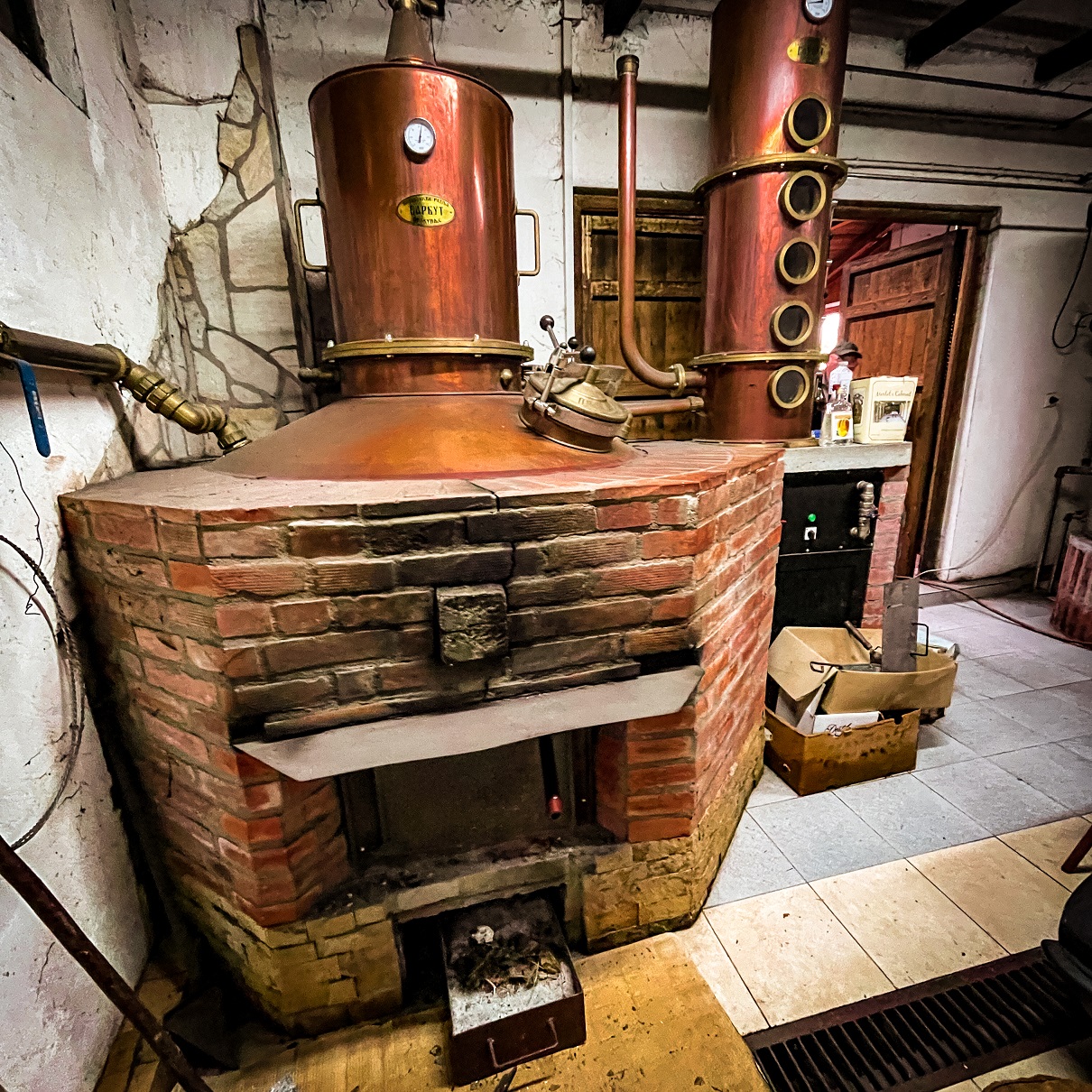
By launching Yebiga, Gould is introducing the traditional processes of home distillation to a retail market. Currently, there are two plum brandies within the Yebiga brand: BELA, a clear rakija and PRVA, an oak-aged rakija. The spirits are distilled on a mountain farm near Kraljevo in Central Serbia. The plum orchard sits at 800m, the highest elevation point for plums, and subsists alongside pines and other conifers. BELA is produced from an equal share of čačanska rodna and čačanska lepotica plums -- both varieties created by the Institute of Fruit Growing in Čačak, Serbia. This is the equivalent of Cornell AgriTech regarding the development of new grape varieties. Both of these plums were released in 1975 and according to the Institute, are high-quality cultivars most suitable for desserts and slivowitz. 

The plums are hand-harvested at full maturation which is quite labor-intensive since individual plums ripen at different intervals. This period lasts from late July to early August and after harvest, the pits are removed, and the fruit ferments from 10 days to 14 weeks. The fermented juice is then double distilled using a 500l wood-fired copper pot still. The wood for the fire is acquired from the local forest. Finally, the rakija is cut to 40% abv using pure mountain spring water. 

Having no oak treatment the BELA provides a full expression of the fruit - from the cultivars to the evergreen terrain. Not sure if my sensory impressions were influenced by their story, but there's subtle pine mixed with the stone fruit aroma. Plums are clearly noticeable on the palate just before the soft burn and lengthy finish. I can see why the BELA was awarded double gold at the  2021 San Francisco World Spirits Competition. 

The Yebiga rakija is currently available online via Mash&Grape ($31) and Yebiga and at retail locations in the following states:  CA, IL, NY, NJ, DC, FL, TX, MO, & MI. There is a map of retail stores on the Yebiga website. Finally, they are available at Total Wine in California and Texas as well as at Binny's in Illinois.  


Orchard and still photos courtesy of Yebiga.

Disclosure: We received samples from Yebiga through the BevFluence New Perspectives on Cider, Perry, and Brandy campaign in order to share our opinion about their products.

Thursday, July 14, 2022

The Virginia Cider Trail Coincides with the BevFluence Cider: New Perspectives on Cider, Perry, and Brandy Campaign

This is a big month for Virginia Cider. Last week the American Cider Association (ACA) announced the launch of the Virginia Cider Trail where users of the app can win prizes and receive discounts at participating cider houses. And it just happened that this summer I have already visited four of these establishments. And I believe I was the first to officially check-in using the Virginia Cider Trail app at Sage Bird Ciderworks and Ciders from Mars. 

In addition, our partner site at BevFluence has opened brand registration today for their Cider: New Perspectives on Cider, Perry, and Brandy campaign. The cider, perry, and brandy products will be presented to a combination of industry experts, mixologists, bartenders, creators, bloggers, writers, and other media – and across the craft beverage landscape. This will generate new perspectives about cider, perry, and apple brandy from creators who range from cider novices to experts. I also plan on taking the ACA's Certified Cider Professional (CCP) exam during this campaign and using the ciders with my training guide. Brands and content creators can register here for the BevFluence campaign or learn more about the CCP here.

Lost Boy Cider is an urban cidery in Alexandria and sources its fruit from various orchards in the Shenandoah Valley. In early June they hosted one of four sessions on the Virginia Cider Road Show presented by the ACA. After a brief overview of Lost Boy by cidermaker Dave, the ACA's Jennie Dorsey provided a history of cider, a history of cider in North America, and then the history of cider in Virginia. She then provided a brief overview of Virginia's three most important apple varieties: Newton (Albemarle) Pippin, Hewes VA Crab, and Harrison. She finished by discussing the ACA's Apple classes (bittersweet, bittersharp, sweet, & sharp); ACA Cider Families (cider, perry, fruit cider, botanical cider, & dessert ciders); cider cocktails; and cider-food pairings. Yes, a boatload of information was packed within each session. We finished with a food and cider pairing featuring cheeses from Cheestique. I think the Barrel-Aged cider paired with the Appalachian cheese, dried pear, and balsamic vinegar was my favorite -- very complimentary.

Castle Hill Cider is located east of Charlottesville in Keswick and has an interesting history regarding the propagation of cider apples. As stated on their website:

Colonel Thomas Walker, the original owner of Castle Hill Estate, was the first to bring Newtown Pippin apple scions to Central Virginia following his return from the Battle of Brandywine in 1777.  The variety was planted at Castle Hill and became known as the Albemarle Pippin apple.

And as most Virginia cider lovers know, the Albemarle Pippin is still one of the signature Virginia apple varieties and was even exported to England throughout the 1800s.  Castle Hill Cider was founded in 2020 and the estate is planted with 6,500 trees featuring more than 30 apple varieties including Albemarle Pippin, Black Twig, Harrison, Burford Red Fresh, GoldRush, Dabinett, Hewes Crab, and Wickson Crab. The ciders are bottled in either 750ml or 375ml bottles and range from sweet to dry. 

During our visit, we choose a Classic flight and a Barrel aged flight. The majority of the group preferred the Terrestrial 2020 where the tannins and slight RS are balanced. It's also an interesting blend that includes Black Twig, Winesap, and Ashmead's Kernel. Personally, I preferred the funky, dry, and naturally fermented in quevri Levity 2020. Is this the only American cider fermented and aged in Georgian quevri?

For the barrel-aged ciders, the Hewes Pommeau Reserve is fascinating with complexity created by four years of aging in Woodford Reserve barrels and Keswick Winery wine puncheons. I also enjoyed the Silver Bough where Dabinett and Golden Hornet ciders were aged over a year in rum barrels.

Sage Bird Ciderworks is located in downtown Harrisonburg and opened a couple years ago after the persistently hard work of Zach and Amberlee Carlson. This is the first cidery in the home of the Dukes and they offer an excellent array of various styles. I settled on a flight of five ciders - slightly more than the paddle size. The clear favorite was the Dry River Reserve -- their flagship brut cider made from a blend of Virginia-grown apples. The Peaches For Me fits perfectly into the upcoming BevFluence campaign since the cider was aged in used apple brandy barrels. The oak treatment is noticeable -- providing a peaches and cream feel with a boost of apple flavors. Finally, an interesting geographic cider is their Stay Gold, a dry cider inspired by West Virginia's official state fruit, the famed Golden Delicious apple. 

Ciders from Mars is located about 30 miles south in downtown Stanton across the street from both Ox Eye Vineyards and Redbeard Brewing Company. So no excuses for not visiting. The cidery was founded by Virginia natives and science-minded Nikki West and Jeremy Wimpey. And Nikki improved her cidermaking through courses at the Cider Institute of North America -> a partner of the American Cider Association. Over a burger from 1Tribe Farm, I sampled six ciders through a standard flight. The Helles Dry is a solid representation of a brut cider and on the other side of the spectrum, the Pink Oceans was interesting with a subtle strawberry profile. However, the most impressive cider was easily the Liquid Gang, made from foraged apples and fermented using native yeast. The tannic structure mimics biting into an apple. Could be my favorite cider made in Virginia and is on par with the excellent cider from New York's Aaron Burr Cidery.

Monday, July 11, 2022

Brandy, Gin and More from Croatia's First Craft Distillery: Brigljević Distillery

On my first day in Zagreb, at the Pink Day Festival, I discovered artisanal Croatian gin through Iguana Gin and quickly learned it was a  rising phenomenon in Hrvatska. Little did I know that ten days later I would be introduced to the man and distillery who started this trend. 

Knowing that I was completely free during my last full day in Croatia, the Zagreb County Tourist Board arranged a visit to the small city of Velika Gorica and the larger Turopolye region just south of Zagreb. This region has a vibrant history and in 1225 the inhabitants of Turopolje were recognized as free noblemen by King Bela IV and were exempted from serving the Town of Zagreb. And on January 7th, 1737 King Karlo III gave the noble municipality of Turopolje the official stamp to create a coat of arms. The coat of arms of all the noble families, wooden architecture, and more local culture and history is on display at the Turopolje Museum.

Fortunately, my prudent and knowledgeable tour guide had more plans for me and had scheduled a visit to the area's only distillery:  Brigljević Distillery.  The craft distillery was founded in 2002 by Miljenko Brigljević and today is one of the oldest distilleries in Croatia. And in 2015, Brigljević decided to create a handcrafted gin which he called Flying Cat Gin. The recipe was based on London Dry Gin and featured juniper berries, fennel seeds, almonds, cinnamon, lemon peel, ginger, mint, and clove. In addition, the family has long ties to Turopolje where the Brigljević family was awarded the noble title in 1524. This family coat of arms is proudly displayed on the labels of the Brigljević liqueurs. 

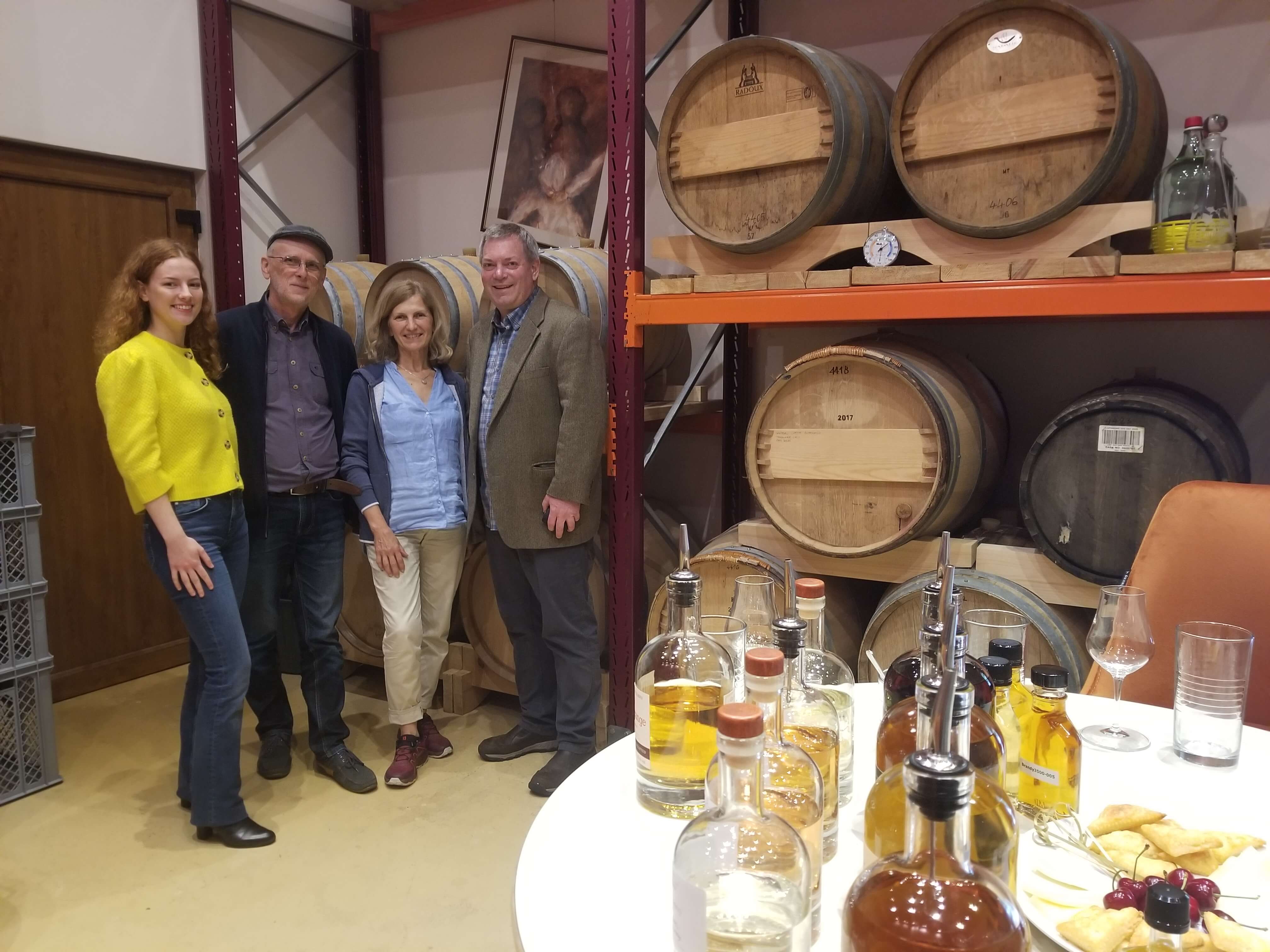
I was met by Miljenko, his wife, and their daughter Gabriela -- who plans to succeed her father. The focus of this visit was not gin or liqueurs, but brandy -- and all distilled using the family's carport-ready copper pot still.  Miljenko emphasized throughout the tasting that focusing on the spirit's aromatics is the central guide to his craft. Today he and Gabriela also train their palates through regular meetings of a Zagreb whiskey club, but in the past Croatians had little concept or tradition of aged spirits. In general, Croatian Rakija is served fresh and if aged, usually in the bottle or small glass wine fermenters. In order to create a truly world-class aged spirit, Miljenko had to experiment with various oak casks to determine which worked best not only with an individual spirit but also with the local climate (mostly temperatures) as a whole. And they are still experimenting.

Barrelina Apple Brandy First Cask (50%)
This brandy is doubled distilled from local apple cider made from four apple varieties, including Pink Lady and Granny Smith, and aged 18 months in American oak barrels. Distilled in 2017 and bottled in 2020. Very harmonious between the apple aroma and flavors combined with the oak-driven vanilla and honey.. 

Barrelina Apple Brandy Teatro Vaniglia (55.1%)
This brandy is doubled distilled from local apple cider and aged for 24 months in barrique barrels made from American oak by an Italian cooperage. Distilled in 2018 and bottled in 2021. This brandy sizzles with apple aromas and flavors with notes of vanilla throughout. Very smooth at cask strength. 

Barrelina Pear Brandy Quarter Cask  (50%)
The double-distilled perry is aged four years in American oak quarter casks. Distilled in 2018 and bottled in 2022. This is a lengthy brandy with vibrant fruit and slight spices. 

Dark Forest 8-Year Pomace Brandy (44.1%)
This grape brandy was made by double-distilling four varieties of grapes grown in Baranja, Slavonia. The brandy was first aged for two years in a Slavonian oak barrel and then six years in a Bordeaux wine barrel. Distilled in 2013 and bottled in 2021. Expect complexity. Baked raisins and fig on the nose and then earthiness, raisins, honey, and more throughout the long finish. 

I also tasted several upcoming attractions of malt whisky and brandies aged in unique barrel sources such as Laphroaig and Chateau Lafite Rothschild. Innovation and experimentation are continual processes at  Brigljević Distillery.

Saturday, December 18, 2021

Swig & Ramble Season 1 Finale: The Tastes of 2021

Thanks to the fine folks at Swig & Ramble for having me as a guest to discuss my favorite spirits of 2021.  In between Mark interrupting Julia we discussed several Virginia and New York craft spirits from Dida's Distillery, Catoctin Creek Distilling Company, Cooperstown Distillery,  Hillrock Estate Distillery, and Kings County Distillery. There's also a shoutout to Florida's St. Augustine Distillery, plus my 2021 favorite -- the Maggie's Farm Rum - Allegheny Distilling Sherry Finished Rum -- American grown sugar cane fermented and distilled in Pittsburgh PA. Follow the Swig & Ramble Facebook Group to receive updates on the 2022 show schedule. Cheers.


Monday, November 15, 2021

Gazdina Vilijamovka Rakija from Republika Srpska, Bosnia

I purchased this bottle of Gazdinav Rakija Vilijamovka ($34) a while ago and just getting around to opening it. The Williams Pear is forefront with a creamy interior and an ethanol creeping burn. Serving chilled kills the burn with only a little effect on the aroma and flavor.

The producer, Prijedorčanka AD, is the largest fruit processor in Bosnia and Herzegovina, as well as the largest producer of fruit distillate in Europe. Interestingly, they are located in the Republika Srpska -- one of the two entities of Bosnia and Herzegovina, the other being the Federation of Bosnia and Herzegovina.

The fruit is grown in the Potkozarje region -- also known for its apple and plum orchards.  The fermented fruit is then distilled using column stills and the warehouse can store over 1,700,000 liters. That's a large facility. 

Monday, October 19, 2020

Serbian Rakija: Zaric Šljivovica & Hubert 1924 Quince

Rakija is an eau de vie styled fruit brandy popular in Slavic and Balkan countries and in Hungary where it is known as Palinka. It is the national drink of Serbia and the plum variety (Šljivovica) is actually a registered trademark with a Protected Designation of Origin (PDO). Rakija is also distilled from other fruits such as apricots, grapes, pears, and cherries where the fermented fruits are "baked" and not boiled in the distillation process. The first distillation is referred to as "soft brandy" whereas the second distillation is called prepecenica -- or "double-baked".  Plums are double-baked whereas apricot, quince, and pear brandies are often soft brandies in order to retain the fruit fragrance.

Historians claim that the spirit arose in the Balkans in the 16th century as a result of the Turkish invasions of the 14th & 15th centuries. However, there is now three separate archaeological evidence that Rakija was being distilled in Bulgaria in the 11th century.  Regardless of origin, rakija has been and still is a family staple throughout Eastern Europe. 

With Šljivovica, producers use different plum varieties and blend these together -- either combining before fermentation or after distillation. Three of the most popular plum varieties are Požegaca, Crvena Ranka, and Trnovaca. The latter is an older cultivated species of plum which are small and round and provides rich fruit. Crvena Ranka is another ancient species that is larger and thrives in poorer and drier soils. It is also sterile and thus needs to be pollinated by another plum species - often  Požegaca or better known as Damson.  However, this plum is very sensitive to frost and the Plum plox virus (a viral disease), thus vigilant care is taken in the orchards. 

Besides varietal differences within a rakija spirit, there are also geographic differences. For instance, in the Kosjeric region of western Serbia, fruit ripens late in the growing season due to the area's higher altitude. This translates to a ratio of sugars and acids and higher quality fruit sought by distillers.  In the Vojvodina province on the Carpathian Basin -- the plain that remained when the Pliocene Pannonian Sea dried out -- is full of rich and fertile loamy loess soils.  As a result, agriculture dominates in Vojvodina as the soil ensures a good supply of plant-available water, soil aeration, and various minerals. I recently purchased two Serbian Rakija from each of these areas. 

The Zaric Distillery operates in Kosjeric and produces numerous rakija from local fruit including the Zaric Distillery Kraljica ($52). Kraljica translates to Queen, is PDO protected, and is a prepecenica Šljivovica produced by the three plum varieties discussed above: Požegaca, Crvena Ranka, and Trnovaca. After the second distillation, the spirit is aged for a minimum of seven years in oak,  converting the clear Rakija into a style similar to cognac.  Even with the oak aging, plums leap through the nose and remain on the palate with a layer of smoke that lasts in a low burn setting (42% abv). I really like the smokiness as it doesn't overpower the fruit. 

Destillerija Hubert 1924 is located in Vojvodina - specifically in Banatsko Veliko Selo - near the Romanian Border. The family distillery was founded in 2007 but the building that houses the distilling operations was built in 1924, hence the name. They produce six brandies (Quince, Apricot, Apple, Plum, Pear, Cherry) using an old family recipe and the traditional double distillation in copper cauldrons. The fruit is sourced from the 15 hectares family orchard estate. Since quince is not fairly known in the U.S., I grabbed a bottle of the Dunja Quince Brandy ($44). Quince (Dunja in Serbian) is a pome fruit, related to apples and pears, that when ripe is bright yellow and looks like a fuzzy, short-necked pear. As a raw fruit, it is too sour and astringent to eat so is most often used in jams, cakes, and rakija.  It also has a relatively low sugar content in that 70 kg of fruit is necessary to produce 1 liter of brandy and fermentation occurs from autumn to spring. The flavor profile of this rakija is quite interesting with strong tropical aromas like pineapple but a more subdued pear inspired core. And very smooth at 40% abv.

Saturday, August 15, 2020

A Little Spain and Croatia in the Blue Ridge Mountains

Over twenty years ago, John Delmare and his family planted the first vines on the historic Rappahannock County property they had purchased called Glenway Farm. This site in the Blue Ridge Mountains has been farmed since 1804 and is well suited for grapes with its high elevation (900' and 1200'); southeast aspect, with 10% grade; and rocky soil comprised of shale, limestone, and clay.  They initially planted a variety of varieties from vinifera to hybrids - one such French hybrid being Vidal Blanc. This grape is a cross between the Vitis vinifera Ugni blanc and another hybrid variety, Rayon d'Or, and is intended to be winter-hardy with high sugar levels with moderate to high acidity.

Rappahannock Cellars released their first vintage of wines in 2000 and since that date, they have held back a portion of their Vidal Blanc in each successive year.  They take that Vidal and siphon it into five-gallon glass casks and place on the winery's roof where it ages in the sun for 10 months. The direct sunlight and heat oxidize the wine which, when optimal, produces characters of cooked or dried fruit, nuttiness, and yeast. These casks are brought inside and aged over the winter and then back-blended with the previous vintages in their version of a Spanish Solara system. Each year the Solara gets older with a portion bottled for release - which they appropriately label Solera ($34).

This wine is dry yet very complex - similar to a Spanish Oloroso sherry with nuttiness and yeastiness immediately apparent. Since the wine is naturally oxidized it can remain corked for a few months so is appropriate for sipping or in cocktails - one is mixing with grape brandy from the winery's sister distillery Dida's Distillery.

The distillery honors the Delmare's great-grandfather Paul Mariani as Dida translates to Grandfather in Croatia and it was their Dida who immigrated to California and introduced the family to agriculture. Distiller Allan Delmare further commemorates their heritage by producing the Dida's Vintners Choice Immature Brandy ($40), a grape brandy in the tradition of the Croatian fruit brandies - rakija.  In rare instances, you can find oak-aged rakija and in Hungary, the best home-made palinka's are those with a little oak seasoning.   The Dida's has even more seasoning using 100% in new American charred oak barrels which smooth the rouge edges without overwhelming the fruit. I found my local rakija source.  Zivjeli!!.

Friday, January 3, 2020

Demarest Hill Winery & Distillery - The Everything Store for Craft Beverages

Francesco Ciummo is a pioneer - yes they still exist. He learned how to graft vines at 17, moved to Belgium at 20 to work as a coal miner, then emigrated to Venezuela and learned the auto body trade. In 1961, at 26 years old, he came to the United States eventually purchasing a body shop in Bergenfield, NJ. Ciummo retired at 55, and soon afterward purchased 135 acres in Warwick, NY where he planted a vineyard. He opened Demarest Hill Winery in 1998 then started tinkering in other craft beverages such as distilled products in 2006 and hard cider more recently. Not satisfied with a limited portfolio, Ciummo has explored the boundaries of wine, spirits, vinegar, and flavorings currently offering over 90 distinct products for sale - 33 of which are distilled spirits and liquors.

During a Christmas Break visit, we sampled many of these offerings with a keen interest in the unique distilled products. For instance, Ciummo distills a rather tasty Clear Grappa but also sells versions augmented with honey, raisins, or figs. He follows a similar pattern with grape brandy, selling versions aged in Cherry Tree wood and our favorite the Triple Tree Plus Brandy ($22) – aged from maple, oak, apple, cherry and cedar trees from his property. I also enjoyed the Dandelion Brandy ($22) distilled with a dandelion flower mash and serves as a suitable digestif. The Sherry is suggestive of Jerez and the Tropical Liquore - a version of the Dominican drink "Mamajuana" is a blend of rum, red wine, and honey aged in the bottle with tree bark and herbs. And his fruit brandies, Cherry and Peach are sweet - but loaded with flavor.

As for wine, a majority of the products are on the sweeter scale but there are several dry offerings that are pleasant. The estate Dry Aurora - a white hybrid grape variety produced by Albert Seibel - is complex and interesting. And the off-dry Riesling comes across drier as the acids enable a crisp and clean finish. For reds, the Bacchus Noir made from Baco Noir was our favorite followed by the Warwick Black Pearl and Warwick Red Deer composed of De Chaunac and Marechal Foch respectively. For a final, try the Apple Cider and Rum ($14) which is only 2% alcohol but provides a delicious and deep apple flavor.

Monday, September 30, 2019

From Aveleda - the Adega Velha 6 Years Old Reserva Brandy

Flying home from Lisbon last month I sounded my pockets (1) and found a few extra Euros in which I converted to a 500ml bottle of Adega Velha 6 Years Old Reserva Brandy ($22). This grape brandy is made in the far northwestern DOC of Vinho Verde from a mixture of indigenous grapes: Vinhão, Azal Tinto, Barraçal, and Espadeiro.

Specifically, these grapes were grown in the granite and sandy loam soils at the Quinta da Aveleda vineyard. This site is located in the hilly sub-region of Sousa which enjoys a generally Mediterranean climate with Atlantic influences. The Aveleda winery was founded in 1870 and is currently managed by the 5th generation of the family and is the largest producer and exporter of Vinho Verde wine.

The wine is distilled using an alembic Charentais still - a similar Cognac still used for the Lepanto Brandy de Jerez Solera Gran Reserva. The brandy is then aged six years in Limousin oak casks - the same oak preferred in the Cognac region and popular with brandy makers because of it's wide grains. This translates to a more tannic profile than tight-grained woods.

Despite these tannins, this is a soft brandy, some floral and woody aspects in the nose with a fresh nutty and honeyed core. Love the finish, long with little burn. Cheers.

(1)  One of my favorite lines from Moby-Dick.

Wednesday, October 24, 2018

Eastern European Moonshine: Rakija, Palinka, Slivovitz

Some of the greatest moments when traveling to Eastern Europe is when you are handed a vessel that doesn't contain its original liquid. Instead it is filled with homemade palinka or slivovitz, a fruit brandy distilled clear and usually at exceedingly high abv - sometimes reaching 70 proof. The liquid has heat, but in the best cases portrays the fruit nicely with a burn that evaporates rather quickly. The brandy is derived from a range of harvested fruit such as peaches, plums, Meggy (sour cherries), Quince, Grapes, Pears, or Apples and has different versions throughout central and eastern Europe: Albania, Austria, Bosnia, Bulgaria, Croatia, Czech Republic, Greece, Hungary, Montenegro, Poland, Romania, Serbia, the Slovak Republic, and Slovenia.

In most of these countries the spirit is called Rakija or the domestic equivalent to that word and is usually the most popular spirit in that country. In Serbia it is known as Slivovitz, made from plums, and is that country's national drink. In Hungary and parts of Austria it is known as Palinka and the first records of its consumption date from 1332. Landowners, Cistercian monks and Jewish residents continued the traditional methods of double distilled after the fruit has naturally fermented. Today Palinka is widely produced and consumed both legally and illegally and the government is currently battling the EU to legalize the distillation of small quantities of palinka for home use. Home distillation is so popular in Hungary that department stores sell small distilling kits.

In Croatia where Rakija is the most popular spirit, it is sometimes infused with herbs to create Travarica which is usually served at the beginning of meals. Croats in central Croatia enjoy šljivovica, a version of plum brandy, and in throughout the Adriatic different islands and regions infuse with bitters, anise, walnuts, and honey.

In the Washington DC area, access to this spirit is limited. In Virginia most ABC stores carry the kosher Maraska Slivovitz Old Plum Brandy made in the historic city of Zadar. The ABC store in the Arlington section of Courthouse carries a range of Slivovitz from Serbia and Bosnia and in Clarendon or DC check at the Ambar Restaurant which carries a range of Serbian Slivovitz. The Quince is my favorite. In DC, MacArthur Beverages and Schneider's of Capitol Hill carry the Czech Jelinek Slivovitz and many others stores carry a version of Serbian Slivovitz. And in Maryland, the Montgomery County stores carry both the aforementioned Jelinek and Maraska labels as well as the Hungarian Zwack Slivovitz. Cheers.