Showing posts with label Rotgipfler. Show all posts

Wednesday, May 20, 2026

Fine Wines from Austria: A Curated Embassy Tasting with Klaus Wittauer

Our visit to the Austrian Embassy during the EU Open House began with a seminar titled Fine Wines from Austria, led by Klaus Wittauer of KWSelection and hosted by Decanter Wine Boutique. Over the course of tasting nine curated wines, Wittauer guided the room through Austria’s landscapes, grape varieties, and producers with an ease that comes only from long familiarity. His commentary blended regional insight, stylistic context, and personal stories from each winery, turning the seminar into a compact tour of Austria’s wine culture. By the end, the experience felt less like an introduction and more like an invitation—one that makes you want to book a flight and continue the exploration firsthand.

The Steininger Cabernet Sauvignon Rosé 2025 comes from Weingut Steininger, a family‑run estate in Langenlois in the Kamptal region of Lower Austria, an area known for its cool nights, loess soils, and a long tradition of precise, aromatic winemaking. While Cabernet Sauvignon is not the dominant red grape of Kamptal - or even Austria, Steininger has built a reputation for crafting focused, elegant rosé from this international variety. Cabernet Sauvignon’s naturally thick skins and structured tannins soften beautifully when handled gently, producing a rosé with crisp red‑berry fruit, subtle herbal tones, and a refreshing mineral backbone. The wine reflects Kamptal’s ability to translate even non‑native grapes into expressions of clarity and finesse, shaped by the region’s diurnal shifts and limestone‑influenced soils.

The Paul Dired­er Gemischter Satz 2025 represents one of Austria’s most historic wine styles: a true field blend harvested and fermented together. Paul Dired­er, based in the Wagram region, works with traditional mixed plantings that include varieties such as Grüner Veltliner, Riesling, Weissburgunder (Pinot Blanc), Müller‑Thurgau, Fruhroter Veltliner, and others depending on the vineyard. Wagram’s deep loess soils give these blends a signature texture—round, lightly creamy, yet still lifted by bright acidity. Gemischter Satz is prized for its layered aromatics and natural balance, and Dired­er’s version captures the charm of the style: orchard fruit, white flowers, citrus, subtle spice, and a seamless palate. 

The Steininger Ried Loisium Grüner Veltliner 2024 Kamptal DAC Reserve comes from a single vineyard adjacent to the LOISIUM wine center in Langenlois, where Grüner Veltliner thrives on a mix of primary rock and loess. Steininger is widely respected for its precise, terroir‑driven expressions of Grüner, and the Loisium site produces a particularly vibrant style. Grüner Veltliner, Austria’s flagship white grape, shows its classic traits here: white pepper, citrus, green apple, and a clean mineral line. The vineyard’s exposure and soil composition give the wine both freshness and depth, making it a benchmark example of Kamptal’s ability to produce Grüner with structure, tension, and longevity.

The Steininger Ried Kittmannsberg Grüner Veltliner 10WT Erste Lage 2023 offers a contrasting expression from another of the estate’s important single vineyards. Kittmannsberg sits slightly higher and benefits from cooler airflow, producing a Grüner Veltliner with more concentration and a deeper, more textural mid‑palate. The soils here—loess over ancient bedrock—allow Grüner to develop ripeness without losing acidity. The wine often shows richer notes of stone fruit, subtle smokiness, and a more pronounced peppery finish. It is a study in how site variation within Kamptal can shape the same grape into distinct personalities, each with its own sense of place.

The Heinrich Hartl Rotgipfler Gumpoldskirchen Thermenregion 2023 highlights one of Austria’s rarest and most regionally specific grapes. Rotgipfler is native to the Thermenregion, south of Vienna, where limestone‑rich soils and warm breezes from the Pannonian plain create ideal conditions for this aromatic, full‑bodied white variety. Heinrich Hartl is known for championing local grapes such as Rotgipfler and Zierfandler, producing wines that balance richness with precision. Rotgipfler typically shows ripe tropical fruit, floral notes, and a distinctive creamy texture supported by lively acidity. Hartl’s version captures the grape’s natural generosity while maintaining elegance, making it a standout example of a variety found almost nowhere else in the world.

The Ruttenstock Riesling Alte Reben 2023 is a blend of Himmelreich and Steinleiten fruit that comes from the Kremstal region, where Riesling thrives on steep terraces of primary rock and gravel. Weingut Ruttenstock is a family estate that focuses on clean, expressive white wines shaped by the region’s cool climate and stony soils. Riesling from Kremstal tends to be taut, aromatic, and mineral‑driven, and Ruttenstock’s bottling reflects these traits with notes of citrus, peach, and crystalline acidity. The wine’s structure and purity speak to the region’s ability to produce Rieslings that offer both approachability and aging potential.

The Paul Dired­er Zweigelt 2024 is a classic, easy‑drinking expression of Austria’s most widely planted red grape. Zweigelt, a crossing of Blaufränkisch and St. Laurent, is known for its juicy cherry fruit, soft tannins, and versatility. Dired­er’s version, bottled in a generous one‑liter format, emphasizes freshness and drinkability—an everyday wine meant for the table. Wagram’s loess soils give the wine a round, supple texture, while the grape’s natural vibrancy keeps it lively. It is a straightforward but well‑crafted example of why Zweigelt remains a staple of Austrian red wine culture.

The Steindorfer Apetlon Rouge 2022 comes from the village of Apetlon in Burgenland, near Lake Neusiedl, where warm temperatures and sandy soils create ideal conditions for red blends. Weingut Steindorfer is known for producing expressive wines that highlight the region’s ripeness and sun‑driven character. This Apetlon Rouge vintage is a blend of 40% Blaufränkisch, 30% St. Laurent, and 30%vZweigeltv-- crafted into a smooth, fruit‑forward style. The wine shows dark berries, gentle spice, and soft tannins, reflecting Burgenland’s reputation for approachable yet flavorful reds shaped by the lake’s moderating influence.

The Heinrich Hartl Ried Kräutergarten Pinot Noir Thermenregion DAC 2021 showcases the Thermenregion’s growing reputation for cool‑climate red wines. The Kräutergarten vineyard, with its limestone soils and favorable exposure, allows Pinot Noir to ripen slowly, developing aromatic complexity without losing freshness. Hartl’s approach emphasizes finesse and purity, producing a Pinot Noir with red cherry, forest floor, and subtle herbal notes—true to both the grape and the site. The wine demonstrates how the Thermenregion, once known primarily for white varieties, has become a source of elegant, Burgundian‑styled reds shaped by its unique geology and microclimate.

Tuesday, June 21, 2022

A Tasting To Remember at Krauthaker Vineyards and Winery


Wine lovers are well aware of the 45th parallel North - the line halfway between the equator and the North Pole - that runs through many of the world's predominant wine regions: Bordeaux, Rhine Valley, Piedmont, Lombardy, Veneto, Oregon, and Michigan. Less well-known is that this demarcation runs through Croatia at the Istria peninsula and at our current focus: the Požega Valley in Slavonia. Winemaking has occurred in this valley near Kutjevo since the Illyrians, Celts, and Romans and continues today through the efforts of the Krauthaker family through the endeavors of the legendary Vlado Krauthaker. During our recent visit to the winery, we gained an even greater appreciation for their operation through a tasting and dinner which lasted over five hours and reached 33 wines and brandy from the tank, bottle, and barrel.

In 1976, Vlado Krauthaker came to Kutjevo from Slovenia and began working at the historic Kutjevo - Winery 1232 - today the largest producer in Croatia and also claims the oldest working cellar in Europe. For 18 years (14 as the chief oenologist) he worked at this wine-cooperative championing Graševina and Slavonian wine. Eventually, he left the comfort of that position and planted one hectare of vines and launched Krauthaker Vineyards and Winery. Although he still admires Slavonian Graševina (Grape Spotlight: Slavonian Graševina with Krauthaker Winery) he has planted 43 other grape varieties and expanded the estate to 50 hectares while also operating and overseeing 65 hectares of cooperative vineyards. 

These vineyards are located on the southern slopes of the Krndija Mountain at elevations of 200 and 300 meters. The slopes and the Požega Valley were recognized as a winegrowing land by the Illyrians and the ancient Romans called it the "Golden Valley" (Vallis Aurea). This golden valley is known for viticulture not only because of the angle of the sun at 45 degrees longitude; but also because the valley was part of the Pannonian Sea and consists of sandy soils containing fossilized sea creatures. At Krauthaker, they fertilize this nutrient-poor soil with manure and work the vineyards using horse labor as has been the tradition for centuries. 

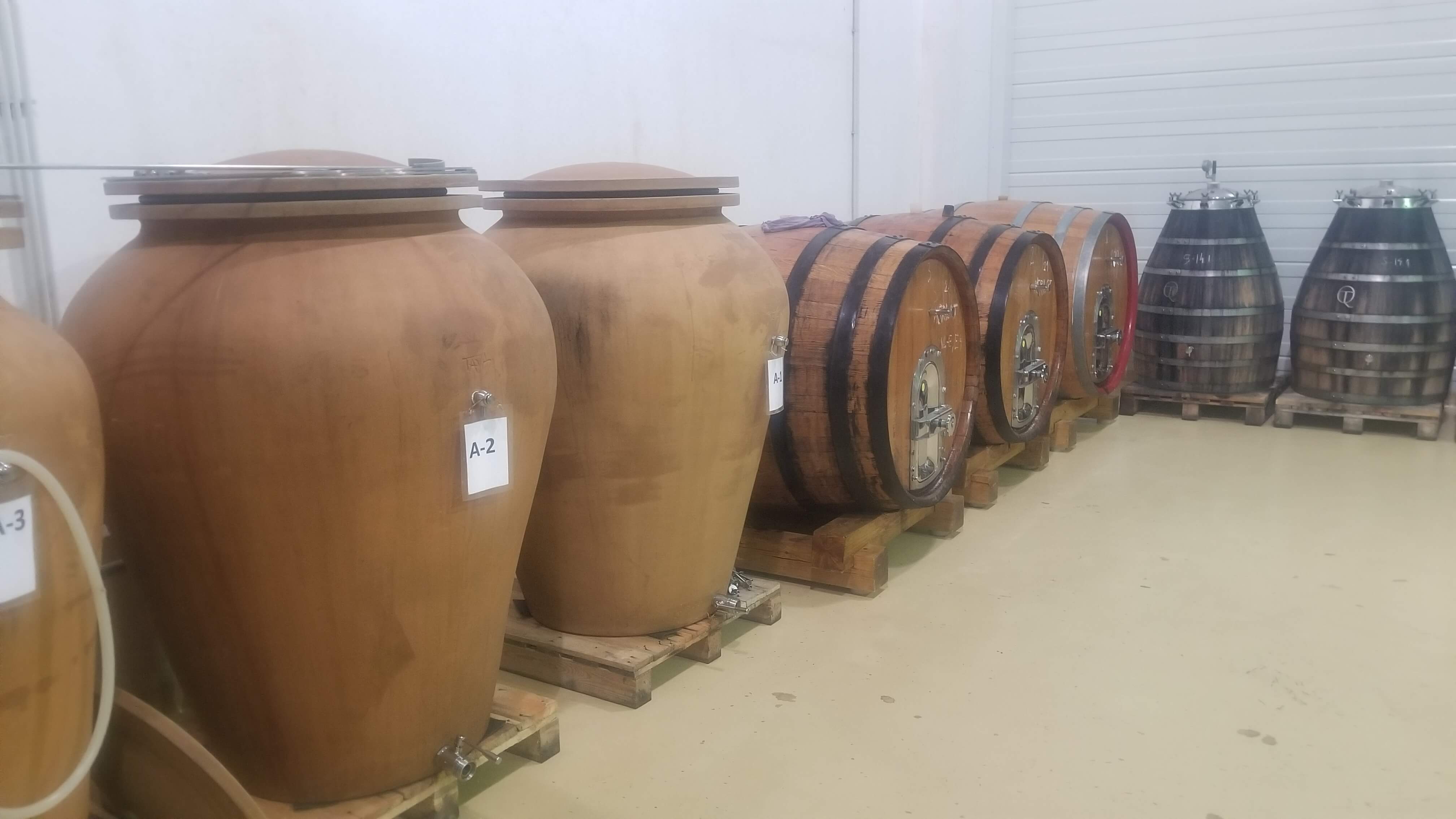
Whereas Vlado continues to oversee the vineyards, his daughter Martina is now responsible for the winemaking and together they have accelerated innovations in the cellar. Vlado had introduced the use of amphora in the mid-2000s and now they utilize egg-shaped wooden barrels to allow the lees to circulate in the wine without any dead spots. They also innovate in the vineyard, planting 44 grape varieties with many used solely for experimentation in the cellar. That being said, Graševina has the largest share of total production at 22%. 

During our visit, we are initially greeted by Martina and her cousin Ivan - both having been raised in the vineyards and cellars and understanding the complete history and processes of the winery. We first visited the 12-year-old new production area and cellar - housing thousands of liters of wine settling in stainless steel, amphora, and various-sized barrels. Tasting a few Graševinas from the tank allowed us to attest to their freshness, minerality, almonds, and bright fruit profiles. 

We then traveled to their tasting room and initial cellar to start the marathon tasting. Ivan had pulled a lineup of wines starting with the refreshing and aromatic charmat-made Julija 2021 - a sparkling wine blend of Muscat Ottonel and Zelenac (Rotgipfler). This last grape (a natural crossing of Traminer and Roter Veltliner) was the basis for a most interesting wine - the 2020 Krauthaker Zelenac Kutjevo (82 HRK).  It is green and nutty but the slightly bitter profile is complemented by strong floral notes and significant tannins.  Later that evening, Ivan introduced us to the 2016 Krauthaker Kuvlakhe - an amber wine that rested 90 days on its skins in amphora. In 2009, this had been the winery's first amphora wine and the first label on the Croatian market free of sulfur. The 2016 has a great mouthfeel, structured, with a solid tannin backbone 

As for Graševina, we started with the 2021 Podgorje Graševina (65 HRK), which is bright with almonds and green apples, but was overshadowed by the savory 2020 Graševina Mitrovac (77 HRK). The grapes for this wine were harvested from the estate's oldest vineyards (35-55 years old) about two weeks after the Podgorje. The wine sits 10 months on lees developing complexity, texture, and showing more stone fruits. Over dinner, we sampled two more Graševina wines starting with the 2020 Krauthaker Graševina Kasna Serba (100 HRK) - a late harvest wine with layers of apricots, honey, and candied fruit. This was followed by the 2019 Krauthaker Graševina Izborna Berba Prosušenih Bobica (100 HRK) - another delicious dessert wine made with botrytis grapes.

There were plenty of red wines as well -- not surprisingly a few Frankovka and Pinot Noir. More unanticipated was a Nebbiolo, Syrah, Muskat riza (Red Muscat), Mercs (Merlot and Cabernet Sauvignon blend). These were all excellent wines, truly representative of the respective grapes and region. 

It was not only a pleasure meeting Vlado Krauthaker - but a lifetime of memories of spending so much time with the wine-making legend as well as Martina and Ivan. We will be posting quite often in the future about these wines and any we find through Croatian Premium Wine Imports. They currently have the 2019 Podgorje Graševina in stock.