Showing posts with label Shenandoah Valley. Show all posts

Friday, August 7, 2026

Shenandoah Valley - Appalachian Highlands Road Trip Stop 3: Rockbridge Vineyards and Brewery

Recently I spent a couple days traveling the backroads of the Shenandoah Valley into the Appalachian Highlands visiting as many craft beverage establishments as possible. This endeavor included four wineries in the Shenandoah Valley, two breweries in the Appalachian Highlands, and a couple cider houses within both regions. Here's the story

The Shenandoah Valley is a 140–150 mile long and 25 miles wide geographic corridor located in western Virginia and the eastern panhandle of West Virginia.  It is bounded to the east by the Blue Ridge Mountains and to the west by the Allegheny Mountains. Plus, the valley floor is bisected by Massanutten Mountain, a 50-mile ridge that splits the valley into sub-valleys and separates the north and south forks of the Shenandoah River.  The region features karst topography with limestone bedrock that creates fertile soil, sinkholes, and extensive cave systems.

Grape growing in the Shenandoah Valley is shaped by the region’s position between the Allegheny Mountains and the Blue Ridge. These ranges create a rain shadow that results in lower annual precipitation compared to other parts of Virginia. Lower humidity reduces disease pressure, which can allow growers to extend the growing season when conditions permit. Vineyard elevations commonly range from roughly 900 to 1,500 feet, contributing to cooler nighttime temperatures. Soils in the area include limestone, shale, and loam, which drain efficiently and support varieties that benefit from moderate fertility and consistent water management. Like the rest of the Commonwealth, Chardonnay and Cabernet Franc are popularly planted grapes, but the cooler climate is also suitable for Riesling, Sauvignon Blanc, Albarino, Seyval Blanc, and late‑ripening vinifera varieties such as Petit Verdot and Cabernet Sauvignon.

From Cave Ridge Vineyard, it was time for the longest segment, 70+ miles south to Raphine. Having plenty of time, I took the more scenic Route 11 most of the trip, jumping onto Route 81 to avoid the traffic through downtown Harrisonburg and Staunton. 

Rockbridge Vineyards and Brewery is located in the southern portion of the Shenandoah Valley and has operated since 1992 under the direction of winemaker Shep Rouse. The property sits within a landscape of rolling farmland and limestone‑influenced soils typical of the Valley, and over several decades the estate has expanded its plantings to include vinifera and hybrid varieties suited to the region’s climate. Riesling, Cabernet Franc, Chardonnay, Traminette, and Pinot Noir form part of the core vineyard holdings. More recently they added a brewery and cider program -- creating a combined wine, beer, and cider facility that should be attractive to all craft beverage lovers.

I've tried several of their wines throughout the years and in fact served their St. Mary’s Blanc at our wedding.  The wine is named for the St. Mary’s Wilderness, Virginia's largest designated wilderness area, encompassing approximately 10,000 acres (specifically 9,826 to 10,090 acres) of rugged terrain in the Blue Ridge Mountains. The current vintage is 100% Vidal Blanc and fermented to create a dry citrus profile. Looking forward to celebrating an anniversary with a new bottle. 

So instead of wine, I opted for a flight of three beers and one cider.  This flight started with their flagship Pale Ale which is based on Sierra Nevada's legendary Pale Ale. Expect a decent amount of citrus and pine at the front and tail. The Robust Porter followed which has that classic dry roasted and chocolate profile. The downfall, in my opinion, was the over abundance of hops. Their Coffee-Milk Stout batted third in the lineup and is a collaboration with Crucible Coffee Roasters. A solid beer; love the lactose. The final pour, and my favorite, was the Rock Dry Cider. They nailed this blend of Winesap and Golden Delicious apples; a cider that is dry, yet flavorful with a balanced tartness and acidity.  Unfortunately their canning machine was out of service. 

Moving into the wine tasting bar I was able to sample two of my favorite Rockbridge expressions, the 2018 DeChiel Reserve Riesling and DeChiel Reserve Pinot Noir. Riesling has been a long‑standing focus at Rockbridge, and the estate’s plantings benefit from the Valley’s cooler nights and well‑drained soils. The estate grown 2018 DeChiel Reserve Riesling has .5% residual sugar, aged in stainless steel, and shows the age ability of the grape variety - a feature that is under appreciated. Expect orchard fruit, citrus, and firm acidity. Pinot Noir is less commonly planted in Virginia due to the state’s humidity and disease pressure, but the Shenandoah Valley’s lower rainfall and cooler nights make it one of the few regions in the state where the grape can be grown with consistency. The DeChiel Reserve Pinot Noir is produced from estate fruit and shows the lighter color and moderate tannin typical of the variety. 

Monday, August 3, 2026

Shenandoah Valley - Appalachian Highlands Road Trip Stop 2: Cave Ridge Vineyard

Recently I spent a couple days traveling the backroads of the Shenandoah Valley into the Appalachian Highlands visiting as many craft beverage establishments as possible. This endeavor included four wineries in the Shenandoah Valley, two breweries in the Appalachian Highlands, and a couple cider houses within both regions. Here's the story

The Shenandoah Valley is a 140–150 mile long and 25 miles wide geographic corridor located in western Virginia and the eastern panhandle of West Virginia. It is bounded to the east by the Blue Ridge Mountains and to the west by the Allegheny Mountains. Plus, the valley floor is bisected by Massanutten Mountain, a 50-mile ridge that splits the valley into sub-valleys and separates the north and south forks of the Shenandoah River. The region features karst topography with limestone bedrock that creates fertile soil, sinkholes, and extensive cave systems.

Grape growing in the Shenandoah Valley is shaped by the region’s position between the Allegheny Mountains and the Blue Ridge. These ranges create a rain shadow that results in lower annual precipitation compared to other parts of Virginia. Lower humidity reduces disease pressure, which can allow growers to extend the growing season when conditions permit. Vineyard elevations commonly range from roughly 900 to 1,500 feet, contributing to cooler nighttime temperatures. Soils in the area include limestone, shale, and loam, which drain efficiently and support varieties that benefit from moderate fertility and consistent water management. Like the rest of the Commonwealth, Chardonnay and Cabernet Franc are popularly planted grapes, but the cooler climate is also suitable for Riesling, Sauvignon Blanc, Albarino, Seyval Blanc, and late‑ripening vinifera varieties such as Petit Verdot and Cabernet Sauvignon.

Cave Ridge Vineyard is located only a short drive from our first stop at Kindred Pointe and was established in 2000 by Randy and Karen Phillips. The property sits on a slope with limestone‑influenced soils typical of the central Valley, and the vineyard has expanded over time to include a mix of vinifera and hybrid varieties chosen for their suitability to the region’s climate. The estate plantings include Cabernet Franc, Cabernet Sauvignon, Chardonnay, Chambourcin, Riesling, Viognier, Petit Verdot, and several other varieties that respond well to the Valley’s lower humidity, extended growing season, and diurnal temperature shifts. The winery produces a range of wines from these estate vineyards, supplemented at times by fruit from nearby growers within the Shenandoah Valley American Viticultural Area.

We took a different approach this time. Instead of a flight we sat down with a glass of their Blanc de Blanc Sparkling Riesling ($32).Why? Well, how can you refuse a glass of sparkling Riesling? Riesling has long been planted at Cave Ridge and the grape responds well to the Valley’s limestone‑rich soils and cooler nighttime temperatures. Riesling’s naturally high acidity makes it suitable for sparkling wine production, and the Blanc de Blanc designation indicates that it is made entirely from white grapes. The wine shows the grape’s typical combination of acidity and light fruit character works well in the sparkling format. 

On leaving, I purchased a trio of wines that seemed incredibly interesting. AlbariƱo thrives in the Mid-Atlantic where it shows firmer structure and more pronounced stone‑fruit notes as opposed to Galicia. And I remember tasting their 2024 AlbariƱo ($30) at a recent Governor's Cup event.  Looking forward to compare this Shenandoah version with others from Maryland and Loudoun County. Rkatsiteli. How could I pass on this historic Georgian grape variety that is slowly expanding in the U.S. beyond New York's Finger Lakes. I expect the 2025 Rkatsiteli ($26) to show the variety’s typical combination of citrus, apple, and light spicey notes. I recently opened a bottle of white Cabernet Franc from Capstone Vineyards and this style must be a new trend as Cave Ridge offers a 2024 Blanc de Cabernet Franc ($27). To produce a white Cabernet Franc, the grapes are whole cluster pressed -- quickly after harvest -- to prevent any red pigments in the juice.  Expecting a well structured wine with a lengthy finish.

Update: Well, we opened the 2025 Rkatsiteli and it is excellent. Light apple to pear on the nose followed by more concentrated pommeau character, subtle spices, and juicy acidity. Should have purchased more than one bottle. 
Thursday, July 30, 2026

Shenandoah Valley - Appalachian Highlands Road Trip Stop1: The Winery at Kindred Pointe

Recently I spent a couple days traveling the backroads of the Shenandoah Valley into the Appalachian Highlands visiting as many craft beverage establishments as possible. This endeavor included four wineries in the Shenandoah Valley, two breweries in the Appalachian Highlands, and a couple cider houses within both regions. Here's the story

The Shenandoah Valley is a 140–150 mile long and 25 miles wide geographic corridor located in western Virginia and the eastern panhandle of West Virginia.  It is bounded to the east by the Blue Ridge Mountains and to the west by the Allegheny Mountains. Plus, the valley floor is bisected by Massanutten Mountain, a 50-mile ridge that splits the valley into sub-valleys and separates the north and south forks of the Shenandoah River.  The region features karst topography with limestone bedrock that creates fertile soil, sinkholes, and extensive cave systems.

Grape growing in the Shenandoah Valley is shaped by the region’s position between the Allegheny Mountains and the Blue Ridge. These ranges create a rain shadow that results in lower annual precipitation compared to other parts of Virginia. Lower humidity reduces disease pressure, which can allow growers to extend the growing season when conditions permit. Vineyard elevations commonly range from roughly 900 to 1,500 feet, contributing to cooler nighttime temperatures. Soils in the area include limestone, shale, and loam, which drain efficiently and support varieties that benefit from moderate fertility and consistent water management. Like the rest of the Commonwealth, Chardonnay and Cabernet Franc are popularly planted grapes, but the cooler climate is also suitable for Riesling, Sauvignon Blanc, Albarino, Seyval Blanc, and late‑ripening vinifera varieties such as Petit Verdot and Cabernet Sauvignon.

Our first stop of this trip was at The Winery at Kindred Pointe which sits within the central agricultural landscape of the Shenandoah Valley. The winery operates on a property that originally functioned as an equestrian farm. The transition to grape growing began in the early 2010s, when the owners planted varieties suited to the conditions of the region. The tasting room and surrounding structures retain elements of the site’s earlier use, including the horse imagery that appears on several wine labels. The winery produces small quantities of wine from estate fruit and from growers within the Shenandoah Valley American Viticultural Area.

The tasting flight offered at Kindred Pointe shows how they leverage the history and regional strengths of the Valley. We started with the Saving the Edinburg Mill ($32) , a blend of Albarino, Sauvignon Blanc, and Dazzle, that references the preservation of the historic pre-civil war era mill. For those like us newly introduced to the Dazzle grape, it was developed by the University of Arkansas that they describe as "floral and fruity with herbal and spicy aromas".  Expect to enjoy peaches and other lively stone fruit while admiring the artwork. 

We then moved on to a pair of Seyval Blanc wines starting with the stainless steel 2022 Seyval Blanc ($28). The is a fresh grapefruit forward wine with fantastic acidity. In contrast, the 2021 Seyval Blanc Skins ($28) was fermented on the skins which adds texture, tannin, and deeper color, while providing a more savory dimension that differs from the stainless‑steel style. 

Turning to reds, Petit Verdot is a major focus appeared in two vintages and a blend. The 2019 Petit Verdot French ($35) is aged 36 months in French oak and shows how long aging softens tannins and integrates dark fruit flavors. The velvety fruit is layered with soft vanilla and earthy characters. The 2020 Petit Verdot ($32) offers a comparison shaped by both the vintage and aging in American oak for the same 36 month period. This version is spicier, not as velvety, and with closer to smokey cedar. The final wine wine to discuss is their 2021 Hungarian Blend ($38), an interesting and unique blend of equal parts Chambourcin, Petit Verdot, and Dornfelder.  The typical Chambourcin profile is hidden as the 28 months in Hungarian oak and one year bottle aging softens the grapiness and allow the black fruit characters of the other two grapes to dominate.  This is a savory fire pit sipper. 

But instead of purchasing the Hungarian Blend I came home on a hunch with their single varietal 2021 Dornfelder ($36) that was aged for 36 months in new Hungarian oak. Check back to see if that was a good all. 

Tuesday, April 18, 2023

A Craft Beverage Road Trip along Route 340 in the Shenandoah Valley

On a trip home from Waynesboro, I decided to ditch the tractor-trailer-laden Route 81 and ventured north on the more peaceful and bucolic Route 340.  This allowed me to follow portions of both the Shenandoah Beerwerks Trail and the Shenandoah Spirits Trail while passing through the towns of Elkton, Shenandoah, and Luray. In total, I stopped at eight establishments, most for the first time, and returned home with enough beverages to carry me through the rest of the month. 

Basic City Beer Company
The Shenandoah Beerwerks Trail runs from the Harrisonburg area south to Lexington and Rockbridge County. Waynesboro is basically halfway between the two borders and is home to a favorite brewery Basic City Beer Co. and #thecompasscbf stop number 45. The brewery is housed in the former Virginia Metalcrafters building and is a destination itself with pizza and various arcade games (shuffleboard, pinball, etc), plus a large selection of beer. I usually stock up on two staples the Our Daily Pils German Pilsner and whatever Grin's Casket is available. On this visit, it was the Cherry Quad aged in Heaven Hill bourbon barrels with almonds. Can't wait to open during a firepit night.

Elkton Brewing Company
Remaining on the Shenandoah Beerwerks Trail, we headed north on Rt 340 to Elkton -- a small town situated between Massanutten Mountain and Skyline Drive -- and settled by German and Scots-Irish immigrants similar to the founders of Elkton Brewing (#thecompasscbf stop number 46). The Napotnik family opened the brewery in a building originally built in 1890 to house the Elkton Milling Company. They brew a large array of beers and had 14 on tap on our arrival. Our flight consisted of the Nekid Crik Kolsch, Blonde Bear Blonde Ale, Uncommon Elk California Common, and the BoysenTuley Pie Boysenberry + Graham Cracker + Vanilla GOSE / Sour. I can't imagine the thought process of Colonel Gos Tuley, who was responsible for killing the last known indigenous Virginia Elk in 1855. The Uncommon Elk was the favorite and worked well with the Bayou Gumbo available at the food truck.

Chateau Virginia
After leaving Elkton Brewing I noticed a Winery sign a block away and stopped to discover Chateau Virginia - a new Virginia winery that officially just opened in April. The winery is producing wine from Shenandoah grapes that hopefully will be available in the near future. Winemaker and founder Andrew Starkey studied and worked for two years in Champagne specifically at Crezancy. Andrew's sister Amanda is the resident sommelier. She also studied in France and was the sommelier at Pippen Hill Winery and The Inn at Little Washington. The winery also offers a wide selection of wines from around the world starting close to home with Williamsburg Winery but also with a special emphasis on Bordeaux, Beaujolais, Piemonte Italy, and Mendoza.

Wisteria Farm and Vineyard
From Elkton, we continued North on Rt 340 towards Luray, diverging onto Business 340 and Wisteria Farm and Vineyard. The farm is situated in the Page Valley enclosed by the Massenutten range to the west and Skyline Drive to the east and still within the Shenandoah Valley proper. And is fully part of the Shenandoah Spirits Trail. Not only do they produce wine from their estate grapes, but have a small flock of natural-colored Romney sheep as well as free-roaming chickens. I indulged in a flight consisting of the dry Seyval ($21), Persephone dry rose ($24), Chambourcin ($24), and Ashtaroot Petnat ($23). The Seyval was rather satisfying and I purchased a bottle of the Persephone primarily because of its unique flavor profile where the blend includes some Norton.

River Hill Wine and Spirits
This was our second visit to River Hill Wine and Spirits, the first precipitated after purchasing a bottle of their Corn Whiskey and Bourbon at an ABC store. This is a very small operation, located just minutes outside of Luray. On this visit, I discovered they just released a Rye Whiskey -- aged 12 months in oak. It's quite different from the spicier versions coming out of Kentucky - grassy and earthy, with a little chalk, dark chocolate, and licorice. Loads of flavors.

Blue Shepherd Spirits
We reached a milestone last weekend, visiting our 50th craft beverage establishment in 2023. This was Blue Shepherd Spirits, a distillery that opened in August 2022, very close to the caverns. Their three main spirits are vodka, gin, and rum with the mash for the first two based on local corn and sugar. The New World Gin has a citrus profile that is complimented by the juniper. The Dog Days of Summer Rum (90 proof) is distilled using both molasses and cane juice and infused with various spices. Not overly spiced however and has a nice balance with the traditional rum flavor. We purchased a bottle to use with our iiCiNG Pina Colada flavoring. Unfortunately, we couldn't purchase a bottle of our favorite spirit, their 6-month-aged Whiskey because of limited production. This is a complex whiskey made from a 70% corn, 20% rye, and 10% malted barley mash. Plenty of vanilla, caramel, honey, and a little rye spice.

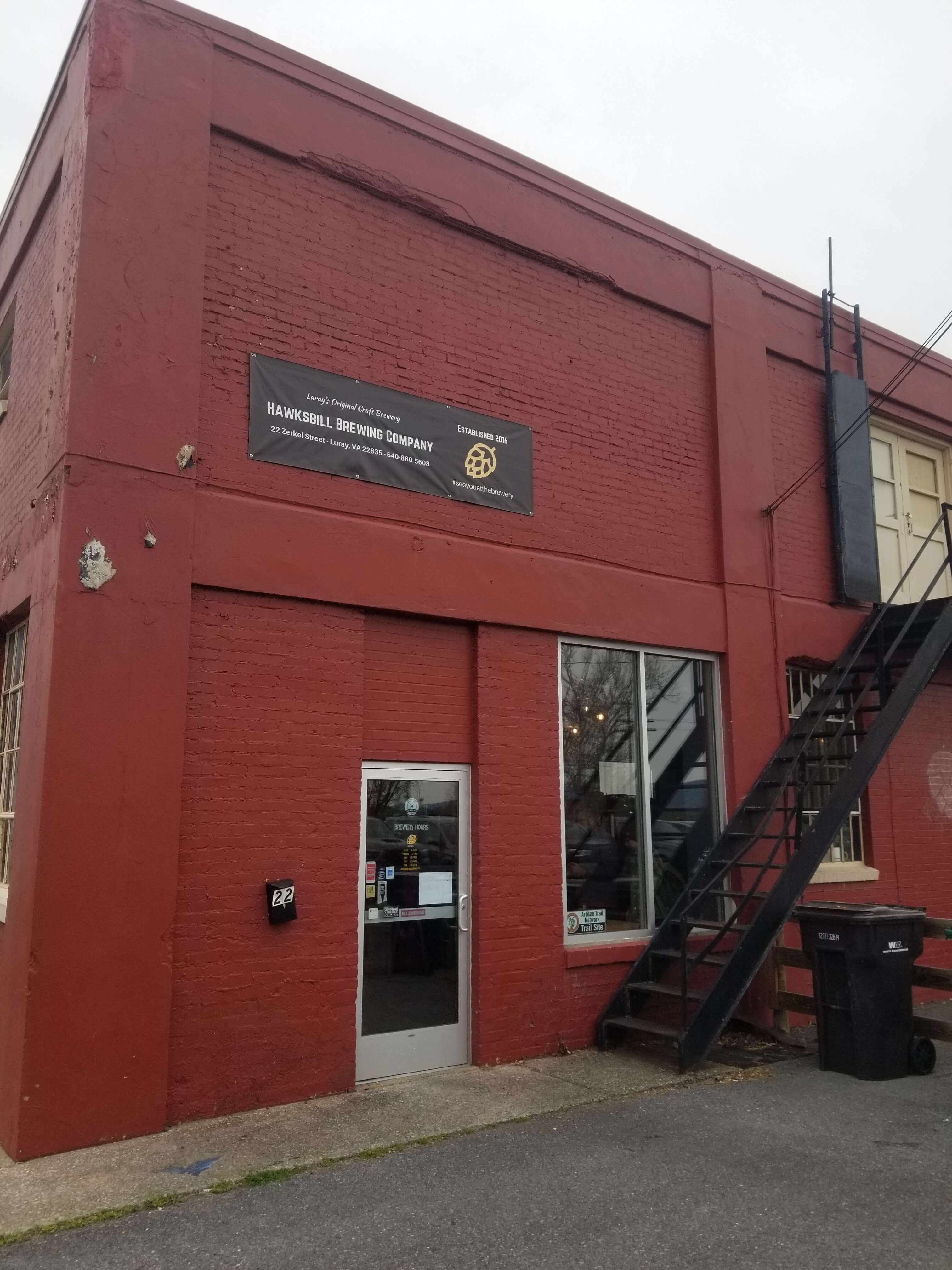
Hawksbill Brewing Co.
Our final stop in downtown Luray was Hawksbill Brewing Co., a six-year-old brewery that specifically targets using Page County grown ingredients. This was a bustling brewery with lots of beer drinkers with their dogs enjoying an interesting array of beer. My flight consisted of The Haymaker Cream Ale (a few cans came home with us), Bearfence Black Lager, Farmer's Brown Ale, and the Brown Cow Nitro Stout. Solid beers.

Castle Vineyards
It was appropriate that we started our trip in Waynesboro -- not far from Fishersville and Barren Ridge Vineyards -- and ended it at Castle Vineyards, a satellite tasting room for that winery. Actually, it's a joint venture between the descendants of Ralph Castle Davis (thus Castle Vineyards), a local businessman and farmer. R. Steven Davis (Uncle) and Jeremy A. McCoy (nephew) planted Viognier within their working cattle farm and partnered with Barren Ridge to host their wines surrounded by excellent views of the Shenandoah Valley and Blie Ridge Mountains. After a tasting of most of their portfolio, we returned home with our three favorites starting with the delicious 2020 Cabernet Franc. Two white blends also caught our fancy, first, the 2021 Harmony blends Petit Manseng, Viognier, Vidal Blanc, Chardonnay, and Sauvignon Blanc. Imagine the aroma in that bottle. Second was the 2021 Tinkling Spring, a blend of Riesling, Traminette, and Vidal -- more strong aromas and tropical fruit and saline.

Monday, November 21, 2022

Enjoy Beer, Wine, and Scenic Views from Hazy Mountain Vineyards & Brewery


We can all agree that every winery provides its own unique glorious view of the surrounding countryside and the views from Hazy Mountain Vineyards & Brewery are no exception. Except that it may provide the best mountain and valley views in Virginia, and arguably the entire East Coast.  The 35-acre estate vineyard off Afton Mountain is planted on south-facing slopes ranging in elevation from 800 feet to 1,140 feet within the Monticello AVA. And with amazing views of the Blue Ridge Mountains and Piedmont valleys.

In addition to the estate vineyard, Hazy Mountain farms 50 acres in the cooler Shenandoah AVA west of Staunton, on the southeast-facing slopes of the west side of the Shenandoah Valley. The Little North Mountain Vineyard also houses their production facility. Thus Hazy Mountain offers wines from two distinct Virginia AVAs - cool climate Riesling, Chenin Blanc, Grüner Veltliner, and Pinot Noir from the Shenandoah Valley and Chardonnay, Cabernet Sauvignon, Malbec, and Petit Verdot from Nelson County and the Monticello AVA.

We stuck to the white wines and were very impressed with these cool climate varietal wines. We learned that the 2020 Chenin Blanc was fermented and aged in large French oak puncheons and aged on lees in a barrel for 11 months, providing rich fruit texture and a larger mouthfeel. Great acidity too. As did the 2019 Dry Riesling and 2020 Gruner Veltliner with the Riesling very light in the Kabinett style and the Gruner providing layers of white grapefruit. As for beer, go no further than the German Pilsner. Excellent. Can't wait to visit for a Nelson County Dark Skies night.

Friday, October 1, 2021

#SipShenandoah Beer and Wine at Great Valley Farm Brewery & Winery


During our return from the  2021 Bristol Rhythm & Roots Reunion, and not hiking to Natural Bridge,  we stopped off at the Great Valley Farm Brewery & Winery to sample some beer and check sports scores.  As a consequence, we discovered a venue with outstanding views of the countryside, a solid portfolio of craft beer, as well as a couple delicious wines we had brought home. 

Owners Nathan and Irma Bailey purchased the land in 2008 with the intention to open a farm brewery which finally occurred in October of 2016.  At the same time, they planted a vineyard that now consists of six acres of various grape varieties including Gruner Veltliner, Vidal Blanc, Cabernet Franc, and Lemberger. Wine production started in 2019 and these wines are now available to the public. 

During our stopover, I chose a flight that consisted of a Grisette, Hibiscus Wit, NZ Pale Ale, and Milk Stout. A completely diverse range of beers.  The farmhouse Grisette was funky and was made using New Zealand Motueka hops leftover from the Pale Ale. The Wit was deliciously satisfying for that warm day. The Pale Ale had a solid structure and was made using NZ Nelson Sauvin and Motueka hops. And finally, the Milk Stout was as expected - velvety cream merging with chocolate and coffee.

Still a long way from home, we purchased a couple bottles of their 2019 Gruner Veltliner ($24) and 2019 Shenandoah Red ($30) to open at a later date. For the Gruner that was the next day and didn't last long. It's a very pleasant wine, creamy citrus, some saline, and abundant acids. The Shenandoah Road is a blend of Cabernet Franc, Petit Verdot, and Lemberger that is aged for one year in a mixture of French, American, and Hungarian oak.  This blend is ridiculously good with plenty of fruit, some spice, texture, acidity, and creeping tannins. Well done on this initial effort. 

October is Virginia Wine Month so try to visit as many wineries (and breweries) as possible during these 31 days. The Virginia Wine Marketing Board lists several events and theCompass Craft Beverage Finder will guide you to these establishments. Cheers.

Monday, February 22, 2021

Virginia Wine Chat — A Taste of the Shenandoah Valley

In 1982, the Shenandoah Valley AVA became the first  American Viticultural Area established in Virginia - and for that matter in West Virginia too as the boundaries include both Berkeley and Jefferson Counties in the Eastern Panhandle.  The fruitful valley is bounded by the Blue Ridge Mountains to the east and the Appalachian and Allegheny Mountains to the west.  It is one of the largest AVAs in the country ranging about 150 miles northwest-southeast and 25 miles wide. This leads to several micro-climates allowing for a diverse planting of grapes, but in general, this cool climate region shares a predominate limestone soil and large diurnal temperatures - leading to more acidic grapes. (TTB - AVAs)

On Sunday, February 20th, Frank Morgan (drinkwhatyoulike.com) presented his Virginia Wine Chat on A Taste of the Shenandoah Valley featuring three wines from prominent wineries in that AVA.  This tasting was organized as an afterthought of the 2020 Shenandoah Cup wine competition, which Morgan oversaw, and where Cave Ridge Vineyard was awarded the cup for their 2017 Shenandoah Valley Petit Verdot.  This wine was aged 100% Hungarian Oak and during the chat Cave Ridge owner Randy Phillips discussed his decision to use this treatment -- particularly lower costs without substituting quality.  

As a recap on Hungarian oak, the barrels are made using Quercus petraea, sessile oak, from the ZemplĆ©n Hills in western Hungarian. This forest is close to Tokaj and contains the same rocky and volcanic soil that gives the Furmint grape its minerality. Sessile oaks make up over 95% of the acreage because that tree prefers tough conditions where the soils are stony and dry, and where the climate is colder. The tree then grows slower, creating a tight grain which leads to lower tannins and a richer aroma in barrels. This tightness also results in lower evaporation and smaller oxygen penetration.

Here are the descriptors of the wines and readers are highly encouraged to visit the Shenandoah Valley Wine Trail

2018 Brix & Columns Virginia Chardonnay ($26)
Allow to warm in glass; creamy lemons aroma, golden delicious apples dominate its profile with a little lychee, creme brulee. Barrel fermented and nine months in new and neutral French oak provides weight and doesn't diminish the lifting acids. 

2017 Bluestone Vineyard Estate Cabernet Franc ($25.50)
The grapes were grown in the highest elevation block of their estate and only free-run juice was fermented and then 40% aged in new French and 60% Hungarian oak. Bright cherry aroma, layers of dark fruit, finishing with firm and chewy tannins. Best feature - lack of vegetable or green peppers characters. 

2017 Cave Ridge Vineyard Shenandoah Valley Petit Verdot ($35)
The fermented wine was aged 100% in Hungarian oak barrels. Very amaro-ish; herbal olive leaf, chocolate coffee, & cherry aroma, chalky velvety character,  dense fruit,  rising acidity, approachable tannins.

Monday, December 2, 2019

Follow the Old Valley Pike to Box Office Brewery

Looking for a Hallmark Christmas destination that has the one important feature that these movies lack? I'm referring to a craft beverage establishment like Strasburg Virginia's Box Office Brewery.

Craft beverage establishments have been repurposing abandoned buildings in small towns throughout the U.S... In the Shenandoah Valley, the owners of Box Office Brewing renovated the defunct Strasburg Theatre which was originally built in 1918 as the Strand Theatre. They reused both internal and local materials including a 1930s Lucky Strike bowling lane for the main bar.

As for beer, the Old Valley Pike American Pale Ale is solid and is named after US Route 11 that runs in front of the building. The road was previously the Old Valley Pike, a dirt road originally used by the local Indians then predominantly by troops during the Civil War. The German styled Prohibition Pilsner is also exactly what one would expect.

But if you are really lucky the Curtain Call Coconut Porter is still on tap. The name speaks for itself. Cheers.

Tuesday, November 12, 2019

A Day Trip Along the Shenandoah Spirits Trail

The Shenandoah Spirits Trail consists of 49 breweries, cider houses, distilleries, and wineries within the Shenandoah Valley and located between Harrisonburg and Winchester. These destinations are an easy day trip from the DC Metro area and are worth leveraging when visiting the Valley's Civil War sites, scenic roads, and outdoor activities. And try to stay for the sunsets. Here are a few we visited recently.

Old Hill Cider - Timberville
The is an outgrowth of Showalters Orchard where the Showalter family has been growing apples for over 50 years on a century-old orchard. Cidermaker Shannon Showalter established the first cider house in the Shenandoah Valley by fermenting various heirloom apples such as Pippen, Winesap, and Stayman. These are the blend for the refreshing Yesteryear dry cider. Full a fuller cider, try the Cidermaker's Barrel where the juice is fermented using wild yeast then racked into barrels -- developing texture and depth. And walk out back to sip and enjoy the scenic valley.

Swover Creek Farms and Kitchen - Edinburg
Swover Creek Farms was established just over a decade ago by Lynn and Dave St.Clair, diversifying their 100+-year-old family farm into berries and about 6 years ago 14 hop varieties. In 2014 they opened a small brewery operation using a 3.5 barrel brew system with 2 fermenters and 4 bright tanks. These are located in a renovated barn with a former cow loafing shed used for outdoor covered seating. Inside enjoy house-made pizza, Swover Creek smoked sausages and several styles of beer. Our favorites were the Saison and Lager.

Wolf Gap Vineyard - Edinburg
Willard and Diane Elledge founded Wolf Gap Vineyard and Winery 15 years ago on a 48-acre estate. The views of Wolf Gap and the Great North Mountains from their deck is worth a visit in itself, but an added bonus is the well-crafted wines offered. The 50-50 2017 Viognier-Traminette blend is refreshingly unique while the 2016 Chardonnay is textured and crisp. Nut the dry reds are their strong suit starting with the 2015 Chambourcin Reserve. Smokey and spicy but not jammy. The 2015 Cabernet Sauvignon Reserve proves that this grape can excel in pockets in the Commonwealth and the 2013 Mariage Reserve (Chambourcin and Cabernet Franc) is delicious.

Reminder: theCompass Craft Beverage Finder will guide you to these destinations.