Showing posts with label Virginia Beer. Show all posts

Wednesday, August 12, 2026

Shenandoah Valley - Appalachian Highlands Road Trip Stop 5: Bacova Beer

Recently I spent a couple days traveling the backroads of the Shenandoah Valley into the Appalachian Highlands visiting as many craft beverage establishments as possible. This endeavor included four wineries in the Shenandoah Valley, two breweries in the Appalachian Highlands, and a couple cider houses within both regions. Here's the story

Hot Springs was our fist destination on day two, and like many towns in Bath County its development is tied to the long history of tourism centered around the region’s mineral springs. Visitors began arriving in the eighteenth century, and by the late nineteenth and early twentieth centuries the Homestead Resort and surrounding businesses formed a small commercial district that served travelers seeking the springs and the mountain climate. The town today maintains a mix of long‑standing service establishments and newer small businesses that support both residents and visitors to the Allegheny Highlands.

After traveling from Clifton Forge and through the scenic views of Alleghany Highlands and Bath County, we arrived in Hot Springs just in time for Bacova Beer to open for lunch. The brewery initially opened in 2017 and is owned and operated by Seth and Emily Ellis -- both having ties to Bath County’s community and outdoor culture. The name references the historic Bacova community and woodcraft enterprise that operated in the county during the mid‑twentieth century and known for producing handmade household goods. The brewery operates a five barrel brewhouse, a taproom offering a rotating lineup of beers, plus a kitchen serving pub fare and sandwiches. 

One of these sandwiches that immediately caught our attention was their Avocado BLT. Seemed like a great option to pair with their six beer flight.  The first selection was the 180 Kölsch. The name derives from Seth doing a "180" regarding Emily's suggestion to brew this German style beer which their version follows the traditional approach: presenting a pale, restrained malt profile and a dry finish.  Love it and have been sipping cans at home since our return. 

The Furious George is hybrid ale crossing an English Bitter with an American IPA, in other words, biscuity malt background as English Bitters pronounced dry hop character of an IPA.  I'm not sure how I felt about this hybrid - would be interested in their version of a strict English Bitter. 

The Sally Amber is an amber ale -- a style traditionally defined by moderate malt sweetness, caramel notes, and a balanced hop presence. Yet the brewery augments this into a West-Coast style with a  prominent supply of hops.  Another where I would rather try a true Amber Ale 

The Harris Porter is a traditional English porter emphasizing roasted malt, chocolate, and coffee notes, with moderate bitterness and a fuller body than lighter ales. Love this beer - imagine sipping in Autumn among the mountain leaves. 

Bacova brews a year round Irish‑style red ale in the Conner O’Malley. This style typically shows moderate malt sweetness, light caramel notes, and a subtle toasted character, with a reddish hue derived from specialty malts.  Nicely done and named for the family dog - a Siberian Huskey with red fur. 

The final offering in our flight was the seasonal Hay Fever wheat beer. Another very drinkable beer that matches the expected character of  soft grain and subtle fruit with spice notes.  Probably the best pairing choice with the Avocado BLT. Cheers.

Monday, August 10, 2026

Shenandoah Valley - Appalachian Highlands Road Trip Stop 4: Jack Mason’s Tavern and Brewery

Recently I spent a couple days traveling the backroads of the Shenandoah Valley into the Appalachian Highlands visiting as many craft beverage establishments as possible. This endeavor included four wineries in the Shenandoah Valley, two breweries in the Appalachian Highlands, and a couple cider houses within both regions. Here's the story

Clifton Forge was our final destination for the first day of the trip and this town's development was closely tied to the expansion of the Chesapeake & Ohio Railway. Clifton Forge grew as a rail center beginning in the late nineteenth century, serving as a location for locomotive maintenance, crew changes, and freight movement through the Allegheny Mountains. The town’s commercial district formed around this activity, with hotels, restaurants, and taverns supporting rail workers and travelers. Jack Mason’s occupies a building within this historic core and reflects the town’s connection to rail‑based industry and the transition toward tourism and local commerce that followed the decline of heavy rail operations.

After checking into our hotel, we immediately ventured downtown to Jack Mason’s Tavern and Brewery. The operation was established in 2009 by Martha Atherholt and Wendy Hudler who named the tavern as a tribute to Martha’s grandfather, Jack Hiram Mason -- "whom they admired for his many and varied accomplishments". In July 2022 the tavern changed hands to lifelong friends of Martha's, Michael and Ann Foster, who retained the tavern name and tradition of naming beers in alliance with Clifton Forge's history.  

The first beer I chose while waiting for my plate of Smoke Sausage and Kraut was their Loghopper Tavern Kölsch. I can't believe there isn't a Beer Centric post on Kölsch, so in brief this is a German style originating from Cologne, brewed as an ale but conditioned at cooler temperatures. This process creates a clean, light beer with moderate bitterness and subtle fruit notes. And the name "Loghopper" refers to the logging and timber activity in the Allegheny region, where workers moved timber along rail lines and through mountain passes. The beer nails the traditional profile of the style, offering a pale color, restrained malt character, and a dry finish.

I then selected the Brother Perkins Brown Ale to pair with the smoked sausage. The name refers to a local preacher known within Clifton Forge’s community history. Brother Perkins was remembered for his role in local religious life and for his interactions with residents, becoming part of the town’s oral tradition. The ale offers a malt‑forward style with color and flavors associated with caramel, toast, and light chocolate.  The beer blended nicely with the savory smokiness of the sausage and with the moderate alcohol level I was tempted to another pint -- but not after this long day.

Thursday, November 13, 2025

On the Road to Old House Vineyards, Distillery and Brewery

I am very embarrassed to admit that this was my first visit to Old House Vineyards, Distillery and Brewery. And Culpeper is only about an hour drive away. In any case, it was well worth the visit. Our group tasted through a flight of beer, wine, and had a very impressive lunch from their Green Ribbon Kitchen. Beef Bourguignon for me.

The beer flight consisted of the Big Iron Lager, Harvest Ale 2025, Sunburnt Farmer, and Pure and Simple Stout. The later was excellent, served on Nitro, and paired nicely with the stew.  The Harvest Ale 2025 was another standout brewed with 100% malted wheat and blended with Vidal Blanc pressings. Thus the vintage label. The Big Iron Lager is an American Pre-prohibition lager with more body than expected. I also wonder if a little rice makes it into the mash bill. Finally, the Sunburnt Farmer is an amber farmhouse house brewed with rye and wheat.  Expect a very distinct profile.

The wine flight wove us through their Vidal Blanc, Rosie's Rose, Petit Verdot, and Bacchanalia Reserve (Cabernet Franc, Petit Verdot, Merlot blend). The reds were a surprise - my favorites of the flight. Nicely done. The Vidal Blanc is finished off-dry but the prolific acidity brightens the sugar blending it seamlessly into the tropical and stone fruits.  


Thursday, November 6, 2025

Beer Centric: Kellerbier -- A Taste of Germany’s Cellar-Fresh Tradition

The next Beer Centric profile is Kellerbier -- a style that we are seeing more often -- most recently at Juicy Brewing Company with their Schultz. Few beer styles capture the essence of "from the cellar to the glass" like Kellerbier. Literally translating to "cellar beer", Kellerbier offers a glimpse into the origins of German lagering and the unfiltered, naturally conditioned beers that shaped Bavaria’s brewing identity. 

A Brief History of Kellerbier

Kellerbier traces its roots to Franconia, a historic brewing region in northern Bavaria. Before refrigeration and modern filtration, brewers stored their beers in cool underground cellars or Kellers to ferment and mature. These spaces were often carved into hillsides or caves and provided stable temperatures ideal for bottom-fermenting yeast, which thrives in cooler environments. 

During the 16th and 17th centuries, Bavarian brewers perfected this technique, leading to the development of lagers as we know them today. But while many of those early beers evolved into clear, refined styles like Helles or Pilsner, Kellerbier remained raw, rustic, and closer to the brewer’s original intent—unfiltered, naturally cloudy, and full of flavor.

Traditionally, Kellerbier was served directly from the lagering barrel in the cellar. These early versions had a shorter shelf life but were celebrated for their freshness, soft carbonation, and malty depth.

How Kellerbier Is Made

At its core, Kellerbier is a young, unfiltered lager, typically brewed using traditional German ingredients and methods. The malt bill typically involves Pilsner malt or a mix of Pilsner and Munich malts to achieve a balanced golden-to-amber color and a gentle malt sweetness. German noble hops -such as Hallertau Mittelfrüh, Tettnang, or Spalt - are added to provide delicate herbal and floral notes. Kellerbier employs lager yeast (Saccharomyces pastorianus), which ferments at cooler temperatures (around 8–12°C / 46–54°F). The beer is then cold-conditioned for several weeks to smooth out rough edges, though it is typically packaged and served before full maturation—retaining a slightly yeasty, bready character. Unlike filtered lagers, Kellerbier remains naturally hazy with yeast and proteins suspended in the beer. It is often naturally carbonated in the keg or bottle, giving it a gentle, creamy mouthfeel rather than a sharp carbonation.

Styles and Variations

There are two main variations of Kellerbier: Helles Kellerbier (or Zwickelbier) and Dunkles Kellerbier.  Helles Kellerbier is generally pale golden, lightly hopped, smooth, and slightly sweet. Zwickelbier—named after the Zwickel sample tap used to taste beer directly from the tank—is essentially a lighter, younger version of Kellerbier. In contrast, Dunkles Kellerbier is amber to deep copper in color, with toasted malt and caramel notes. This style is closer to the original Franconian cellared lagers.

Monday, March 25, 2024

Mieza Blendery - Alexandria's Shrine to Blended Beers

After most of our brewery visits, we normally post our review on our social media channels, but at times there are extraordinary operations that necessitate a blog post. Mieza Blendery is one such establishment. The blendery is located in Alexandria (between Aslin Beer Alexandria and Port City Brewing Company) and their goal is to "make a lot of diverse beer components, many of them may not taste good or balanced on their own, but when blended correctly result in an experience that couldn’t be achieved as a single one-off batch."  Whereas consumers expect consistency in a Port City Porter, each offering at Mieza is unique. 

The name Mieza, is also unique. It refers to the "shrine of the Nymphs" -- the town in ancient Macedonia where Aristotle taught the Alexander the Great between 343 and 340 BCE. According to founder Alex Lynch, "Mieza is a blank space I can project onto, possessing a modicum of myth and some underlying themes that my approach to blending strongly shares". Lynch has plenty of brewing experience, first as a brewer at Lost Rhino Brewing Company, then to Sonoma's Bear Republic, and back to Lost Rhino to manage their barrel program and quality control lab. And because of his relationship with Favio Garcia, the first batches of the Mieza brand were brewed at Dynasty Brewing.

During my visit, I enjoyed a flight of four -- two because of their wine grape heritage. The Angels and Astronauts (8.3%) is a blond barrel-aged sour beer aged on Monticello AVA Petit Verdot; whereas the Venatio II (7.4%) is a blond blend with Viognier grapes and dry hopped with Huell Melon hops. I really liked the second, an explosion of sour and funky flavors that transitions to an apple cider finish. Don't be put off by the muffled nose. The Ceramic Gnomes (7.4%) is very intriguing blond blend where the sweet & sour cherries and star anise blend nicely and finishes with some vanilla and spices from aging in Rye barrels. Finally, the Cousin Throckmorton (5.8%) was a huge surprise. This mixed culture Saison is based on a Helles beer and strengthened by Saphir hops is softly sour but with plenty of funk and even melons.

Tuesday, July 11, 2023

theCompass Craft Beverage Finder: Visited 100 Craft Beverage Establishments So Far in 2023

During 2022 we visited a little less than 70 craft beverage establishments, a paltry figure which is embarrassing for an entity that professes to publicize the craft beverage industry. And we created theCompass Craft Beverage Finder specifically for individuals to find these establishments anywhere in North America. We initially vowed to get to at least 100 in 2023, which was further increased to 200 after a quick start to this endeavor.  And at the end of June, we visited our 100th craft beverage establishment in 2023: Box Office Brewery.

This was my second visit to this Shenandoah Valley brewery located inside the historic Strand Theatre in Strasburg, Virginia. The theatre was originally built in 1918 and Box Office utilizes several historical items such as a 1930s Lucky Strike bowling lane for the main bar. As they offer a pentagon of tastings in a flight, visitors can obtain a reasonable representation of their beer offerings. For your flight, I would recommend the Old Valley Pike American Pale AleProhibition Pilsner, Signal Knob IPA, Massanutty Brown Ale, and Curtain Call Coconut Porter. And ask your server about the history behind each beer name. 

Six months to visit 100 more establishments. Any suggestions? 

And follow theCompass Craft Beverage App on Instagram to view the first 100 visits and follow our progress in the second half of 2023.

100 Visits in 2023 (so far)


Friday, July 7, 2023

Discovering Sake at North American Sake Brewery

For the 15+ years I've been operating WineCompass I've visited close to 700 craft beverage establishments, but last month for the first time I visited a sake producer, Charlottesville's North American Sake Brewery.  This brewery was founded in 2016 by Jeremy Goldstein and Andrew Centofante who both experienced different paths toward an appreciation of Japanese culture, and more specifically, toward sommelier-approved sake. Eventually after becoming certified Sake Professionals, home-brewing sake, and visiting numerous sake producers in the U.S. and Japan, they opened North American Sake Brewery on August 25th, 2018, at their current location in the IX Art Park

The brewery's sake is made using rice sourced from American farms. This rice is first steamed to soften and gelatinize the grain and then Koji mold is introduced to break down the rice starches into sugars. After a couple of days, the mash is then moved to fermenting tanks and assisted with the freshest water from the Blue Ridge Mountains, cold fermented until an abv between 15-20% is reached.  At this point, the sake is filtered to achieve a "crystal clear sake or cloudy hazy sake".

Both of these styles of sake were available during our visit and among our flight of four. The first sake was the Real Magic Junmai Craft Sake (15%). Junmai translates to "pure rice" and is a standard that signifies that the sake was made from just four ingredients: rice, water, yeast, and koji mold. The rice in the Real Magic was milled to 70% and provides clear pear and apple notes. Very approachable. The second sample was the Serenity Now! Junmai Daiginjo Craft Sake (15%). In order to be classified as daiginjo a minimum of 50% of the outer rice layers must be polished away -- signifying a premium sake. The Serenity Now! is a textured sake, highly aromatic where the rice character shines. The Big Baby Cloudy Style Craft Sake (16%) was the only unfiltered sake in the flight and showed significant textured banana notes as the tasting menu suggested. Finally, the Quiet Giant Extra Dry - Karakuchi Genshu (18.5%) was fermented longer and under colder conditions to completely ferment the sugars producing an extremely dry sake with higher alcohol. The latter is barely noticeable and this sake is very approachable with some earthy character. 

We will definitely make the North American Sake Brewery a regular visit when in Charlottesville, at the very least to continue our foray into this beverage. Cheers. 乾杯

Monday, May 29, 2023

Second Battle of Bull Run, St. Mary of Sorrows, Clara Barton, & Bunnyman Brewing

This weekend, Pentecost and Memorial Day landed on the same weekend and that served as an impetus to tour the historic St. Mary of Sorrows church and then, after mass at the new church, visit Bunnyman Brewing -- #thecompasscbf 2023 stop number 73.

St. Mary of Sorrows was the second Catholic church built in Fairfax County (behind St. Mary’s in Alexandria) after Irish immigrants moved to the area while building the Orange and Alexandria Railroad to what is now Fairfax Station. The names of these families can still be read on the tombstones standing in St. Mary's cemetery. The church was finished in 1860 just when the Civil War started brewing. "Given the church’s important location on the main road from Fairfax Courthouse to the depot of the Orange and Alexandria Railroad (now Fairfax Station), the area, with St. Mary’s as an identifying point, quickly became an important objective for both Northern and Southern armies vying to dominate the railroads in the area".

When Pope's Union army was flanked and routed by Longstreet and Jackson at the Second Battle of Bull Run or Battle of Second Manassas, a field hospital was moved to St. Mary’s. "The wounded were laid out on the Church’s hill, many on pews taken from the church. They awaited the unloading of food and ammunition from the trains in the railroad yard nearby, so they could be placed on trains going east to Alexandria.

Clara Barton had arrived from Alexandria on one of these trains. She was a clerk at the Government Patent Office who had gathered a group of volunteers to tend to the wounded and dying. She nursed the wounded for three days and nights as heavy rains fell and doctors operated in the only dry place available, the church. Many soldiers died and were buried in the churchyard. Although 20,000 Confederate soldiers began the push toward Fairfax Station, Miss Barton, her volunteers, and the doctors remained until the last of the wounded were evacuated. She watched from the windows of the last train as the Confederate Soldiers captured Fairfax Station and set fire to the depot. As a result of her experiences at Fairfax Station, she devised a plan to establish a civilian society, which became the American Red Cross. A plaque honoring her heroism sits on the Route 123 side of the church grounds".
.
Since the "original wood pews were destroyed during the Civil War, as mentioned above. Tradition holds that the present seats were installed at the order of President U.S. Grant. He often traveled by train to a resort in nearby Clifton, and ordered restitution when he learned of the damage inflicted on the church by Union troops...The soldiers buried in the churchyard during the Civil War were later moved to Arlington National Cemetery, with the exception of one Confederate named Kidwell. Only those bodies that could be positively identified were moved. Kidwell’s relatives wanted him to remain on Catholic ground, so they contrived a ruse with the pastor to not mark Kidwell’s grave so that his body would not be moved". (1)  


A beautiful new church for the expanding parish was constructed during 2019-2020 and is a stop on the A Jubilee Journey with Mary tour of Marian-Named Parishes in the Arlington Diocese

After attending mass or just visiting the new or old churches, Bunnyman Brewing is only minutes away.  The brewery is named after a local Fairfax urban legend and provides abundant beer for those willing to risk encountering the hacket-throwing insane man dressed in a white bunny suit. These beers are dispensed using a self-serve system where visitors can pour the volume of their choice and are charged for that amount. I poured two flights of various levels in order to taste a broad representation of their portfolio. A full taster pour of Kölsch revealed a refreshing bready beer and I'm becoming a fan of the steady and easy-drinking English Mild Brown Ale. The biggest surprise was the Juicy Viking IPA brewed with Norwegian Kveik yeast and Ekuanot & Galena hops.  A pint pour next time. And my favorite with a mini-taster at 12.5% was the Blinders Barrel-Aged S'mores Milk Stout. Delicious. 

 (1) St. Mary of Sorrows

Tuesday, April 18, 2023

A Craft Beverage Road Trip along Route 340 in the Shenandoah Valley

On a trip home from Waynesboro, I decided to ditch the tractor-trailer-laden Route 81 and ventured north on the more peaceful and bucolic Route 340.  This allowed me to follow portions of both the Shenandoah Beerwerks Trail and the Shenandoah Spirits Trail while passing through the towns of Elkton, Shenandoah, and Luray. In total, I stopped at eight establishments, most for the first time, and returned home with enough beverages to carry me through the rest of the month. 

Basic City Beer Company
The Shenandoah Beerwerks Trail runs from the Harrisonburg area south to Lexington and Rockbridge County. Waynesboro is basically halfway between the two borders and is home to a favorite brewery Basic City Beer Co. and #thecompasscbf stop number 45. The brewery is housed in the former Virginia Metalcrafters building and is a destination itself with pizza and various arcade games (shuffleboard, pinball, etc), plus a large selection of beer. I usually stock up on two staples the Our Daily Pils German Pilsner and whatever Grin's Casket is available. On this visit, it was the Cherry Quad aged in Heaven Hill bourbon barrels with almonds. Can't wait to open during a firepit night.

Elkton Brewing Company
Remaining on the Shenandoah Beerwerks Trail, we headed north on Rt 340 to Elkton -- a small town situated between Massanutten Mountain and Skyline Drive -- and settled by German and Scots-Irish immigrants similar to the founders of Elkton Brewing (#thecompasscbf stop number 46). The Napotnik family opened the brewery in a building originally built in 1890 to house the Elkton Milling Company. They brew a large array of beers and had 14 on tap on our arrival. Our flight consisted of the Nekid Crik Kolsch, Blonde Bear Blonde Ale, Uncommon Elk California Common, and the BoysenTuley Pie Boysenberry + Graham Cracker + Vanilla GOSE / Sour. I can't imagine the thought process of Colonel Gos Tuley, who was responsible for killing the last known indigenous Virginia Elk in 1855. The Uncommon Elk was the favorite and worked well with the Bayou Gumbo available at the food truck.

Chateau Virginia
After leaving Elkton Brewing I noticed a Winery sign a block away and stopped to discover Chateau Virginia - a new Virginia winery that officially just opened in April. The winery is producing wine from Shenandoah grapes that hopefully will be available in the near future. Winemaker and founder Andrew Starkey studied and worked for two years in Champagne specifically at Crezancy. Andrew's sister Amanda is the resident sommelier. She also studied in France and was the sommelier at Pippen Hill Winery and The Inn at Little Washington. The winery also offers a wide selection of wines from around the world starting close to home with Williamsburg Winery but also with a special emphasis on Bordeaux, Beaujolais, Piemonte Italy, and Mendoza.

Wisteria Farm and Vineyard
From Elkton, we continued North on Rt 340 towards Luray, diverging onto Business 340 and Wisteria Farm and Vineyard. The farm is situated in the Page Valley enclosed by the Massenutten range to the west and Skyline Drive to the east and still within the Shenandoah Valley proper. And is fully part of the Shenandoah Spirits Trail. Not only do they produce wine from their estate grapes, but have a small flock of natural-colored Romney sheep as well as free-roaming chickens. I indulged in a flight consisting of the dry Seyval ($21), Persephone dry rose ($24), Chambourcin ($24), and Ashtaroot Petnat ($23). The Seyval was rather satisfying and I purchased a bottle of the Persephone primarily because of its unique flavor profile where the blend includes some Norton.

River Hill Wine and Spirits
This was our second visit to River Hill Wine and Spirits, the first precipitated after purchasing a bottle of their Corn Whiskey and Bourbon at an ABC store. This is a very small operation, located just minutes outside of Luray. On this visit, I discovered they just released a Rye Whiskey -- aged 12 months in oak. It's quite different from the spicier versions coming out of Kentucky - grassy and earthy, with a little chalk, dark chocolate, and licorice. Loads of flavors.

Blue Shepherd Spirits
We reached a milestone last weekend, visiting our 50th craft beverage establishment in 2023. This was Blue Shepherd Spirits, a distillery that opened in August 2022, very close to the caverns. Their three main spirits are vodka, gin, and rum with the mash for the first two based on local corn and sugar. The New World Gin has a citrus profile that is complimented by the juniper. The Dog Days of Summer Rum (90 proof) is distilled using both molasses and cane juice and infused with various spices. Not overly spiced however and has a nice balance with the traditional rum flavor. We purchased a bottle to use with our iiCiNG Pina Colada flavoring. Unfortunately, we couldn't purchase a bottle of our favorite spirit, their 6-month-aged Whiskey because of limited production. This is a complex whiskey made from a 70% corn, 20% rye, and 10% malted barley mash. Plenty of vanilla, caramel, honey, and a little rye spice.

Hawksbill Brewing Co.
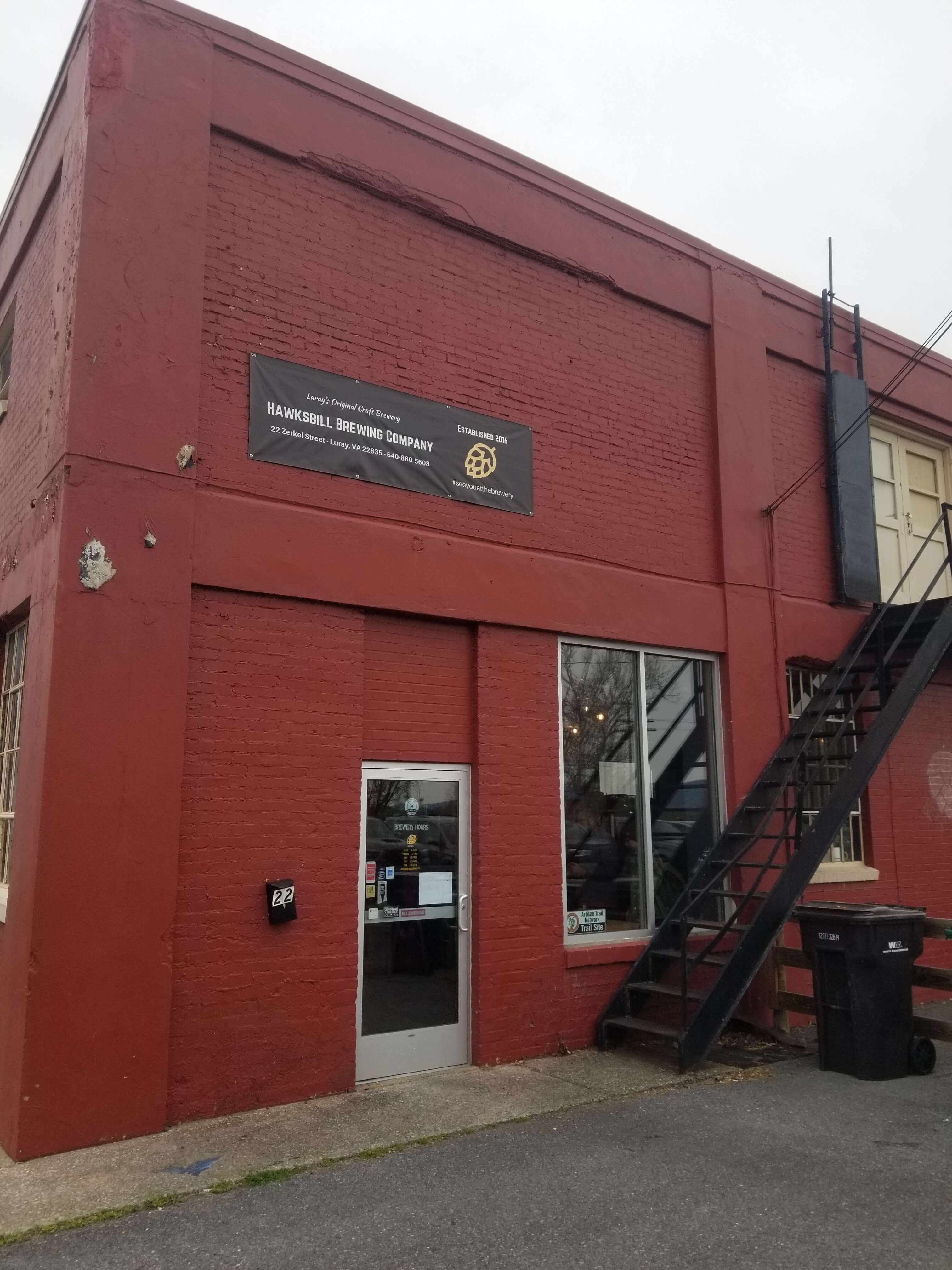
Our final stop in downtown Luray was Hawksbill Brewing Co., a six-year-old brewery that specifically targets using Page County grown ingredients. This was a bustling brewery with lots of beer drinkers with their dogs enjoying an interesting array of beer. My flight consisted of The Haymaker Cream Ale (a few cans came home with us), Bearfence Black Lager, Farmer's Brown Ale, and the Brown Cow Nitro Stout. Solid beers.

Castle Vineyards
It was appropriate that we started our trip in Waynesboro -- not far from Fishersville and Barren Ridge Vineyards -- and ended it at Castle Vineyards, a satellite tasting room for that winery. Actually, it's a joint venture between the descendants of Ralph Castle Davis (thus Castle Vineyards), a local businessman and farmer. R. Steven Davis (Uncle) and Jeremy A. McCoy (nephew) planted Viognier within their working cattle farm and partnered with Barren Ridge to host their wines surrounded by excellent views of the Shenandoah Valley and Blie Ridge Mountains. After a tasting of most of their portfolio, we returned home with our three favorites starting with the delicious 2020 Cabernet Franc. Two white blends also caught our fancy, first, the 2021 Harmony blends Petit Manseng, Viognier, Vidal Blanc, Chardonnay, and Sauvignon Blanc. Imagine the aroma in that bottle. Second was the 2021 Tinkling Spring, a blend of Riesling, Traminette, and Vidal -- more strong aromas and tropical fruit and saline.

Friday, October 15, 2021

A Virginia Wine Month Visit to The Winery at Sunshine Ridge Farm

For Columbus Day we decided to visit a Virginia winery particularly since October is Virginia Wine Month and settled on the recently opened The Winery at Sunshine Ridge Farm. Although, don't let their name detract from the presence of a brewery and cider house onsite. In fact, this Gainesville operation is an adult playground with three types of craft beverages, its plethora of firepits and picnic tables, live music on the weekends, and widespread views of Lake Manassas. Too bad public access is not available for the lake - looks like a wasted fishing opportunity. 

Our visit started with a flight of four wines - all produced using Virginia sourced grapes: 2019 Chardonnay ($33), 2020 Viognier ($34), 2019 Riesling ($33), and 2019 Cabernet Franc ($36). I preferred the chewy Cabernet Franc but was outvoted for a bottle of the very drinkable Viognier.  I didn't object because I also wanted to taste through a flight of beers starting with those brewed at Sunshine Ridge. Some of their beers come from Beltway Brewing, a very respectable contract brewer. My clear favorites from this flight were the Sowing Oats (Spiced Farmhouse Ale, 5.6% ABV, 26 IBU), Double Dog Dare Ya! (Double IPA, 8.0% ABV), and Picnic Porter (Robust Porter, 6.2% ABV, 44 IBU). Not normally an IPA lover, the Double Dog is outstanding - hazy citrus, tropical, earthy, and so smooth.

I have a feeling I will be returning very soon seeing the Scott Kurt is scheduled for several nights starting this weekend to into December.  And as always, theCompass Craft Beverage Finder will guide you there.

Friday, September 24, 2021

Exploring Virginia Beer at the Bristol Rhythm & Roots Reunion

After a couple years off we attended the 2021 Bristol Rhythm & Roots Reunion music festival which is one of the liveliest festivals. Held in the Birthplace of Country Music the festival showcases music on venues located on both the Virginia and Tennessee sides of State Street. COVID definitely affected this year's lineup but the organizers were still able to schedule fantastic artists over the three days. The festival targets local and national artists with special attention to Texas musicians. We heard great performances by Yarn, The Steel Wheels, Folk Soul Revival, Big Daddy Love, Town Mountain, and Blackberry Smoke. In addition, John Anderson and Hayes Carll represented Texas and we loved that Carll covered Ray Wylie Hubbard's Drunken Poet's Dream.

We acted like drunken poets at two Bristol breweries located within the festival's parameter. State Street Brewing Company is a relatively new brewery with outside seating accessible to hear the Country Music Mural stage or the continuous music at the Delta Blues BBQ.  The brewery opened a few years ago in the former Hayes Furniture building on the Commonwealth side of State Street and utilizes the 20,000-square-foot building to its fullest. Expect a spacious seating area and a long bar that runs parallel to the brewing equipment. There's enough diversity in their portfolio for all types of tastes - and for morning music we went with the Long Tom Peanut Butter Porter. In the afternoon we transitioned to their Dad Hat Kolsh and Splash Berliner Weiss before ending the evenings with the Cosmos Imperial IPA

We've visited Bristol Station Brews & Taproom a few times and it was great to see the brewery within the festival adjacent to the Piedmont stage.  Folk Soul Revival paired with the Piedmont Pilsner as fans are slightly bitter to their breakup and that matched the beer's profile. The Bristol Helle Raiser fit the Hayes Carll set and would have worked with 49 Winchester if we weren't late. It wasn't the Blue Mountain Steel Wheels ESB but the Bearded Goat Bock hit similar notes as the band's Rain in The Valley. And in the evening, give us the Wil's Lucky Dunkelweisen

 The BRRR will be back in our regular rotation. Look forward to visiting these and other area winery and breweries until then with theCompass Craft Beverage Finder. Cheers. 

Thursday, February 25, 2021

Earning Night-time Driving Hours to Backroom Brewery

One night this week my soon-to-be-driving son asked if we could drive for a couple hours so that he could earn night-time driving hours. Of course, I replied, as long as it includes a stop at Backroom Brewery - over an hour away as shown by theCompass Craft Beverage Finder.  I had been targetting the brewery after several trips to visit the Sip Shenandoah Trail and learning that the brewery was Virginia's first farm brewery.  The operation is an outgrowth of the Sunflower Cottage herb farm where they planted hops in 2012; helped Warren County pass an ordinance to allow farm breweries in 2013;  built out a brewery that following year; and finally, opened an expanded brewery, event center, and tasting room in 2019. 

With that expanded capability BackRoom offers almost two dozen beers in their tasting room, many brewed with homegrown herbs. The perfect example is their flagship Lemon Basil Wheat Ale,  brewed with fresh lemon zest & sweet basil -- and a remembrance of the days twisting lemon juice into Pyramid Hefeweisen.  The Kiss Me Kolsch and Regions Pilsner are solid thirst quenchers and the Backpacker Pale Ale a reminder of the old school pale ales without the hop punch.  However, the two favorites were the Shenandoah Sunset Hazy IPA and the Farmwork  Rosemary Rye Saison -- both just delicious versions of what you would expect from the styles and the ingredients. 

We hope to visit again soon on a weekday to savor more of these beers and try the kitchen. Cheers. 

Wednesday, April 22, 2020

Drinking Through Family History: Woodstock, Virginia

My mother's father's maternal line flows forth from the Shenandoah Valley in an area ranging from Strasburg to Edinburg and dominated by names like Hoover, Smoot, Gochenour, Grandstaff, Keller, and Hottel. These families were mostly German, Swiss, and Dutch immigrants arriving in the colonies at Philadelphia, then migrating to York and Lancaster, before finally settling in what is now Shenandoah County. They were a mixture of Mennonites and Lutherans, primarily farmers, who received their initial land grants from Lord Fairfax.

One of these immigrants was Hans Wilhelm Huber who along with his wife Anna Margaretha, emigrated from Germany and arrived in Philadelphia in 1736. A dozen years later the Hubers settled near the North Fork around Woodstock Virginia after an initial residency in Lebanon PA. Their son, Johannes Huber (John Hoover), married Elizabeth Fravel, whose family lineage arrived in the valley a couple generations earlier and included the Keller and Hottel families. The next two generations of Hoovers were farmers with the last male in my line, Perry Monroe Hoover, marrying Mary Jane Smoot -- bringing Gochenours and Grandstaffs into our mix. The Hoover, Smoot, and Gochenour farms were located very close to Woodstock, where many of these ancestors are buried.

These families participated in the growth of Woodstock starting with its original charter in 1761 - making it the 4th oldest town in Virginia - and on land which George Washington had surveyed in his youth and who sponsored the charter in Virginia's House of Burgesses. The town became the county seat of Shenandoah County with Thomas Jefferson designing the original courthouse that is the oldest courthouse still in use west of the Blue Ridge Mountains. Clerk of the Circuit Court Thomas Marshall, father of Supreme Court Justice John Marshall, was one of the first judges to utilize the courthouse. Ardent revolutionaries, the community contributed soldiers to the 8th Virginia Regiment that saw action in Saratoga among many other battles, and suffered through Valley Forge. During the Civil War, the community was generally reluctant to participate in the southern cause, being religiously opposed to slavery, but a few members enlisted or were conscripted into the Company F (the Muhlenberg Rifles) of the 10th Virginia Infantry as well as Company C of the 33rd Virginia Infantry -- part of the Stonewall Brigade.

Today, Woodstock Brewhouse is located near in the center of town, near the historic courthouse. The brewery opened four years ago after renovating the Casey Jones Work-Clothes Company factory - which operated from 1925 through the early 1940s. You are familiar with this company through its Wrangler brand which rose to national prominence after the company and brand where purchased by the Blue Bell Overall Company in 1943. The brewery commemorates this history through its Casey Jones Vanilla Porter as well as the nearby North Fork of the Shenandoah River with the North Fork Golden Ale and Seven Bender American Pale Ale. These last two are your hydration beers during local hiking and fishing excursions.

And when fishing or visiting the seven bends of the North Fork, venture over the one-lane bridge or the swinging walking bridge to Muse Vineyards. The winery rests on the base of the Blue Ridge Mountains with the vineyards planted with a mixture of Bordeaux and Rhone grapes close to the river. In 2003 Robert Muse and Sally Cowal purchased an abandoned vineyard that formed the base for Muse and later purchased a 200-year-old Mennonite farm adjacent to their property which allowed them to expand to thirty acres of vines. The soil for the various vineyards are quite distinct, with the blocks closer to the river dominated by silt loam alluvium and the vineyards closer to the mountains containing rocky red clay soils. Since its inception, the winery has gained a very favorable reputation for its Clio ($35-ish) Bordeaux-style red wine and Thalia ($24) Rhone-style white wine. We concur completely.